
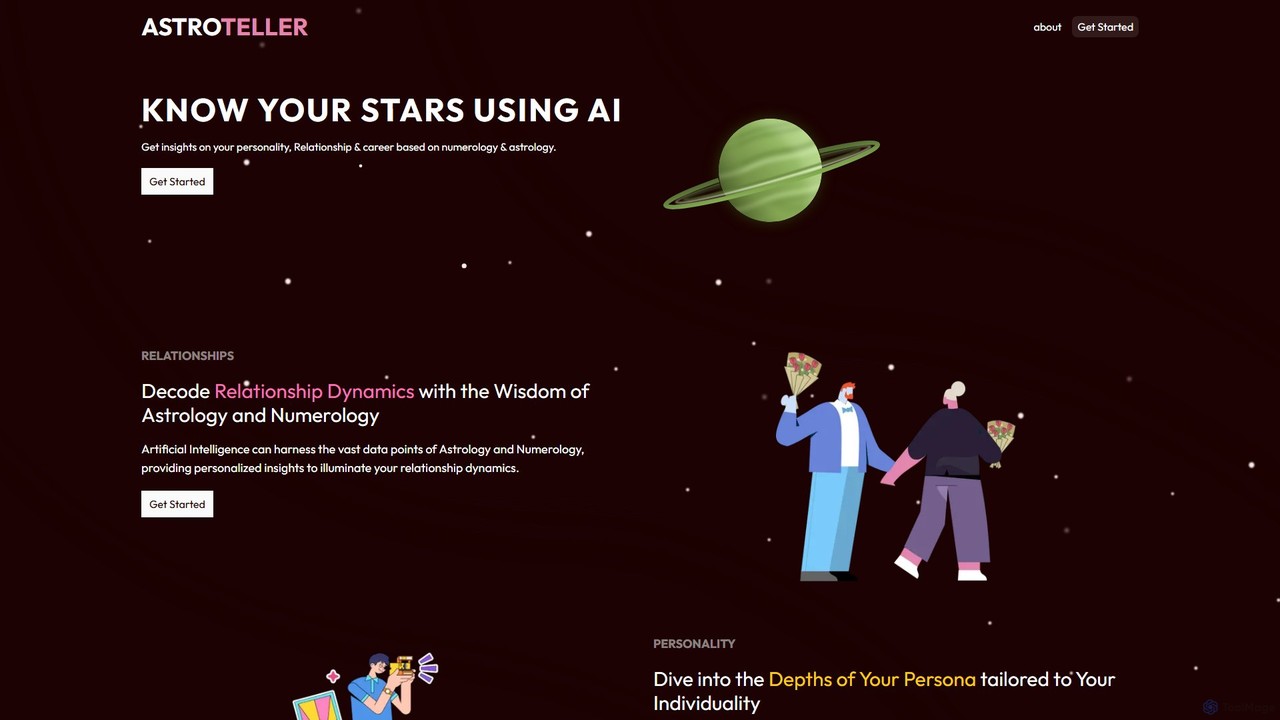
Productivity Best in category 1 results Career Guidance AI Tool

Popular AI tools in the Career Guidance field of Productivity include AstroTeller, etc., helping you quickly improve efficiency.

AstroTeller

AstroTeller

An AI-powered platform offering personalized insights into your personality, relationships, and career by combining the ancient wisdom of …

3.1K

About Career Guidance

AI Career Guidance tools are a specialized category of productivity software that uses artificial intelligence to offer personalized career planning and development support. These platforms analyze user data, such as skills, interests, and experience, against vast datasets of job market trends and role requirements. Their primary value lies in providing data-driven, objective recommendations for job opportunities, skill development paths, and long-term career strategies. This approach enhances personal productivity by structuring and optimizing the complex process of career management.

Core Features

  • Skill Gap Analysis: Identifies discrepancies between your current skills and the requirements of a target career or job.
  • Personalized Pathing: Recommends specific courses, certifications, and job roles to build a coherent career trajectory.
  • Resume and Cover Letter Optimization: Provides AI-driven feedback to tailor application documents for specific roles and Applicant Tracking Systems (ATS).
  • AI Mock Interviews: Simulates job interviews and offers feedback on answers, speech clarity, and non-verbal cues.
  • Job Market Intelligence: Delivers insights on salary benchmarks, in-demand skills, and future industry trends.

Use Cases

These tools are ideal for students choosing a field of study, professionals contemplating a career change, and job seekers aiming to enhance their application success rate. They are also used within organizations by HR departments to facilitate internal mobility and employee development, aligning individual growth with company goals.

How to Choose

When selecting an AI Career Guidance tool, consider the depth and source of its market data. Evaluate the sophistication of its personalization algorithms and the range of features offered, such as resume analysis or interview prep. Also, assess its user interface for ease of use and review its data privacy policy to understand how your personal information is handled.

Career GuidanceUse Cases

1

Mapping Career Paths for Students

A university student unsure about their major uses an AI career guidance tool to explore options. By inputting their course interests, academic strengths, and personality traits from a built-in assessment, the AI generates a report of suitable career paths. It details roles like 'Data Analyst' or 'UX Researcher', showing day-to-day tasks, required skills, salary projections, and future demand. The platform then maps out specific university courses and extracurricular activities that would build a strong profile for these target careers, turning abstract interests into an actionable academic and career plan.

2

Optimizing Resumes for Career Changers

A marketing professional aiming to transition into a project management role uses an AI tool to revamp their resume. They upload their existing marketing resume and the job description for a target Project Manager position. The AI analyzes both documents, identifies transferable skills like 'stakeholder communication' and 'budget management', and suggests rephrasing bullet points to use project management terminology. It also scores the resume's relevance against the job description and highlights missing keywords crucial for passing Applicant Tracking Systems (ATS), increasing the chances of securing an interview.

3

Practicing for Behavioral Interviews

A recent graduate preparing for their first corporate job interview uses an AI interview coach. They select the industry and role type, and the AI generates common behavioral questions like 'Tell me about a time you faced a conflict in a team.' The user records their answer, and the AI provides instant feedback. The analysis covers the content (e.g., using the STAR method), delivery (pacing, filler words like 'um'), and even non-verbal cues if using a camera. This allows the graduate to practice repeatedly, refine their answers, and build confidence before the actual interview.

4

Identifying Skill Gaps for Promotion

An employee aiming for a senior management position uses their company's internal AI career platform. They select their target role, and the system performs a skill gap analysis by comparing their current profile (from performance reviews and completed training) with the competency model for the senior role. The AI identifies a gap in 'Financial Acumen' and 'Strategic Negotiation'. It then recommends specific internal workshops, suggests relevant projects to join for hands-on experience, and even proposes a senior leader as a potential mentor, creating a clear, actionable development plan for promotion.

5

Discovering New Job Opportunities via Skill Matching

A software developer, feeling stagnant in their current role, uses an AI career platform to find new challenges. Instead of searching by job titles, they upload their resume or connect their LinkedIn profile. The AI parses their skills, such as 'Python', 'AWS', and 'Machine Learning', and matches them to job descriptions where these skills are highly valued, even if the job title is unconventional (e.g., 'Growth Engineer' instead of 'Software Developer'). This surfaces relevant but less obvious opportunities that a standard keyword search might miss, broadening their job search horizon.

6

Generating a Personalized Learning Playlist

A data scientist wants to stay current with the latest industry trends. They use an AI career guidance tool that integrates with learning platforms. Based on their career goals ('Become a Lead AI Researcher') and a recent skill analysis, the AI curates a 'learning playlist'. This playlist includes a mix of content formats: advanced online courses on 'Reinforcement Learning', influential research papers to read, key industry experts to follow on social media, and relevant podcasts. This transforms generic professional development into a highly personalized, continuous learning journey managed by AI.

Career GuidanceFrequently Asked Questions