ToolMage
Sign in

Best 1 Checker AI tools for Productivity

Popular Checker AI tools in Productivity include Advacheck, helping you work more efficiently.

Advacheck
Paid

Advacheck

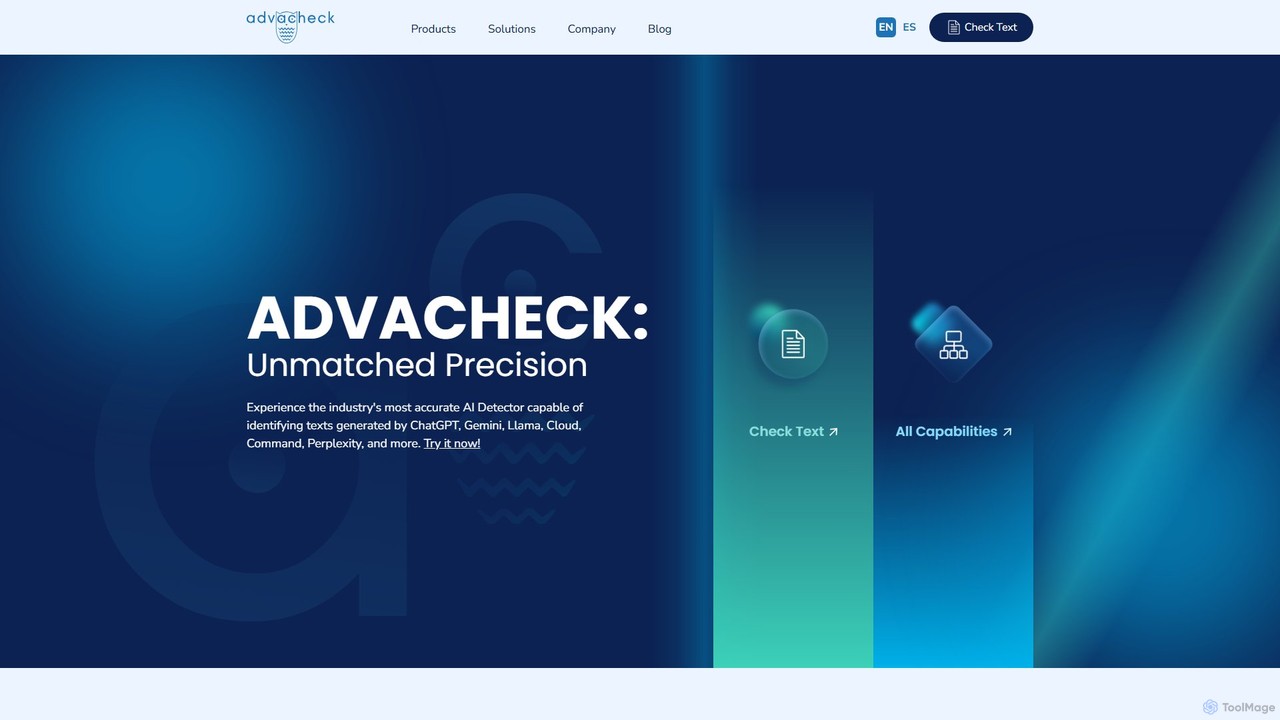
Advacheck is an advanced plagiarism and AI content checker designed for academic institutions, writers, and content creators. It ensures text originality by scanning against a vast database of web and academic sources. Key features include detailed similarity reports, detection of paraphrased content, self-plagiarism alerts, and robust AI-generated text identification. Its integration with platforms like Moodle makes it an essential tool for maintaining academic integrity and producing authentic content.

Academic
Visits 6.3KFavorites 114Likes 106

About Checker

AI Checkers are a category of AI-powered tools designed to analyze, verify, and validate various forms of digital content or data. These tools leverage artificial intelligence, machine learning, and natural language processing to automatically detect errors, inconsistencies, plagiarism, or specific patterns. They significantly enhance quality control, ensure compliance, improve data integrity, and save substantial manual review time, thereby boosting overall productivity.

Core Features

  • Grammar & Spelling Check: Identifies and corrects grammatical errors, punctuation mistakes, and spelling inaccuracies in text.
  • Plagiarism Detection: Compares content against vast databases to identify potential instances of unoriginal work.
  • Fact Verification: Cross-references information with reliable sources to assess factual accuracy.
  • Code Quality Analysis: Scans programming code for bugs, vulnerabilities, and adherence to coding standards.
  • Data Validation: Verifies the accuracy, completeness, and consistency of datasets.

Use Cases

Professionals across various sectors utilize AI checkers to maintain high standards and efficiency. Content creators use them to refine articles and ensure originality. Developers rely on them for robust code quality and security. Data analysts employ these tools to validate large datasets, ensuring reliability for decision-making. Legal and compliance teams use them to verify document adherence to regulations.

How to Choose

When selecting an AI checker, consider its specific checking capabilities (e.g., grammar, plagiarism, facts, code), the accuracy and reliability of its AI models, and its integration options with existing workflows. Evaluate the supported languages, customization features, and the pricing structure. User interface intuitiveness and the quality of reporting are also crucial for effective implementation.

Checker use cases

1

Enhancing Blog Post Quality and Originality

A content marketer or blogger uses an AI checker to review draft articles before publication. The tool automatically identifies grammatical errors, stylistic inconsistencies, and potential plagiarism by comparing the text against a vast online database. This ensures that all published content is polished, professional, and original, saving hours of manual proofreading and reducing the risk of copyright issues, ultimately improving reader engagement and SEO.

2

Automating Code Review for Software Development

Software development teams integrate AI code checkers into their continuous integration/continuous deployment (CI/CD) pipelines. Before code is merged or deployed, the AI tool automatically scans for bugs, security vulnerabilities, and deviations from coding standards. This proactive approach catches errors early, reduces technical debt, and ensures that only high-quality, secure code makes it into production, significantly accelerating development cycles.

3

Ensuring Academic Integrity in Research Papers

University students and researchers use AI checkers to ensure the originality and proper citation of their academic papers, theses, and dissertations. The tool scans for plagiarism against a vast database of published works, web content, and student submissions, providing detailed reports on similarity scores and identifying areas requiring proper attribution. This helps maintain academic integrity and avoids unintentional plagiarism, crucial for scholarly credibility.

4

Validating Large Datasets for Business Intelligence

Data analysts and business intelligence professionals employ AI data checkers to validate the accuracy, completeness, and consistency of large datasets before they are used for reporting or strategic decision-making. The AI can identify anomalies, missing values, or incorrect data formats that might skew analytical results. This ensures that business insights are derived from reliable data, leading to more informed and effective strategic planning.

5

Ensuring Compliance in Legal and Regulatory Documents

Legal professionals and compliance officers use AI checkers to review contracts, policies, and regulatory filings for adherence to specific legal standards, industry regulations, or internal company guidelines. The AI can quickly scan vast amounts of text to highlight non-compliant clauses, missing mandatory disclosures, or inconsistent terminology. This significantly reduces legal risks, ensures regulatory compliance, and streamlines the document review process, saving considerable time and resources.

6

Optimizing Marketing Copy for Brand Consistency

Marketing teams deploy AI checkers to review advertising copy, social media posts, and website content for brand voice consistency, grammatical accuracy, and adherence to specific messaging guidelines. The AI can analyze tone, identify jargon, and ensure that all communications align with the brand's established identity. This helps maintain a unified brand image across all channels, enhances customer perception, and reduces the need for extensive manual editorial oversight.

Checker FAQ

What are AI Checkers?

AI Checkers are intelligent software tools that leverage artificial intelligence, including machine learning and natural language processing, to automatically analyze and validate various forms of digital content or data. Their primary function is to identify errors, inconsistencies, plagiarism, or specific patterns that might be difficult or time-consuming for humans to detect manually. They are crucial for maintaining quality, accuracy, and compliance across diverse digital tasks.

How do I choose the best AI Checker for my needs?

To choose the best AI Checker, first identify your primary checking needs: grammar, plagiarism, fact-checking, code analysis, or data validation. Evaluate the tool's accuracy, supported languages, and integration capabilities with your existing software. Consider the pricing model, scalability for your usage volume, and the quality of its reporting and feedback mechanisms. User reviews and a free trial can also provide valuable insights into its effectiveness and ease of use.

What types of content can AI Checkers analyze?

AI Checkers are versatile and can analyze a wide range of content types. This includes textual content such as articles, essays, emails, marketing copy, and legal documents for grammar, spelling, style, and plagiarism. They can also process programming code for bugs, security flaws, and adherence to coding standards. Furthermore, some advanced checkers can validate structured data in spreadsheets or databases for accuracy and consistency, making them valuable across various digital domains.

How do AI Checkers differ from traditional manual checking?

AI Checkers differ from traditional manual checking primarily in speed, scale, and consistency. Manual checking is prone to human error, time-consuming, and limited by the reviewer's knowledge and attention span. AI Checkers, conversely, can process vast amounts of data in seconds, apply consistent rules and algorithms without fatigue, and often detect subtle patterns or issues that humans might miss. While AI provides efficiency, human oversight remains valuable for nuanced judgment and complex contextual understanding.

What are the main benefits of using AI Checkers in productivity?

The main benefits of using AI Checkers in productivity are significant time savings, enhanced accuracy, and improved consistency. By automating repetitive and detail-oriented checking tasks, these tools free up human resources to focus on more strategic and creative work. They reduce the incidence of errors, ensure adherence to standards, and provide immediate feedback, leading to faster workflows, higher quality outputs, and overall greater operational efficiency across various professional domains.