Hidden Door
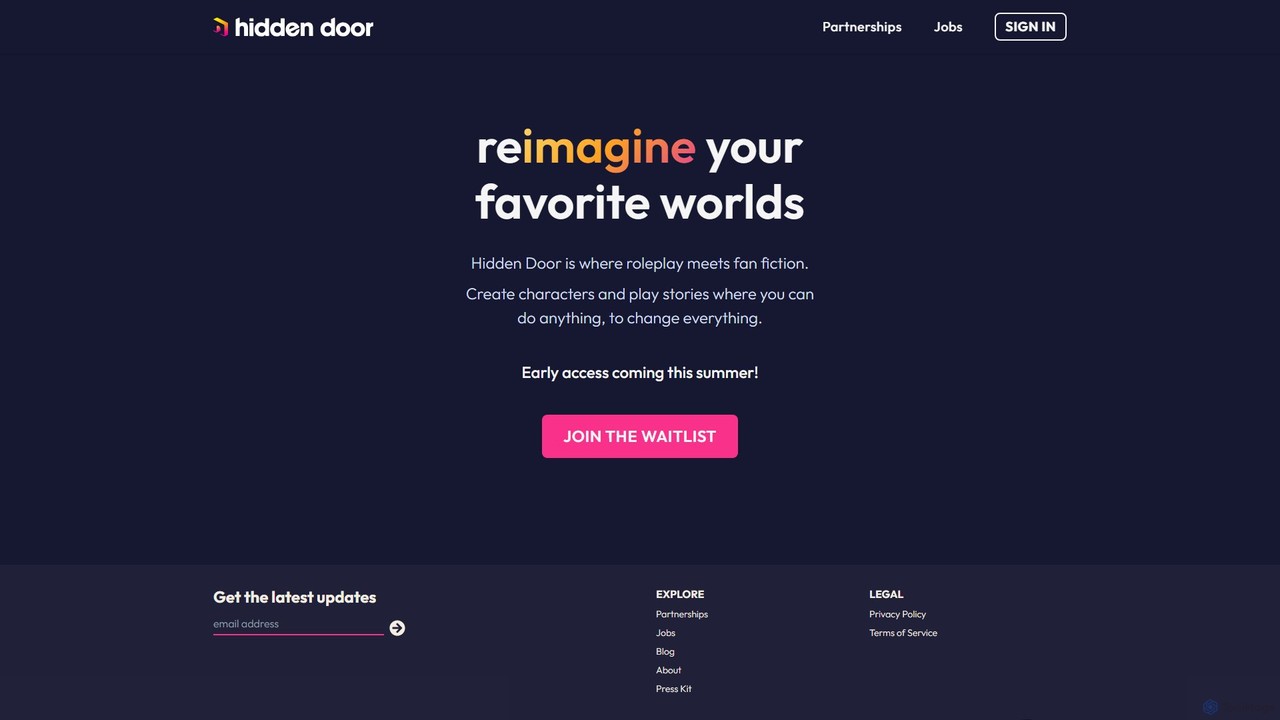
Hidden Door is an AI-powered social role-playing platform that transforms your favorite books, movies, and comics into immersive, …
Hidden Door is an AI-powered social role-playing platform that transforms your favorite books, movies, and comics into immersive, interactive story games. Create characters, team up with friends, and explore beloved worlds where your choices truly change the narrative.
About Collaborative Writing
Collaborative Writing tools are AI-powered platforms designed to facilitate real-time co-creation and editing of text-based content. These tools leverage natural language processing and machine learning to enhance team synergy, streamline content workflows, and ensure consistency across projects. They are essential for teams seeking to improve efficiency and quality in document creation, from reports to marketing copy, by integrating intelligent assistance directly into the writing process.
Core Features
- Real-time Co-editing: Multiple users can simultaneously edit and view changes in a document, fostering dynamic collaboration.
- Version Control & History: Automatically tracks all revisions, allowing users to revert to previous versions and review changes made by collaborators.
- AI-powered Suggestions: Offers intelligent recommendations for grammar, style, tone, clarity, and even content generation to enhance writing quality.
- Integrated Communication: Provides in-document commenting, chat, and notification systems to facilitate seamless discussion and feedback.
- Access Control & Permissions: Manages who can view, edit, or comment on documents, ensuring secure and organized teamwork.
Use Cases
These tools are widely adopted by diverse teams, including marketing departments for campaign content, academic researchers for joint papers, and software teams for technical documentation. They enable efficient content creation, review, and approval cycles, particularly beneficial for remote or distributed teams needing to synchronize efforts on complex writing projects.
How to Choose
When selecting a Collaborative Writing tool, consider its AI capabilities for writing assistance, the robustness of its real-time editing and version control features, and its integration with existing productivity suites. Evaluate user interface intuitiveness, security protocols for sensitive documents, and pricing models that align with your team's size and usage frequency to ensure a scalable and effective solution.

Collaborative WritingUse Cases
Streamlining Marketing Content Creation
Marketing teams utilize Collaborative Writing AI tools to efficiently draft, review, and finalize diverse campaign content, including blog posts, social media updates, and website copy. The AI assists by suggesting consistent brand voice, optimizing for SEO keywords, and refining grammar, allowing multiple team members to contribute simultaneously and iterate quickly. This process significantly reduces review cycles and ensures high-quality, cohesive messaging across all platforms.
Accelerating Academic Research Paper Drafting
Academic researchers and students leverage collaborative writing AI tools to co-author papers, theses, and reports more efficiently. Features like shared bibliographies, citation management, and AI-driven summarization help synthesize complex information from various sources. This ensures all contributors work on the latest version, maintain academic integrity, and streamline the often-cumbersome process of compiling extensive research into a coherent, well-referenced document, saving significant time in drafting and editing.
Enhancing Technical Documentation Development
Software development teams and technical writers utilize collaborative writing platforms to create user manuals, API documentation, and internal guides. AI features can suggest clearer phrasing for complex technical concepts, identify inconsistencies in terminology, and ensure adherence to specific style guides. This not only makes complex information more accessible to end-users but also significantly reduces documentation errors and speeds up the review and approval process among engineers and product managers.
Facilitating Remote Team Report Generation
Distributed and remote teams rely on Collaborative Writing AI tools to efficiently compile quarterly reports, project proposals, and strategic documents. Real-time editing, comment features, and integrated chat allow team members across different time zones to contribute asynchronously and provide immediate feedback. AI can further assist by structuring arguments, refining language for clarity and impact, and ensuring all sections are cohesive, significantly improving the speed and quality of remote document collaboration.
Optimizing Legal Document Drafting and Review
Legal professionals employ collaborative writing AI for drafting contracts, briefs, and agreements, where precision and compliance are paramount. The AI can check for legal jargon consistency, identify potential ambiguities, and ensure adherence to specific legal frameworks and precedents. This significantly speeds up the review process, minimizes errors, and allows multiple legal experts to contribute to complex documents while maintaining accuracy and legal soundness, reducing the time spent on manual checks by up to 50%.
Boosting Creative Storytelling and Scriptwriting
Authors, screenwriters, and content creators utilize collaborative writing AI platforms to co-develop narratives, scripts, and creative works. AI can offer plot suggestions, character development ideas, dialogue enhancements, and even generate alternative scenes or endings. This fosters a more dynamic and interactive creative process among collaborators, helping to overcome writer's block and explore diverse storytelling avenues, ultimately enriching the final creative output and accelerating project timelines.