AdScan.ai
AdScan.ai is an AI-powered ad intelligence platform that helps marketers discover winning ad strategies. By revealing competitor ad …
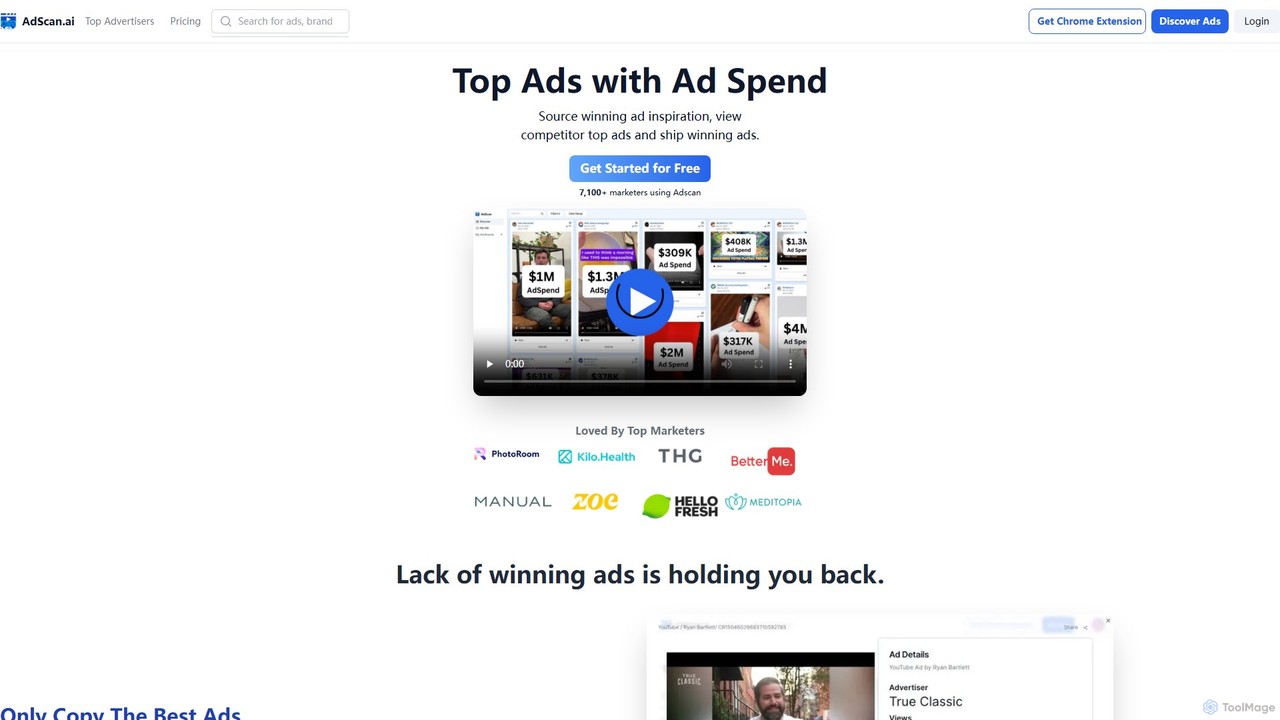
AdScan.ai is an AI-powered ad intelligence platform that helps marketers discover winning ad strategies. By revealing competitor ad spend on platforms like Facebook, YouTube, and TikTok, it allows users to make data-driven decisions. Its Chrome extension integrates directly into ad libraries, enabling users to save, analyze, and organize successful ads for inspiration and campaign optimization.
About Competitive Intelligence
Competitive Intelligence tools are AI-powered platforms designed to systematically monitor, collect, and analyze information about business rivals. These tools automate the process of gathering data from diverse sources like websites, social media, ad networks, and public records. They provide businesses with actionable insights into competitors' strategies, market positioning, and performance. As a specialized area of Productivity, these tools transform time-consuming manual research into an efficient, continuous stream of strategic awareness.
Core Features
- Competitor Tracking: Monitors rivals' website changes, SEO performance, backlink profiles, and keyword rankings.
- Ad Intelligence: Analyzes competitors' digital advertising campaigns, including creatives, ad spend, and target channels.
- Social Media Monitoring: Tracks competitors' social media activity, content strategies, engagement rates, and brand sentiment.
- Market & News Alerts: Delivers real-time notifications about competitors' press releases, news mentions, and significant market shifts.
- Product & Pricing Analysis: Tracks changes in competitor product features, pricing structures, and customer reviews.
Use Cases
These tools are primarily used by marketing teams, product managers, and business strategists. Marketing professionals use them to benchmark campaign performance and identify new opportunities. Product managers leverage the insights to inform feature roadmaps and understand market gaps. Strategists use the data to anticipate market trends and make informed decisions about business direction.
How to Choose
When selecting a Competitive Intelligence tool, consider the scope of data sources—ensure it covers the channels most relevant to your industry. Evaluate the frequency of data updates, as real-time information is critical for dynamic markets. Assess the depth of analytical features, from basic alerts to predictive insights. Finally, check for integration capabilities with your existing workflow tools like CRM or project management software.
Competitive IntelligenceUse Cases
Analyze Competitor Marketing Campaigns
A marketing manager for an e-commerce brand uses a competitive intelligence tool to monitor a key rival's new product launch. The tool automatically tracks the rival's social media ads, influencer collaborations, and email marketing copy. By analyzing the messaging, visuals, and channels used, the manager identifies a gap in their own strategy, leading to a quick pivot to target a neglected customer segment. This results in a 15% increase in engagement for their next campaign.
Inform Product Development with Feature Analysis
A product manager at a SaaS company is planning the next development cycle. They use a competitive intelligence tool to aggregate and analyze customer reviews and feature update announcements from three main competitors. The AI identifies a recurring complaint about a missing integration in all competing products. This insight allows the product manager to prioritize building that specific integration, creating a unique selling proposition and addressing a clear market need before competitors do.
Optimize SEO Strategy with Keyword Gap Analysis
An SEO specialist for a content website wants to increase organic traffic. They use a competitive intelligence platform to perform a keyword gap analysis, which identifies valuable keywords that their competitors rank for on Google, but their own site does not. The tool generates a list of high-intent, low-difficulty keywords. The specialist then creates a content plan targeting these specific keywords, resulting in capturing new traffic streams and improving their search engine visibility within three months.
Adjust Pricing Strategy with Real-Time Monitoring
An e-commerce manager for a consumer electronics store needs to stay competitive during a major sales event. They set up a competitive intelligence tool to monitor the prices of 50 key products across three major competitor websites in real-time. The tool sends an alert when a competitor drops the price on a popular smartphone. The manager immediately matches the price and launches a flash promotion, preventing potential revenue loss and maintaining their market share during the critical sales period.
Monitor Brand Sentiment and Industry News
A corporate communications team for a financial services firm uses an AI tool to track mentions of their brand and key competitors across news sites, blogs, and forums. The system flags a negative news story about a competitor's data breach. This early warning allows the team to proactively prepare a statement reinforcing their own security measures, manage potential investor anxiety, and turn a competitor's crisis into an opportunity to build trust with their own customers.
Identify Potential Partnership or Acquisition Targets
A business development strategist at a large tech corporation is tasked with finding innovative startups for potential acquisition. They use a competitive intelligence platform to monitor emerging companies in a specific niche, tracking their funding rounds, key hires, technology stack, and media coverage. The tool identifies a fast-growing startup with complementary technology. This data-driven discovery allows the strategist to initiate acquisition talks with a well-vetted target, saving months of manual research and sourcing efforts.