
Impartial
Impartial is a free, AI-powered tool designed to settle arguments and resolve conflicts objectively. By acting as an …
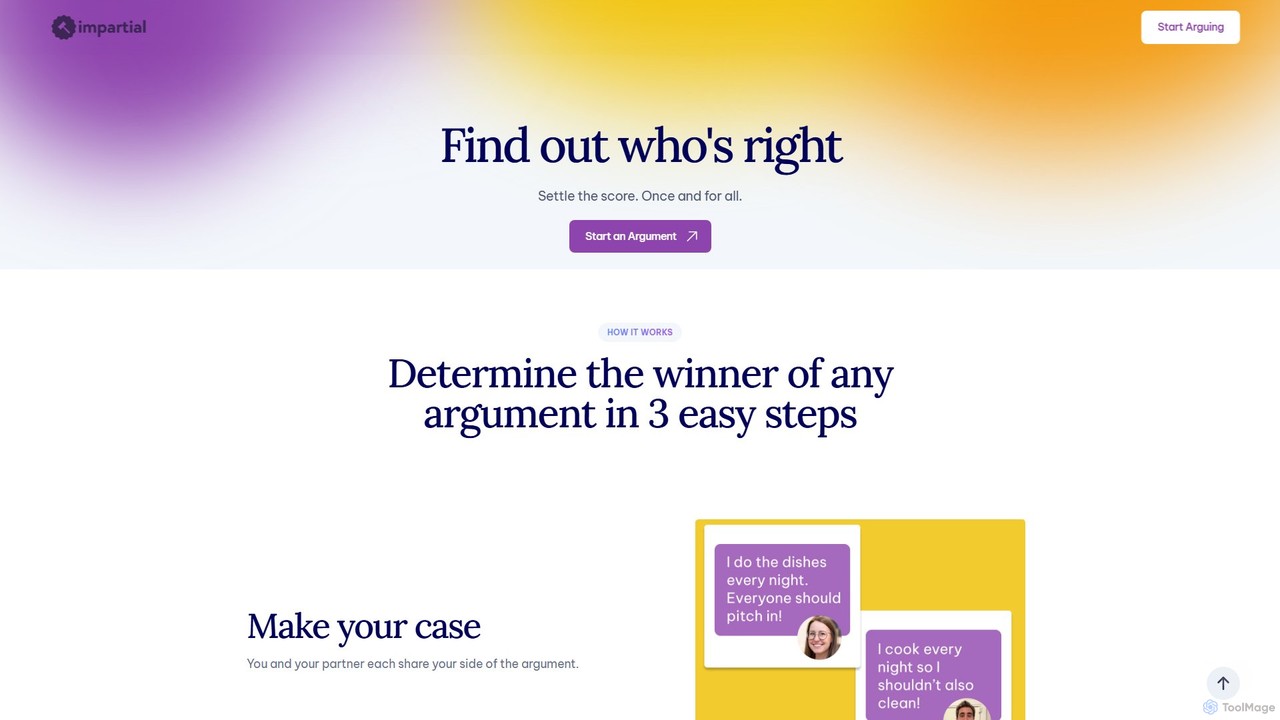
Impartial is a free, AI-powered tool designed to settle arguments and resolve conflicts objectively. By acting as an unbiased third party, it analyzes arguments from both sides, which are submitted blindly to ensure fairness. The AI provides logical reasoning and declares a winner in seconds, helping users find a quick and rational conclusion to disagreements.
About Conflict Resolution
Conflict Resolution AI tools are designed to analyze, mediate, and facilitate the resolution of disputes and disagreements. These AI-powered platforms leverage natural language processing and sentiment analysis to understand communication dynamics, identify core issues, and propose constructive solutions. They aim to streamline negotiation processes, improve communication clarity, and foster more harmonious outcomes in various professional and personal settings, thereby enhancing overall productivity.
Core Features
- Sentiment Analysis: Evaluates emotional tone and underlying sentiments in communications to identify tension points.
- Issue Identification: Pinpoints core disagreements and common interests from complex dialogue.
- Solution Suggestion: Proposes neutral, data-driven compromise options and negotiation strategies.
- Dialogue Structuring: Guides conversations through predefined steps to ensure fair and productive exchanges.
- Bias Detection: Helps identify and mitigate unconscious biases in communication patterns.
Use Cases
These tools are invaluable in human resources for mediating workplace conflicts, in customer service for de-escalating difficult interactions, and in legal settings for streamlining pre-trial negotiations. They also assist project managers in resolving team disagreements and individuals seeking to improve personal communication.
How to Choose
When selecting a Conflict Resolution AI tool, consider its accuracy in sentiment analysis, the breadth of its solution suggestion capabilities, and its integration with existing communication platforms. Evaluate the tool's ability to handle different conflict types, its data privacy policies, and the level of human oversight required for effective implementation.
Conflict ResolutionUse Cases
Facilitating Fair Workplace Conflict Resolution
HR professionals can utilize AI conflict resolution tools to objectively analyze communication between disputing employees. The AI identifies key grievances, emotional triggers, and potential common ground, then suggests structured dialogue prompts and fair compromise options, significantly reducing the time and emotional toll of traditional mediation processes.
De-escalating High-Tension Customer Service Interactions
Customer support teams can integrate AI tools to monitor live chat or call transcripts for signs of escalating customer frustration. The AI provides real-time suggestions to agents on empathetic responses, alternative solutions, or de-escalation phrases, helping to resolve complaints more effectively and prevent negative customer experiences.
Optimizing Pre-Trial Legal Negotiations
Legal professionals can employ AI conflict resolution platforms to analyze case documents, witness statements, and communication logs to identify potential settlement points and risks. The AI can model various negotiation scenarios, predict outcomes, and draft preliminary compromise proposals, accelerating the pre-trial resolution phase and reducing litigation costs.
Enhancing Team Collaboration Through Conflict Prevention
Project managers and team leads can use these tools to proactively identify communication breakdowns or emerging disagreements within project teams. By analyzing team chat and meeting transcripts, the AI can flag potential conflicts, suggest communication best practices, and facilitate structured discussions to keep projects on track and foster a positive team environment.
Improving Personal Communication and Relationship Dynamics
Individuals can leverage AI conflict resolution tools to analyze their own communication patterns or draft sensitive messages. The AI provides feedback on tone, clarity, and potential misinterpretations, offering alternative phrasing to ensure messages are received as intended, thereby reducing misunderstandings in personal and professional relationships.
Automating Constructive Feedback and Performance Reviews
Managers can use AI tools to analyze employee self-assessments and peer feedback for underlying tensions or misalignments. The AI helps synthesize diverse viewpoints, identify areas for constructive discussion, and formulate balanced feedback, making performance reviews more objective and less prone to personal bias or conflict.