Wearelearning
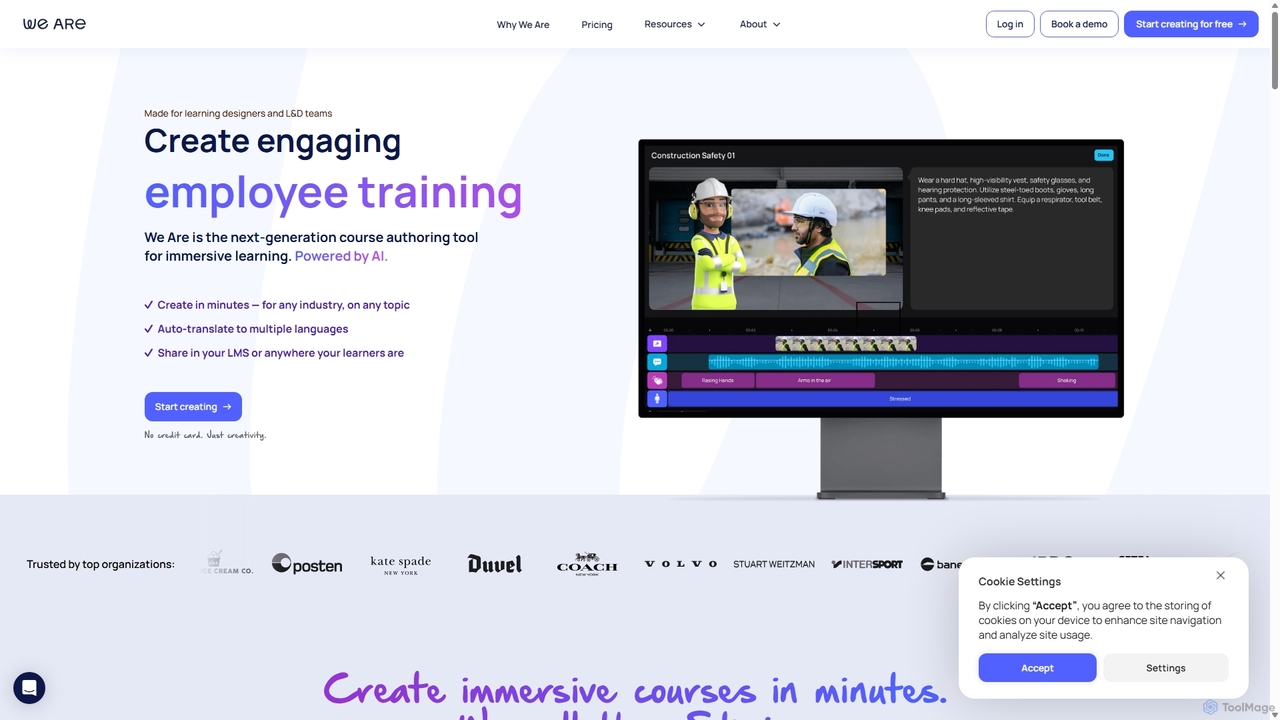
Wearelearning is an AI-powered, next-generation course authoring tool for creating immersive 3D animated videos and interactive simulations. Designed …
Wearelearning is an AI-powered, next-generation course authoring tool for creating immersive 3D animated videos and interactive simulations. Designed for L&D teams and learning designers, it transforms scripts into engaging, scenario-based training experiences in minutes, with no animation skills required. It supports multiple languages, LMS integration, and various sharing options.
About Course Authoring
AI Course Authoring tools are applications that use artificial intelligence to automate and accelerate the creation of educational content. These tools leverage generative AI and natural language processing to transform raw information, such as documents, videos, or simple prompts, into structured courses with modules, lessons, and assessments. They empower educators, trainers, and creators to build comprehensive learning experiences with significantly less manual effort. This allows for a greater focus on refining content quality and improving learner engagement rather than on tedious structural design.
Core Features
- Automated Content Structuring: Instantly organizes raw text or video transcripts into logical modules, lessons, and topics.
- Quiz & Assessment Generation: Automatically creates relevant questions, including multiple-choice, true/false, and fill-in-the-blank, based on the course material.
- Interactive Element Creation: Generates engaging elements like flashcards, summaries, and simple simulations to enhance learning.
- Content Repurposing: Transforms a single source material (e.g., a webinar) into multiple formats like an e-learning course, a blog post, and social media snippets.
Use Cases
These tools are widely used in corporate learning and development (L&D) for creating employee onboarding, compliance, and skill-up training. They are also valuable for educational institutions and online course creators who need to rapidly develop and scale their digital curriculum. Subject matter experts without instructional design experience can use them to convert their knowledge into structured, professional-looking courses.
How to Choose
When selecting an AI Course Authoring tool, consider the types of input formats it accepts (e.g., PDF, URL, video). Evaluate the quality and variety of its assessment generation capabilities. Check for integration options with Learning Management Systems (LMS) for seamless deployment. Finally, assess the level of customization available to ensure the final course aligns with your branding and instructional goals.

Course AuthoringUse Cases
Develop Corporate Compliance Training Rapidly
An L&D manager is tasked with creating the annual data privacy compliance course for 500 employees from a dense, 80-page legal document. They upload the PDF to an AI course authoring tool. The AI automatically identifies key compliance topics, structures them into five distinct modules, generates a 10-question quiz for each module to test understanding, and creates a concise summary for the course introduction. This process reduces the initial development time from four weeks to under three days, allowing the manager to focus on adding company-specific examples and branding.
Convert Expert Webinars into Scalable Courses
A subject matter expert in digital marketing hosts a popular 90-minute webinar. To reach a wider audience, she wants to turn it into a self-paced online course. She uploads the video recording to an AI authoring tool. The platform transcribes the audio, divides the content into logical lessons based on topic shifts, and generates key learning objectives for each lesson. It also creates interactive flashcards for key terms mentioned in the webinar. The expert can then easily edit the generated content and add supplementary materials, launching a complete course in a fraction of the time it would take to build from scratch.
Personalize Sales Enablement Training
A sales manager needs to create tailored training modules for different sales teams (e.g., enterprise vs. SMB). Instead of building separate courses, she uses an AI authoring tool with a prompt like, "Create a 3-module course on 'Overcoming Pricing Objections' based on our sales playbook, with specific examples for SMB clients." The AI generates a foundational course. She then uses a second prompt, "Now adapt this course for an enterprise audience, focusing on multi-stakeholder approvals and long sales cycles." The tool re-writes the examples and case studies, allowing for rapid personalization of training content without duplicating effort.
Generate Microlearning Content for Mobile
A retail company wants to provide on-the-go training for its store associates via their mobile devices. The training manager inputs a lengthy product knowledge document into an AI course authoring tool. The tool is instructed to create a series of 'microlearning' modules, each no longer than 5 minutes. The AI breaks down the document into bite-sized lessons, creates short video scripts for product demos, and generates quick 'check your knowledge' quizzes for each micro-lesson. This allows associates to complete training during downtime directly on the sales floor, improving knowledge retention and accessibility.
Create Interactive Software Simulation Training
An IT department is rolling out new CRM software and needs to train the entire company. Instead of static video tutorials, they use an AI authoring tool. They provide the tool with a list of key tasks (e.g., 'How to create a new lead,' 'How to log a customer call'). The AI generates interactive, step-by-step simulations where users must click on the correct buttons and enter text in the right fields within a simulated software interface. It also creates branching scenarios for common errors, guiding users back to the correct path. This hands-on approach accelerates learning and builds user confidence before they access the live system.
Localize Training Content Across Multiple Languages
A global organization needs to deploy its new Code of Conduct training in 10 different languages. The original course was created in English. The L&D team uses an AI authoring tool with built-in translation capabilities. The tool not only translates the text and voiceover scripts but also suggests culturally relevant imagery and examples to replace US-centric ones. It flags potential nuances in translation for a human reviewer to check. This semi-automated process ensures consistency and cultural appropriateness while reducing the cost and time associated with traditional localization agencies by over 70%.