Productivity Best in category 1 results Courses AI Tool

Popular AI tools in the Courses field of Productivity include Instructa, etc., helping you quickly improve efficiency.

Instructa

Instructa

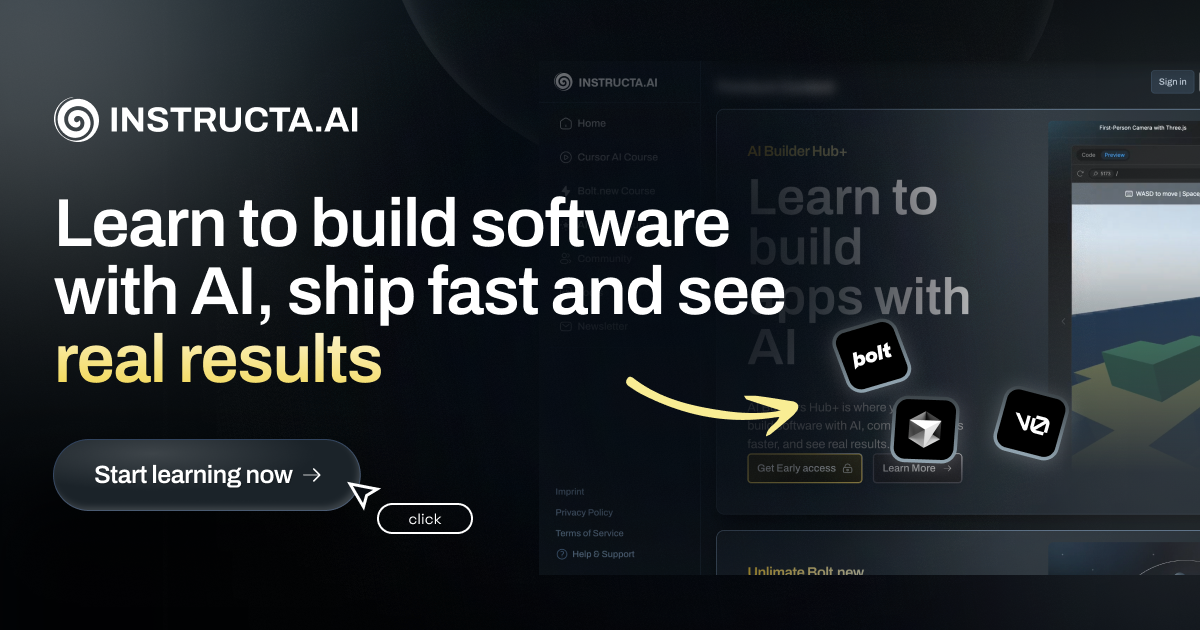
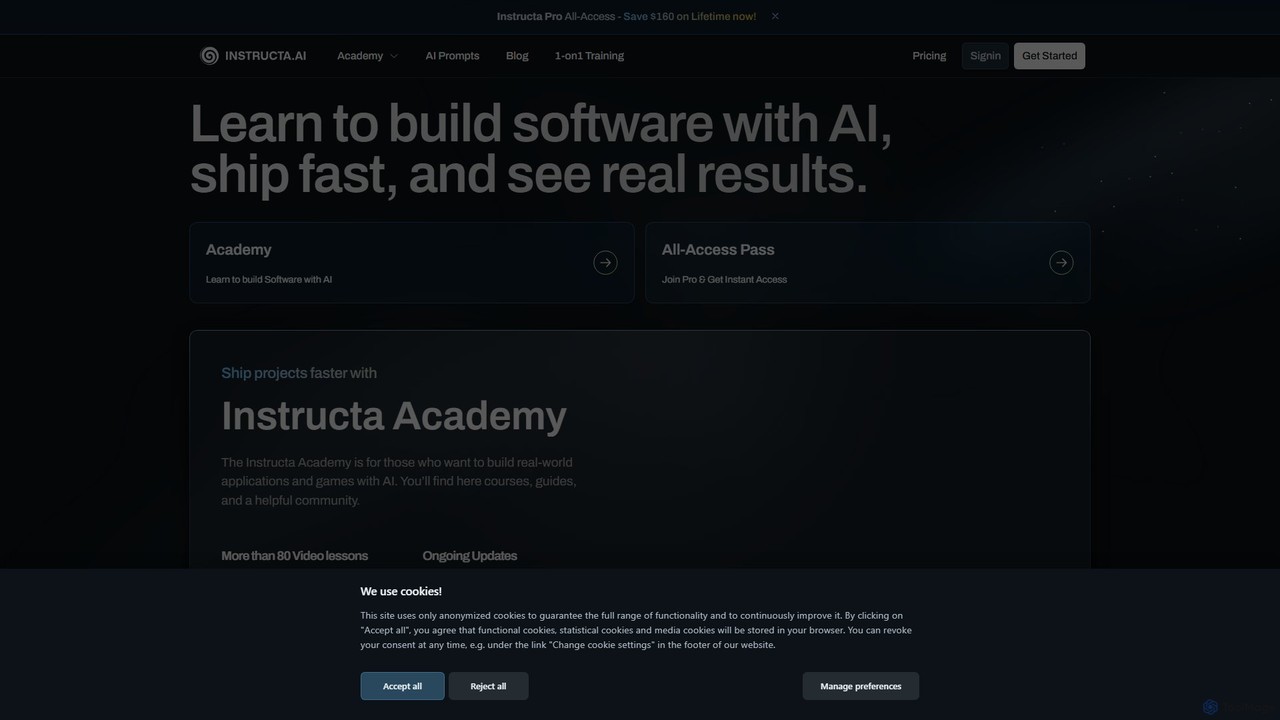
Instructa is an online learning academy for developers and AI builders. It offers a comprehensive suite of video …

25.8K

About Courses

AI Courses are structured educational programs designed to teach the theory, application, and practical skills of artificial intelligence. These platforms often utilize AI to create personalized learning paths, provide instant feedback on assignments, and offer interactive coding environments. The primary value of these courses is to equip learners, from beginners to experts, with the knowledge needed to develop, manage, or utilize AI technologies effectively, thereby boosting productivity and innovation. They bridge the gap between theoretical knowledge and real-world application through project-based learning.

Core Features

  • Adaptive Learning Paths: Curriculums that adjust in difficulty and topic based on the learner's performance and goals.
  • Interactive Coding Environments: Integrated sandboxes or notebooks that allow students to write and run code directly within the browser.
  • AI-Powered Feedback: Automated systems that provide real-time analysis and suggestions on code, assignments, and projects.
  • Expert-Led Instruction: Content created and taught by industry professionals and academic leaders in the AI field.
  • Verifiable Certifications: Official credentials awarded upon completion to validate newly acquired skills for career advancement.

Use Cases

AI Courses are essential for software developers aiming to specialize in machine learning, data scientists looking to master new algorithms, and business analysts needing to understand AI's impact on strategy. They are also invaluable for students, career changers entering the tech industry, and managers who need to lead AI-driven projects without deep technical expertise.

How to Choose

When selecting an AI Course, consider the curriculum's depth and relevance to your career goals. Evaluate the instructors' expertise and industry experience. Assess the platform's emphasis on hands-on projects and practical application. Finally, consider the value of the certification and the support provided by the learning community.

CoursesUse Cases

1

Upskilling for Software Developers

A software developer with experience in traditional programming wants to transition into a machine learning role. They enroll in an advanced AI course focusing on deep learning and computer vision. Using the platform's interactive coding notebooks and GPU-powered environments, they build and train several neural network models for image classification. The course project involves creating a real-world application, which they add to their portfolio, ultimately helping them secure a position as a Machine Learning Engineer.

2

AI Literacy for Business Leaders

A non-technical executive needs to understand how AI can be integrated into their company's strategy. They take a course titled 'AI for Business Leaders'. The curriculum covers core AI concepts, case studies of successful implementation, and frameworks for identifying AI opportunities. Through modules on ethics and project management, the executive learns how to lead AI initiatives responsibly and measure their ROI. This knowledge empowers them to make informed decisions and communicate effectively with their technical teams.

3

Career Transition into Data Science

An individual with a background in finance wants to switch careers to data science. They enroll in a comprehensive Data Science bootcamp that covers everything from Python programming and statistics to advanced machine learning models. The course structure emphasizes a portfolio of projects, including a capstone project where they analyze financial market data to predict stock trends. This hands-on experience and the verifiable certificate are crucial for demonstrating their new skills to potential employers, leading to a successful career change.

4

Mastering Generative AI for Creatives

A graphic designer wants to incorporate generative AI into their workflow. They take a specialized course on prompt engineering and AI art generation tools. The course provides structured lessons on how to write effective prompts, control image styles, and use advanced parameters. Through practical assignments, the designer learns to generate unique assets for marketing campaigns, concept art, and storyboards, significantly speeding up their creative process and expanding their service offerings to clients.

5

Enterprise-Wide AI Training Program

A large corporation identifies a skill gap in AI and data literacy across its departments. It partners with an AI course provider to roll out a company-wide training program. The program includes customized learning paths for different roles: technical tracks for engineers and introductory modules for sales and marketing teams. The platform's administrative dashboard allows the HR department to monitor employee progress, track completion rates, and measure the overall impact of the training on business productivity and innovation.

6

Academic Research in Advanced AI Topics

A PhD student is researching reinforcement learning. They supplement their university studies with a specialized online course taught by a leading researcher in the field. The course provides access to the latest research papers, advanced algorithms, and a community of fellow researchers. The interactive assignments allow them to experiment with complex models in a simulated environment, accelerating their understanding and contributing directly to their dissertation work. The certificate also adds credibility to their academic profile.

CoursesFrequently Asked Questions