Productivity Best in category 2 results Data Cleaning AI Tool

Popular AI tools in the Data Cleaning field of Productivity include MailTester.ninja、AlwaysLander, etc., helping you quickly improve efficiency.

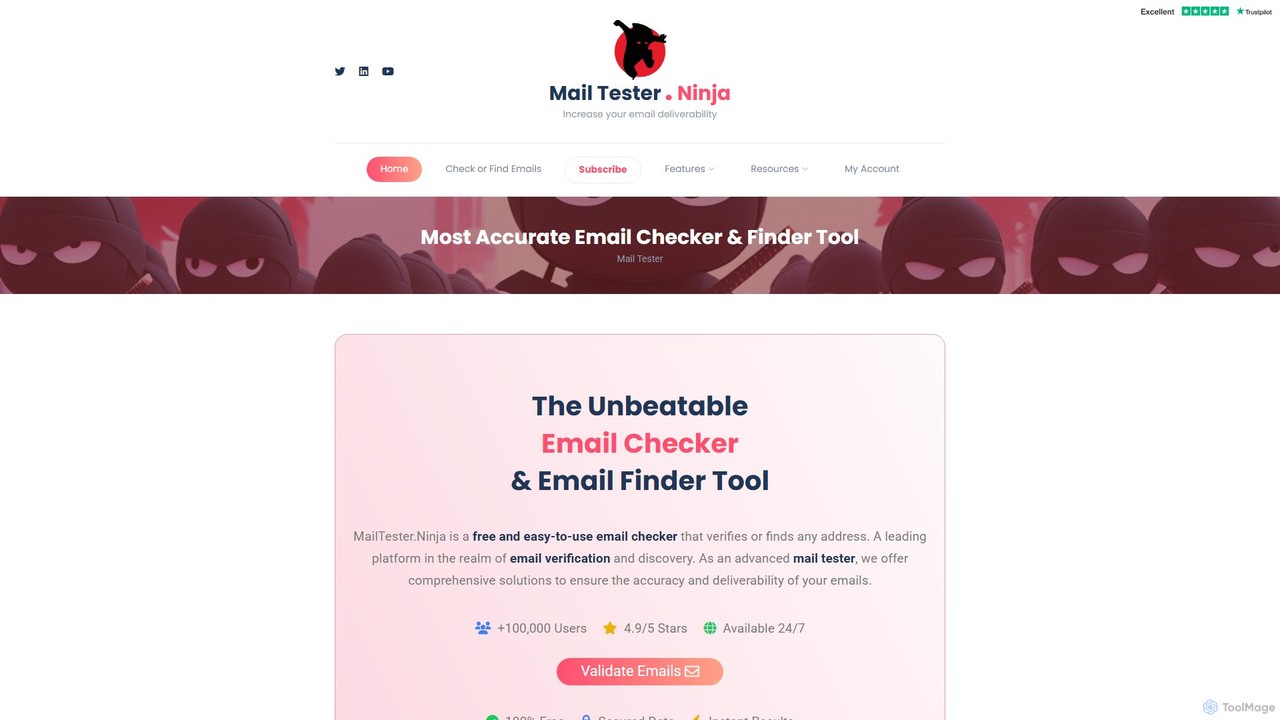
MailTester.ninja

MailTester.ninja

MailTester.ninja is an advanced email verification and finder tool designed to improve email deliverability. It offers real-time, highly …

86.3K
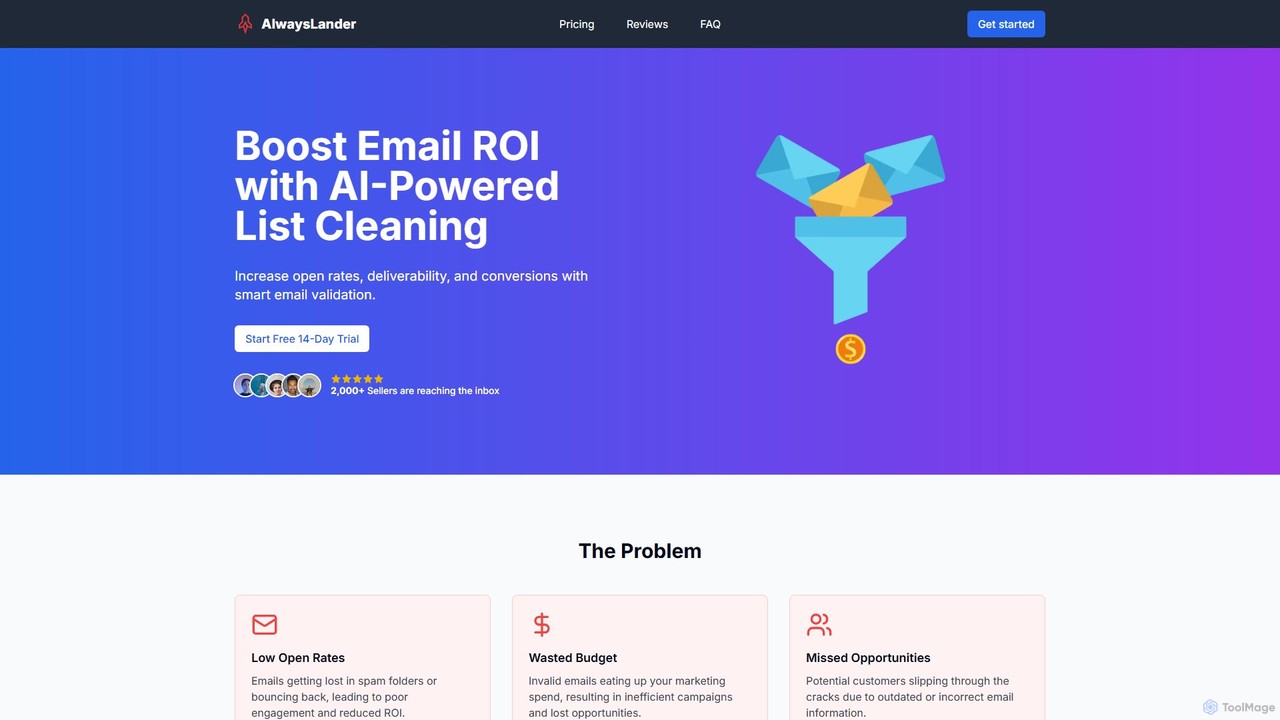
AlwaysLander

AlwaysLander

An AI-powered email validation and list cleaning service designed to boost email marketing ROI. It accurately identifies and …

2.5K

About Data Cleaning

AI Data Cleaning tools are a class of software that automates the process of identifying and correcting errors, inconsistencies, and missing information within datasets. These tools utilize machine learning algorithms to detect complex patterns, anomalies, and duplicates that are often missed by manual or rule-based methods. By ensuring high data quality and reliability, they form the critical first step for accurate data analysis, business intelligence, and the training of robust machine learning models. Their primary value is in drastically reducing the time and manual effort traditionally required for data preparation.

Core Features

  • Duplicate Detection & Merging: Intelligently identifies and consolidates redundant records based on fuzzy matching and contextual similarity.
  • Error Correction & Imputation: Automatically corrects typos and formatting errors, and predicts and fills in missing values based on existing data patterns.
  • Data Standardization & Normalization: Converts data fields like dates, addresses, and units into a consistent, uniform format across the entire dataset.
  • Anomaly & Outlier Detection: Flags unusual data points that deviate from the norm, which could indicate entry errors or significant events.

Applicable Scenarios

These tools are essential for data scientists, business analysts, marketing operations managers, and anyone working with raw data. For example, a marketing team uses them to deduplicate and cleanse customer lists from multiple sources before a campaign. A data science team relies on them to prepare a clean, reliable dataset for training a predictive model, effectively preventing the 'garbage in, garbage out' problem.

Selection Criteria

When choosing an AI Data Cleaning tool, evaluate its support for various data sources (e.g., CSV, SQL databases, APIs), the sophistication of its automation and validation rules, its ability to handle large datasets (scalability), and its integration capabilities with your existing data stack, such as BI platforms or data warehouses.

Data CleaningUse Cases

1

Deduplicating Marketing Campaign Lists

A marketing operations specialist is tasked with merging customer lists from a CRM, a webinar platform, and a trade show event for a major product launch campaign. The raw, combined list contains thousands of duplicate entries with variations in names, email addresses, and company names (e.g., 'Corp.' vs. 'Corporation'). Using an AI Data Cleaning tool, they upload the list and the tool's fuzzy matching algorithms automatically identify and flag potential duplicates. The specialist can then review and merge these records in batches, consolidating contact information and ensuring each unique prospect receives only one email, which improves campaign metrics and prevents customer annoyance.

2

Standardizing E-commerce Product Catalogs

An e-commerce manager receives product data feeds from multiple suppliers, each with its own formatting for sizes, colors, and categories (e.g., 'Large', 'L', 'Lg'; 'Blue', 'Navy'). This inconsistency leads to poor filtering and search results on the website. They use an AI Data Cleaning tool to process these feeds. The tool identifies variations and suggests standardization rules, such as mapping all size variations to 'L' and color variations to 'Blue'. By applying these rules automatically, the manager creates a clean, unified product catalog, improving the customer's shopping experience and increasing conversion rates.

3

Correcting Errors in Financial Transaction Data

A financial analyst needs to prepare a quarterly report, but the raw transaction data from various systems contains numerous errors: inconsistent date formats (MM/DD/YY vs. YYYY-MM-DD), typos in client names, and missing currency codes. Manually correcting these would take days. The analyst uses an AI Data Cleaning tool to automatically parse and standardize all date formats into a single ISO format. The tool also uses pattern recognition to correct common typos and flags transactions with missing currency codes for manual review. This reduces the data preparation time by over 80%, allowing the analyst to focus on analysis rather than manual data entry.

4

Preparing Datasets for Machine Learning Models

A data scientist is building a predictive model to forecast customer churn. The initial dataset, extracted from various logs and databases, is messy. It contains missing values in key feature columns, outliers from data entry errors, and inconsistent categorical labels. Before training the model, they use an AI Data Cleaning tool to perform critical preprocessing. The tool intelligently imputes missing values using statistical methods (like mean or median), identifies and allows for the removal of outliers, and consolidates categorical labels (e.g., 'USA', 'U.S.', 'United States' into one). This ensures the training data is clean and consistent, leading to a more accurate and reliable predictive model.

5

Validating and Cleaning Survey Responses

A market research firm collects thousands of responses from an online survey. The raw data includes free-text answers with typos, inconsistent formatting in demographic fields (e.g., age entered as 'thirty' instead of '30'), and invalid entries. A research analyst uses an AI Data Cleaning tool to streamline the validation process. The tool automatically converts textual numbers to numeric format, standardizes responses for multiple-choice questions, and flags nonsensical or incomplete free-text answers for review. This ensures the integrity of the survey data, leading to more accurate statistical analysis and reliable insights for their client reports.

6

Consolidating Public Health Data from Multiple Sources

A public health official needs to analyze disease outbreak patterns by combining data from different regional health departments. Each department submits data in slightly different formats, with variations in how patient addresses are recorded and how disease names are spelled. Using an AI Data Cleaning tool, the official can automatically parse and standardize the address components (street, city, zip code) into a uniform structure. The tool also identifies and corrects spelling variations of diseases (e.g., 'Covid-19' vs. 'COVID 19'). This consolidation creates a single, clean, and reliable dataset, enabling accurate geographical mapping and timely analysis of the outbreak's spread.

Data CleaningFrequently Asked Questions