
ToolMage
Sign in

Best 1 Deal Management AI tools for Productivity

Popular Deal Management AI tools in Productivity include VentureIQ, helping you work more efficiently.

VentureIQ
Freemium

VentureIQ

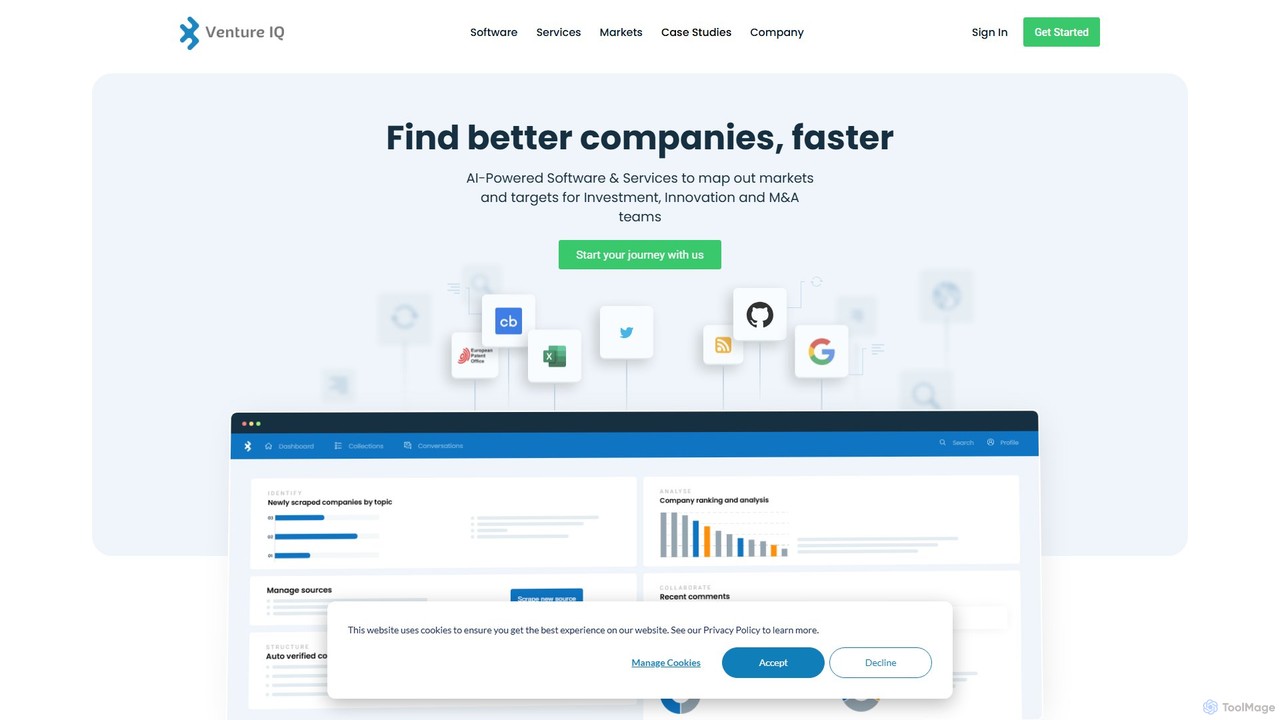
VentureIQ is an AI-powered platform for M&A, investment, and innovation teams. It combines software and services to help users discover, analyze, and manage target companies more efficiently. The platform automates deal sourcing, enriches company data, and facilitates team collaboration to find better companies faster.

Market Research
Visits 7KFavorites 153Likes 155

About Deal Management

AI Deal Management tools are specialized platforms designed to optimize the entire sales cycle using artificial intelligence. These tools analyze sales data, communication patterns, and customer interactions to provide predictive insights and automate administrative tasks. They empower sales teams to prioritize high-value leads, forecast revenue more accurately, and identify at-risk deals before they are lost. By integrating directly with existing CRMs, these platforms enhance productivity by focusing sales efforts on activities that generate revenue.

Core Features

  • Predictive Lead & Opportunity Scoring: Uses AI to analyze historical data and engagement signals to rank leads and deals by their likelihood to close.
  • Deal Health Monitoring: Tracks communication frequency, sentiment, and stakeholder engagement to provide a real-time health score for each deal.
  • Automated Activity Capture: Automatically logs emails, meetings, and calls into the CRM, eliminating manual data entry for sales reps.
  • AI-Powered Sales Forecasting: Generates more accurate revenue forecasts by analyzing the pipeline, historical performance, and deal-specific risk factors.
  • Next-Best-Action Recommendations: Suggests specific, data-driven actions for sales reps to take to advance deals through the pipeline.

Use Cases

These tools are primarily used by B2B sales organizations, from fast-growing startups to large enterprises. Sales representatives use them to prioritize their daily activities, while sales managers rely on them for accurate forecasting and team performance coaching. Revenue Operations (RevOps) teams also leverage these platforms to analyze sales process efficiency and ensure data hygiene.

How to Choose

When selecting an AI Deal Management tool, prioritize its integration capabilities with your existing CRM (e.g., Salesforce, HubSpot). Evaluate the transparency and customizability of its AI models to ensure they align with your business logic. Also, consider the user interface's simplicity to encourage adoption by your sales team, and verify the platform's data security and compliance standards.

Deal Management use cases

1

Prioritizing High-Potential Leads for Sales Reps

A sales representative at a B2B software company starts their day with a dashboard that has automatically scored and prioritized all new leads. Instead of manually sifting through hundreds of contacts, they focus on the top 20% identified by the AI as having the highest purchase intent based on firmographics, website engagement, and email interactions. This allows the rep to spend their valuable time crafting personalized outreach for the most promising prospects, leading to a higher conversion rate from lead to opportunity and a shorter sales cycle.

2

Generating Accurate Quarterly Sales Forecasts

A sales manager needs to provide an accurate revenue forecast to leadership. Instead of relying solely on subjective estimates from their team, they use an AI deal management tool. The platform analyzes the entire sales pipeline, considering factors like deal health scores, historical conversion rates for similar deals, and recent engagement levels. The AI generates a weighted forecast that is more realistic than manual roll-ups, allowing the manager to set better expectations, allocate resources effectively, and identify potential shortfalls early in the quarter.

3

Proactively Identifying At-Risk Deals

An enterprise account executive is managing a large, complex deal. The AI deal management tool flags the opportunity as 'at-risk' because it detected a significant drop in email communication from the client's key decision-maker. The system automatically suggests a 're-engagement' action. Alerted to this subtle change, the executive immediately schedules a check-in call, uncovers a new stakeholder concern, and addresses it proactively. This intervention, prompted by the AI, prevents the deal from stalling and keeps it on track for a successful close.

4

Automating Sales Activity Logging for Data Hygiene

A RevOps team is struggling with incomplete data in their CRM because sales reps often forget to log calls and meetings. By implementing an AI deal management tool, all email exchanges, calendar events, and calls are automatically captured and associated with the correct contact and opportunity records. This not only saves each rep hours of administrative work per week but also provides the RevOps team with clean, comprehensive data. They can now generate accurate reports on sales activities, analyze pipeline velocity, and identify process bottlenecks with confidence.

5

Guiding New Sales Hires with AI Recommendations

A company is onboarding a new cohort of sales development representatives (SDRs). To accelerate their ramp-up time, they use an AI deal management tool that provides 'next-best-action' suggestions. For each lead, the AI recommends whether to call, email, or connect on social media, and even suggests talking points based on the prospect's industry and persona. This acts as a digital coach, guiding new hires to follow proven sales plays from day one. As a result, they become productive faster, adhere to best practices, and achieve their quotas sooner.

6

Optimizing the Sales Funnel for RevOps Teams

A Revenue Operations (RevOps) team wants to understand why deals are stalling in the 'proposal' stage. They use the analytics module of their AI deal management tool to analyze thousands of data points. The AI identifies a pattern: deals without executive sponsor engagement at this stage are 50% more likely to fail. Armed with this insight, the RevOps team works with sales leadership to implement a new process requiring executive check-ins before a proposal is sent. This data-driven change helps improve conversion rates at a critical funnel stage and increases overall revenue predictability.

Deal Management FAQ

What are AI Deal Management tools?

AI Deal Management tools are software platforms that use artificial intelligence to enhance and automate sales processes. They go beyond traditional CRMs by actively analyzing data to provide predictive insights. Key functions include scoring leads based on their likelihood to convert, monitoring the health of ongoing deals by tracking communications, forecasting sales outcomes with greater accuracy, and recommending the next best actions for sales reps to take. Their primary goal is to increase sales productivity and effectiveness.

How do AI Deal Management tools differ from traditional CRMs?

A traditional CRM is primarily a system of record, a database for storing customer information and manually logged activities. An AI Deal Management tool is a system of intelligence that sits on top of or integrates with a CRM. While a CRM tells you what happened, an AI tool tells you why it happened and what is likely to happen next. It automates data entry, analyzes communication patterns that a CRM cannot, provides predictive scores, and actively guides sales reps, transforming the CRM from a passive database into an active, intelligent sales assistant.

What are the main benefits of using AI for deal management?

The primary benefits of using AI in deal management are increased efficiency and improved effectiveness. Key advantages include:

  • Increased Sales Productivity: Automating tasks like data entry and activity logging frees up reps to spend more time selling.
  • More Accurate Forecasting: AI analysis of the pipeline provides more reliable revenue predictions than manual methods.
  • Higher Win Rates: By prioritizing the best leads and identifying at-risk deals early, teams can focus their efforts where they will have the most impact.
  • Improved Sales Coaching: Managers can use data-driven insights about rep activities and deal health to provide more targeted and effective coaching.
How should I choose an AI Deal Management platform?

When choosing a platform, consider these key factors:

  • CRM Integration: Ensure it integrates seamlessly with your existing CRM to avoid data silos and manual work.
  • Ease of Use: The tool should be intuitive for sales reps to use. If it's too complex, adoption will be low and you won't see the benefits.
  • AI Model Customization: Check if the AI models can be tailored to your specific industry, sales process, and business data for more relevant insights.
  • Data Security and Privacy: Verify that the platform adheres to strict security protocols and data privacy regulations, as it will handle sensitive customer information.
  • Analytics and Reporting: Evaluate its ability to provide clear, actionable insights that help managers and RevOps teams make strategic decisions.
Which roles in a company benefit most from AI Deal Management?

While the entire sales organization benefits, specific roles see distinct advantages:

  • Sales Representatives (SDRs/AEs): Benefit from automated data entry, lead prioritization, and next-best-action guidance, allowing them to focus on selling and hitting quotas.
  • Sales Managers: Gain access to more accurate forecasting, real-time deal health visibility, and data-driven insights for coaching their teams effectively.
  • Revenue Operations (RevOps): Use the clean, comprehensive data and analytics to optimize the sales process, improve data hygiene, and identify strategic growth opportunities.
  • Sales Leadership (VPs/CROs): Rely on predictable revenue forecasts and pipeline visibility to make informed strategic decisions for the business.