ToolMage
Sign in

Best 4 Document Review AI tools for Productivity

Popular Document Review AI tools in Productivity include RentSense, AI Contract Guardian, Contractra, and Leaseify, helping you work more efficiently.

RentSense
Freemium

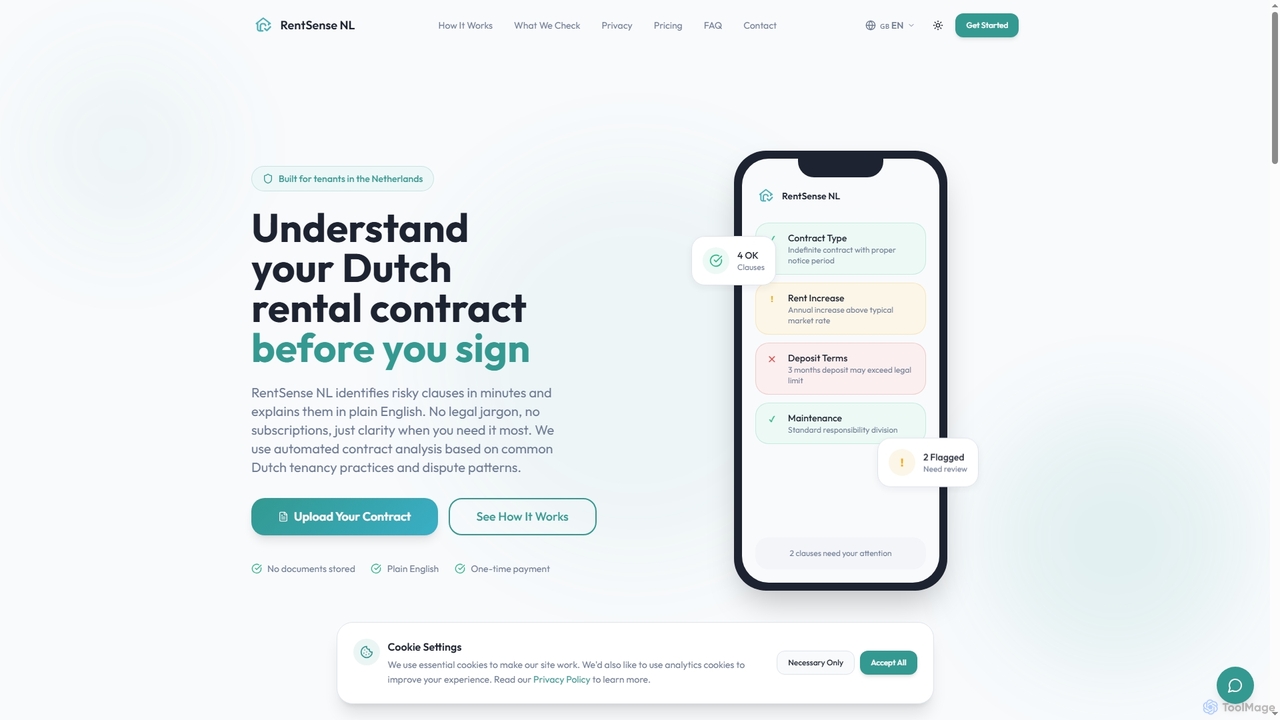
RentSense

RentSense is an AI-powered tool designed for tenants in the Netherlands to quickly understand their Dutch rental contracts. It identifies potentially risky clauses, explains them in plain English, and offers clarity on key terms like rent increases, deposits, and maintenance, all while ensuring user privacy by not storing documents.

Contract Analysis
Visits 4.6KFavorites 39Likes 37
Contractra
Paid

Contractra

Contractra is an AI-powered contract intelligence tool designed for professionals to quickly analyze contract risks. It identifies hidden risks, unfair clauses, and missing protections in seconds, providing a clear risk score and plain-language explanations. Ideal for freelancers, agencies, and startups, Contractra helps users make informed decisions before signing critical business agreements.

Risk Management
Visits 4.4KFavorites 29Likes 28
Leaseify
Freemium

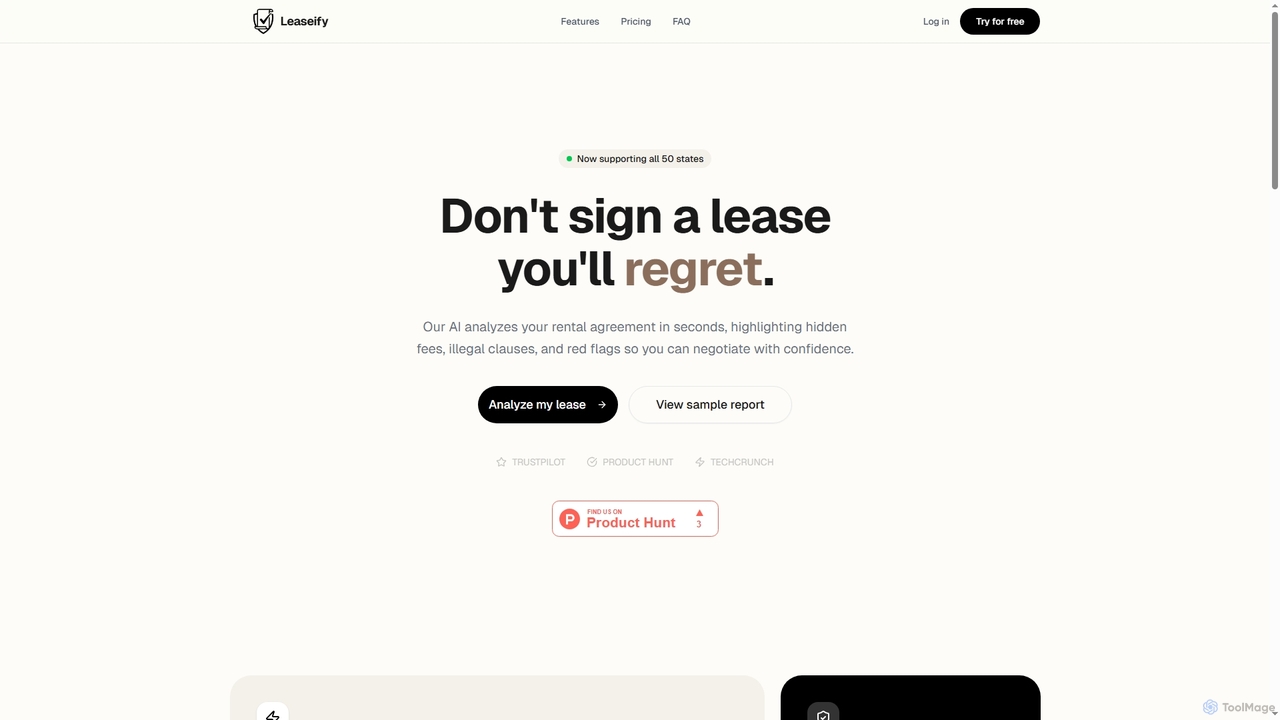
Leaseify

Leaseify is an AI-powered tool that instantly analyzes rental agreements, identifying hidden fees, illegal clauses, and potential red flags. It compares your lease against thousands of local laws and regulations, providing clear, plain-English summaries to empower confident negotiation and protect tenant rights.

Lease Analysis
Visits 4.4KFavorites 102Likes 110
AI Contract Guardian
Paid

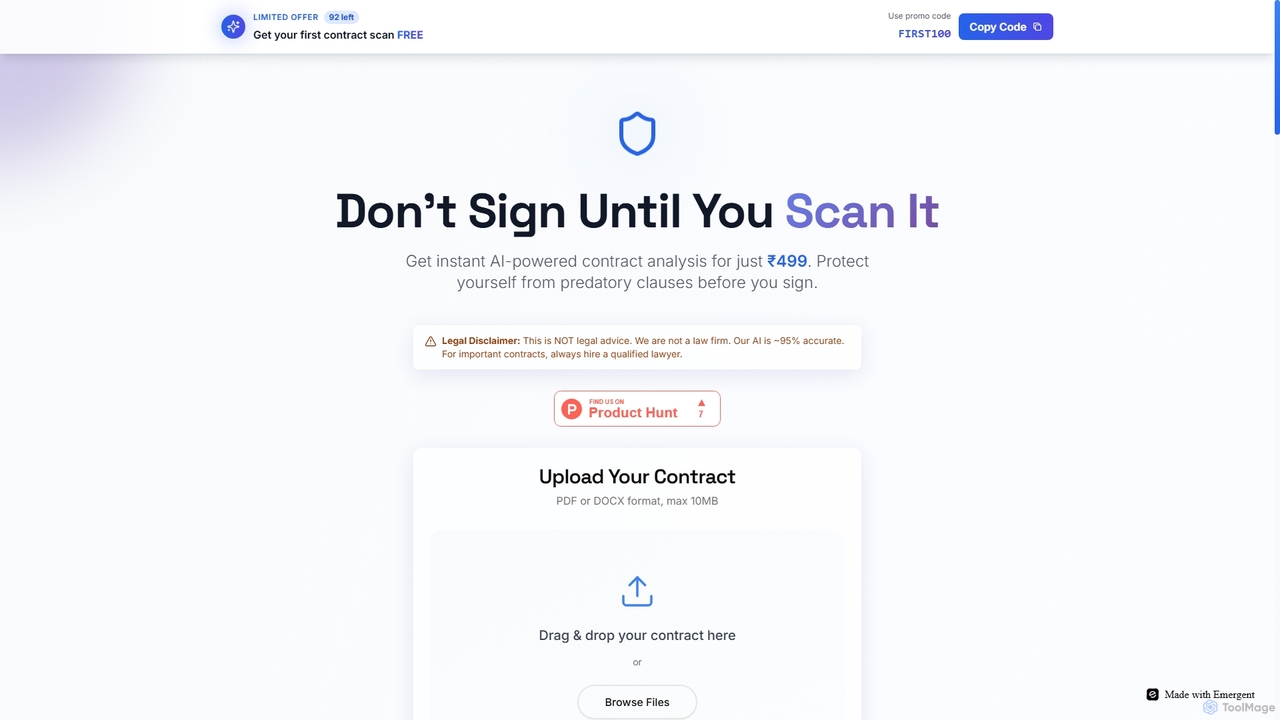
AI Contract Guardian

AI Contract Guardian is an AI-powered tool designed to instantly analyze contracts, helping freelancers and businesses identify over 15 common red flags and predatory clauses before signing. It provides quick, plain English risk assessments.

Risk Management
Visits 4.5KFavorites 120Likes 119

About Document Review

Document Review tools are AI-powered platforms designed to automate and enhance the process of analyzing, understanding, and extracting information from various types of documents. As a specialized segment within productivity tools, they leverage advanced Natural Language Processing (NLP) and machine learning to rapidly process large volumes of text, identify key data points, and flag anomalies or specific clauses. These tools significantly reduce manual effort, improve accuracy, and accelerate decision-making in document-intensive workflows, making them indispensable for legal, financial, and compliance sectors.

Core Features

  • Automated Clause Extraction: Automatically identifies and extracts specific clauses, terms, and conditions from contracts, agreements, and legal documents.
  • Anomaly Detection: Flags inconsistencies, missing information, or deviations from standard templates or predefined rules within documents.
  • Redaction & Anonymization: Intelligently identifies and redacts sensitive personal information (PII) or confidential data to ensure privacy and compliance.
  • Compliance Checking: Compares document content against regulatory standards, internal policies, or legal frameworks to ensure adherence.
  • Semantic Search & Summarization: Enables users to quickly find relevant information across vast document repositories and generate concise summaries of complex texts.

Applicable Scenarios

Legal professionals use these tools to expedite contract analysis, due diligence, and e-discovery processes, dramatically cutting down review times. Financial institutions apply them for loan agreement scrutiny, risk assessment, and regulatory reporting, ensuring accuracy and compliance. Businesses across sectors utilize document review AI for policy enforcement, vendor contract management, and internal audit preparation, streamlining operations and mitigating potential liabilities.

How to Choose

When selecting a Document Review tool, consider its accuracy in extracting relevant data and identifying anomalies, especially for your specific document types. Evaluate its integration capabilities with existing enterprise systems like DMS or CRM. Assess the level of customization offered for rules, templates, and workflows. Finally, prioritize robust security features and compliance with data privacy regulations, given the sensitive nature of documents typically processed.

Featured tool rankings

Document Review use cases

1

Expediting Legal Contract Analysis

Legal teams, particularly in corporate law or M&A, face overwhelming volumes of contracts during due diligence. An AI document review tool can automatically identify and extract critical clauses like indemnification, termination, and change of control from hundreds of agreements, highlighting discrepancies or missing terms. This reduces manual review time by up to 70%, allowing lawyers to focus on strategic analysis rather than tedious data extraction.

2

Ensuring Regulatory Compliance in Finance

Financial institutions must adhere to strict regulations like GDPR, AML, or KYC. Compliance officers use document review AI to scan client onboarding documents, loan agreements, and internal policies for adherence to the latest regulatory standards. The tool can flag non-compliant language or missing disclosures, ensuring the organization avoids hefty fines and maintains a strong regulatory posture.

3

Automating PII Redaction for Data Privacy

Organizations handling sensitive customer data, such as healthcare providers or government agencies, need to redact Personally Identifiable Information (PII) before sharing documents or responding to data access requests. AI document review tools can automatically detect names, addresses, social security numbers, and other PII across thousands of documents, redacting them accurately and consistently, thereby ensuring compliance with privacy laws like HIPAA or CCPA.

4

Streamlining Vendor Contract Management

Procurement departments manage numerous vendor contracts, often with varying terms and renewal dates. An AI document review solution can centralize these contracts, extract key terms like service level agreements (SLAs), payment schedules, and expiration dates. This enables proactive management, identifies unfavorable clauses, and ensures all agreements align with company policies, preventing costly oversights.

5

Enhancing Internal Audit & Risk Assessment

Internal audit teams need to review vast amounts of operational documents, policies, and communications to identify potential risks or non-compliance. Document review AI can rapidly scan these documents for specific keywords, patterns, or anomalies that indicate fraud, policy violations, or operational inefficiencies. This significantly accelerates the audit process and provides a more comprehensive risk assessment.

6

Accelerating E-Discovery in Litigation

During litigation, legal teams must review millions of documents to find relevant evidence. AI-powered document review tools can quickly process and categorize documents, identify privileged information, and highlight documents relevant to specific legal issues. This drastically reduces the time and cost associated with e-discovery, making the litigation process more efficient and effective.

Document Review FAQ

What are AI Document Review tools?

AI Document Review tools are software applications that use artificial intelligence, primarily Natural Language Processing (NLP) and machine learning, to automate and assist in the analysis, extraction, and management of information from various documents. They are designed to process large volumes of text, identify patterns, extract specific data points, and flag relevant content much faster and more accurately than manual review, significantly enhancing productivity in document-intensive tasks.

How do AI Document Review tools differ from simple text search tools?

Unlike simple text search tools that only find exact keyword matches, AI Document Review tools understand the context and meaning of text. They can identify semantic relationships, extract specific entities (like dates, names, clauses), detect sentiment, and even learn from user feedback to improve accuracy. This allows them to perform complex tasks like anomaly detection, compliance checking, and intelligent summarization, which go far beyond basic keyword retrieval.

What types of documents can AI Document Review tools process?

AI Document Review tools are highly versatile and can process a wide range of document types. This includes legal contracts, financial reports, policy documents, emails, invoices, research papers, medical records, and more. They typically support various formats such as PDF, Word documents, scanned images (via OCR), and plain text, making them adaptable to diverse industry needs and data sources.

How can AI Document Review tools ensure data security and privacy?

Data security and privacy are paramount for AI Document Review tools, especially when handling sensitive information. Reputable tools employ robust security measures including end-to-end encryption, access controls, audit trails, and compliance with industry standards like ISO 27001 and GDPR. Many also offer on-premise deployment options or secure cloud environments, along with features like automated redaction and anonymization, to protect confidential data.

What are the key benefits of using AI for Document Review?

The primary benefits of using AI for Document Review include significant time and cost savings by automating tedious manual tasks, drastically improving accuracy by reducing human error, and enhancing consistency across large document sets. These tools also enable faster decision-making, improve compliance by proactively identifying risks, and allow professionals to reallocate their time to more strategic, high-value activities, ultimately boosting overall productivity.