
Omnilert
Omnilert is a leader in AI-powered visual gun detection and emergency notification systems. It transforms existing security cameras …
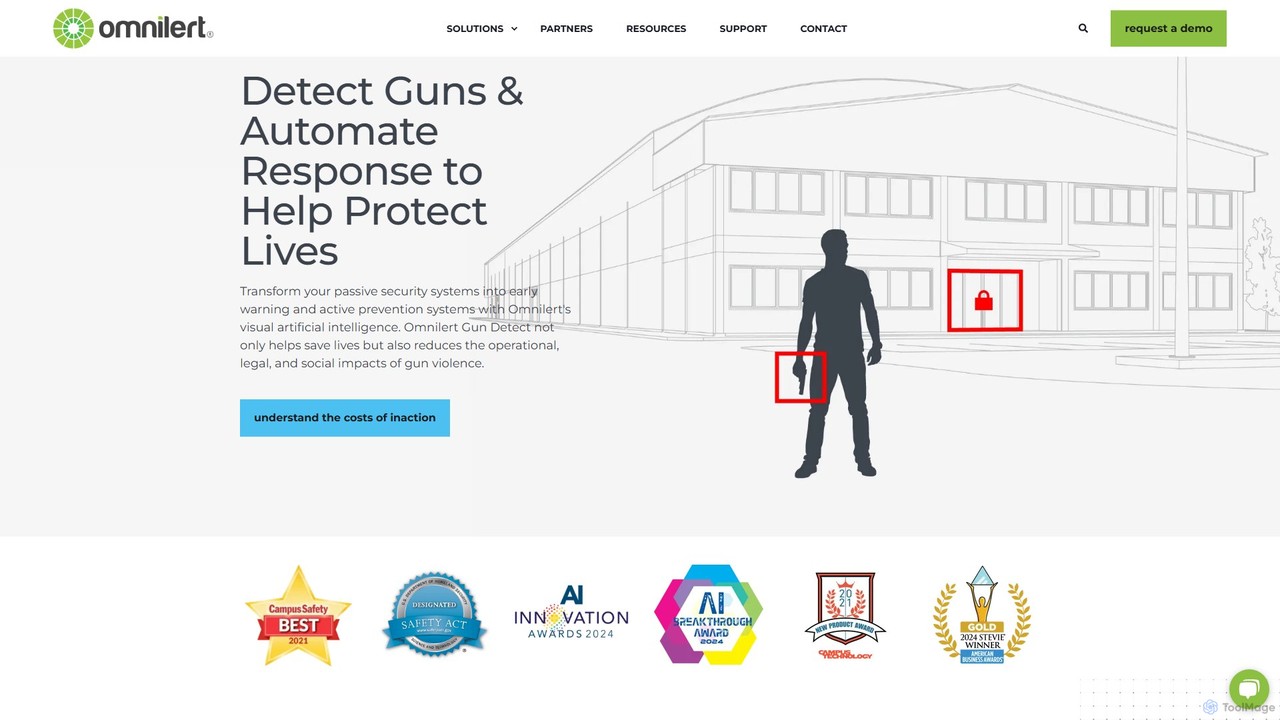
Omnilert is a leader in AI-powered visual gun detection and emergency notification systems. It transforms existing security cameras into proactive threat detection tools, capable of identifying firearms in real-time. The system combines AI monitoring with human verification to ensure accuracy, triggering automated responses like lockdowns and alerting first responders. This provides critical early warnings to help protect lives and mitigate the impact of gun violence across various industries.
About Emergency Management
Emergency Management AI tools are a specialized class of productivity software designed to enhance decision-making and operational efficiency during crises. These tools leverage machine learning and real-time data analytics to process vast amounts of information from sources like sensors, satellites, and social media. This enables response teams to predict event trajectories, optimize resource allocation, and automate critical communications. Unlike general productivity applications, they are built for high-stress, time-sensitive environments where data accuracy and speed are paramount for protecting lives and property.
Core Features
- Predictive Analytics: Forecasts the path and impact of events like hurricanes or wildfires, enabling proactive preparation.
- Real-time Situational Awareness: Aggregates data into a unified dashboard, providing a comprehensive operational picture.
- Automated Communication: Disseminates targeted alerts and updates to affected populations and response teams automatically.
- Resource Optimization: Recommends the most effective deployment of personnel, equipment, and supplies based on real-time needs.
- Automated Damage Assessment: Uses computer vision to analyze drone or satellite imagery to quickly evaluate post-disaster damage.
Use Cases
These tools are primarily used by government agencies (such as emergency services and public health departments), non-governmental organizations (like the Red Cross), and large corporations for business continuity and crisis management. Common applications include coordinating responses to natural disasters, managing public health emergencies, and monitoring large-scale public events for security threats.
How to Choose
When selecting an Emergency Management AI tool, consider its data integration capabilities with your existing systems (e.g., GIS, sensor networks). Evaluate its scalability to handle large-scale events and the intuitiveness of its user interface for use under pressure. Finally, ensure it meets stringent security and compliance standards for handling sensitive information.
Emergency ManagementUse Cases
Predicting Wildfire Spread for Evacuation Planning
An emergency management agency is tasked with protecting communities from a fast-moving wildfire. Using an AI tool, they input real-time data including wind speed, topography, and vegetation dryness. The AI model runs thousands of simulations to predict the fire's most likely paths and spread rate over the next 12, 24, and 48 hours. This provides incident commanders with a clear, data-driven forecast, allowing them to issue precise and timely evacuation orders for specific neighborhoods, rather than overly broad warnings. This targeted approach improves public compliance and optimizes the deployment of firefighting resources to the most critical areas.
Automating Post-Earthquake Damage Assessment
After a major earthquake, search and rescue teams need to quickly identify the most damaged areas. Instead of manual surveys which are slow and dangerous, they deploy a fleet of drones. An AI platform automatically processes thousands of aerial images captured by the drones. Using computer vision, the system identifies and maps collapsed buildings, blocked roads, and other critical infrastructure damage. A detailed damage map is generated within hours, allowing rescue efforts to be prioritized and directed to locations where they are most needed, significantly accelerating the response time.
Optimizing Emergency Medical Service Dispatch
In a large city, an emergency dispatcher receives multiple calls simultaneously during a major traffic accident. An AI dispatch system analyzes real-time traffic data, the location of available ambulances, and the reported severity of injuries from callers. It instantly recommends the optimal ambulance to dispatch to each victim to minimize travel time. The system also predicts potential changes in demand across the city based on the incident, suggesting repositioning of other units to maintain coverage. This results in faster medical attention for critical patients and more efficient use of the entire ambulance fleet.
Monitoring Social Media for Situational Awareness
During a flash flood, an Emergency Operations Center (EOC) needs to understand the situation on the ground beyond official reports. They use an AI tool that monitors public social media posts, filtering for relevant keywords and locations. The tool uses Natural Language Processing (NLP) to identify credible reports of trapped individuals, infrastructure damage, and emerging hazards. It automatically plots these reports on a map and analyzes sentiment to gauge public panic levels. This provides the EOC with a real-time, crowd-sourced layer of intelligence, helping them identify and respond to incidents that might otherwise go unreported.
Managing Corporate Supply Chain Disruptions
A global manufacturing company's key supplier is located in a region threatened by a hurricane. Their business continuity team uses an AI platform to assess the risk. The tool analyzes the hurricane's projected path, potential impact on the supplier's factory and local logistics infrastructure, and identifies alternative suppliers in its database. It simulates the financial and operational impact of switching suppliers and recommends the most resilient course of action. This allows the company to proactively reroute shipments and secure alternative sources, minimizing production delays and financial losses.
Automating Public Health Crisis Communications
During a pandemic, a public health agency is overwhelmed with inquiries from the public. They deploy an AI-powered chatbot on their website and social media channels. The chatbot is trained on official health guidelines and FAQs. It provides instant, accurate answers 24/7 to common questions about symptoms, testing locations, and safety protocols. This frees up human staff to handle more complex cases and reduces the spread of misinformation. The AI also analyzes the questions being asked to identify emerging public concerns, helping the agency tailor its public messaging more effectively.