ToolMage
Sign in

Best 1 Employee Monitoring AI tools for Productivity

Popular Employee Monitoring AI tools in Productivity include Intelogos, helping you work more efficiently.

Intelogos
Freemium

Intelogos

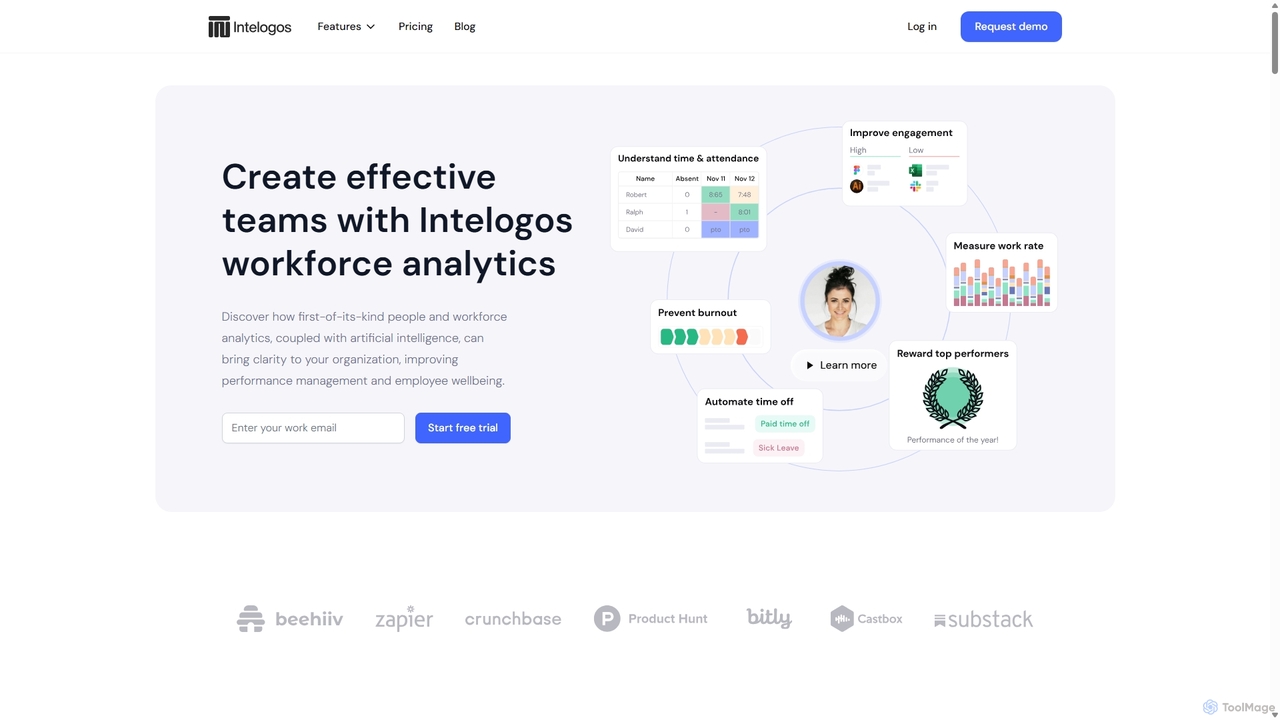
Intelogos is an AI-powered workforce analytics and performance management platform designed to enhance team effectiveness and business profitability. It provides deep insights into employee performance, workload, and wellbeing through privacy-conscious data collection. The platform offers actionable, AI-driven recommendations for CEOs, HR managers, team leads, and employees to foster a culture of continuous improvement, prevent burnout, and streamline operations.

Analytics
Visits 9.4KFavorites 147Likes 123

About Employee Monitoring

Employee Monitoring tools are AI-powered solutions designed to observe, analyze, and report on employee activities and performance. These tools leverage artificial intelligence to track digital interactions, time spent on tasks, and application usage, providing insights into productivity patterns and potential security risks. They help organizations optimize workflows, ensure compliance, and manage remote teams effectively while aiming to balance oversight with employee privacy.

Core Features

  • Activity Tracking: Monitors application usage, website visits, and keyboard/mouse activity to assess engagement.
  • Performance Analytics: Generates reports on individual and team productivity, identifying trends and areas for improvement.
  • Time Tracking: Automatically records working hours, breaks, and project-specific time allocation.
  • Anomaly Detection: Uses AI to flag unusual behavior that might indicate security breaches or policy violations.
  • Compliance Reporting: Provides audit trails and data necessary for regulatory adherence and internal policy enforcement.

Use Cases

Organizations utilize AI employee monitoring for various strategic purposes, from enhancing operational efficiency to safeguarding sensitive data. It is particularly valuable for businesses managing distributed workforces, ensuring consistent productivity and adherence to company policies across different locations. These tools also assist in identifying training needs and optimizing resource deployment.

How to Choose

When selecting an AI employee monitoring tool, consider its feature set (e.g., real-time vs. historical data, specific activity tracking), data privacy and compliance capabilities, ease of integration with existing systems, and scalability for your team size. Evaluate the reporting granularity, user interface, and the vendor's reputation for ethical data handling and support.

Employee Monitoring use cases

1

Optimizing Remote Team Productivity

For companies with remote or hybrid workforces, AI employee monitoring tools provide objective data on work patterns and engagement. Managers can track project progress, identify bottlenecks, and ensure fair workload distribution, helping to maintain productivity and accountability across geographically dispersed teams without constant manual check-ins.

2

Enhancing Data Security and Compliance

IT security teams use these tools to detect and prevent insider threats or data breaches. By monitoring unusual file access, unauthorized application usage, or suspicious communication patterns, AI can alert administrators to potential risks, ensuring sensitive company data remains secure and regulatory compliance (e.g., GDPR, HIPAA) is maintained through audit trails.

3

Improving Workflow Efficiency in Call Centers

Call center supervisors can leverage AI monitoring to analyze agent performance, call handling times, and application usage during customer interactions. This data helps identify training gaps, optimize script adherence, and streamline workflows, leading to improved customer service quality and operational efficiency.

4

Fair Resource Allocation and Workload Management

Project managers and team leads use monitoring data to understand how time is spent across different tasks and projects. This insight enables more equitable distribution of work, prevents employee burnout by identifying overloaded individuals, and informs better resource planning for future projects, ensuring optimal team utilization.

5

Ensuring Software License Compliance

Organizations can use employee monitoring to track software usage across their network. This helps ensure that expensive software licenses are being utilized effectively and that employees are not using unauthorized or unlicensed software, preventing legal issues and optimizing IT spending.

6

Identifying Training Needs and Performance Gaps

HR departments and team leaders can analyze performance data to pinpoint areas where employees might need additional training or support. By observing patterns in task completion, software proficiency, or time management, they can proactively offer targeted development programs, fostering continuous improvement and skill enhancement.

Employee Monitoring FAQ

What are AI Employee Monitoring tools?

AI Employee Monitoring tools are software solutions that use artificial intelligence to track, analyze, and report on employee activities and performance in a digital workspace. They go beyond basic time tracking by leveraging AI to identify patterns, detect anomalies, and provide deeper insights into productivity, security, and compliance, often automating data collection and analysis.

How do AI Employee Monitoring tools work?

These tools typically work by installing agents on employee devices (computers, sometimes mobile). They collect data on application usage, website visits, keyboard/mouse activity, and sometimes communication. AI algorithms then process this data to identify trends, measure productivity, flag suspicious behavior, and generate comprehensive reports, often in real-time or near real-time.

What are the main benefits of using AI Employee Monitoring?

The main benefits include enhanced productivity insights, improved data security through anomaly detection, better compliance with industry regulations, optimized resource allocation, and more effective management of remote teams. These tools provide objective data to inform management decisions, identify training needs, and streamline operations.

What are the ethical considerations when implementing Employee Monitoring AI?

Ethical considerations are crucial. Organizations must prioritize transparency, informing employees about monitoring practices. Key concerns include data privacy, the potential for misuse of data, impact on employee trust and morale, and ensuring compliance with privacy laws (e.g., GDPR, CCPA). It's vital to focus on monitoring for legitimate business purposes and avoid intrusive surveillance.

How does AI Employee Monitoring differ from traditional time tracking software?

Traditional time tracking primarily records hours worked, often requiring manual input. AI Employee Monitoring, however, automates this process and adds a layer of intelligent analysis. It uses AI to understand *how* time is spent, identifies productivity patterns, detects unusual activities, and provides deeper insights into performance and security risks that simple time tracking cannot offer.