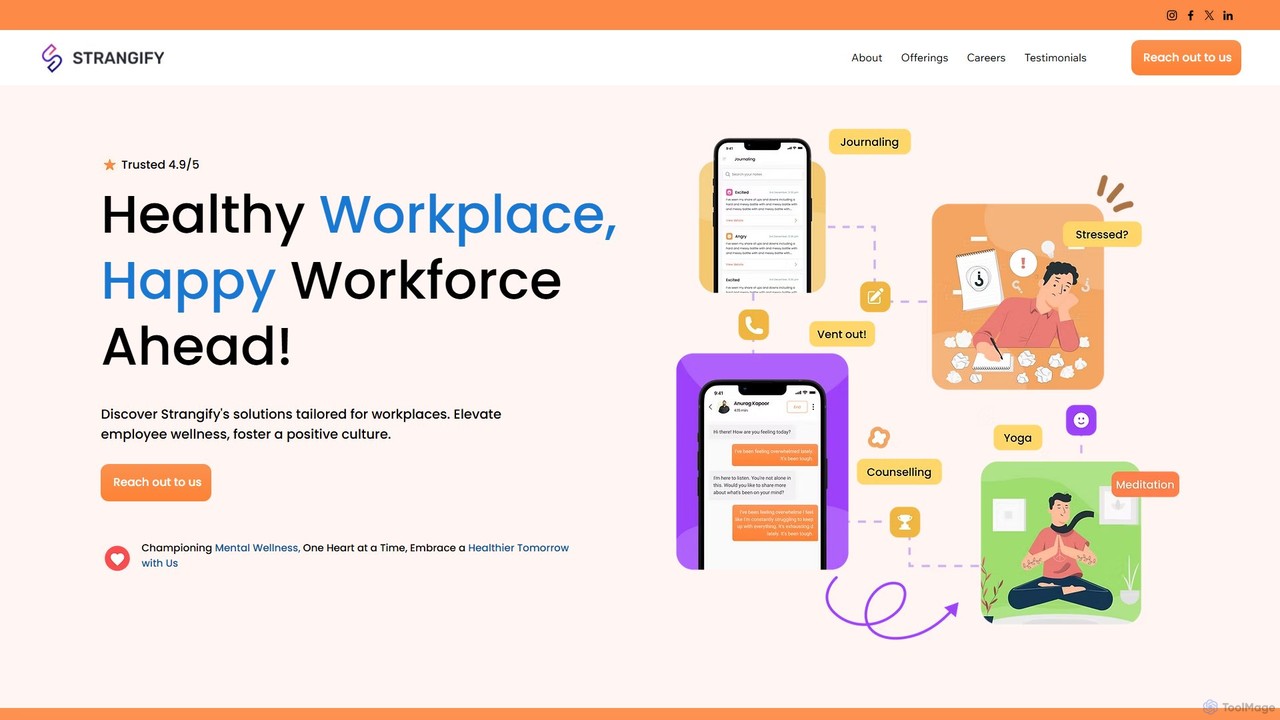
Employee Wellness AI tools are a specialized category of AI-powered solutions designed to support and enhance the overall well-being of employees within an organization. These tools leverage artificial intelligence, machine learning, and natural language processing to offer personalized mental health support, physical activity tracking, stress management, and burnout prevention. By fostering a healthier and more engaged workforce, they directly contribute to increased productivity and a positive work environment, making them a vital component of modern productivity strategies.
Core Features
- Personalized Wellness Plans: AI-driven recommendations for mental and physical health activities tailored to individual needs.
- Sentiment Analysis & Feedback: Tools to anonymously gauge employee morale and identify potential stress factors or burnout risks.
- Mindfulness & Stress Management: Guided meditations, breathing exercises, and cognitive behavioral therapy (CBT) techniques delivered via AI.
- Physical Health Tracking: Integration with wearables and apps to monitor activity, sleep, and nutrition, offering health insights.
- Burnout Prevention: Proactive identification of workload imbalances and stress indicators, suggesting timely interventions.
Use Cases
Organizations utilize Employee Wellness AI tools to create a supportive work culture. They are particularly valuable for HR departments and team leaders aiming to proactively address employee stress, improve mental resilience, and ensure a healthy work-life balance. These tools help in reducing absenteeism, boosting morale, and retaining talent by demonstrating a commitment to employee health.
How to Choose
When selecting Employee Wellness AI tools, consider the breadth of wellness areas covered (mental, physical, emotional), the level of personalization offered, and data privacy protocols. Evaluate integration capabilities with existing HR systems, user-friendliness, and the tool's ability to provide actionable insights for both individuals and the organization. Scalability and support for diverse employee needs are also crucial factors.