ToolMage
Sign in

Best 1 Engagement AI tools for Productivity

Popular Engagement AI tools in Productivity include PowerIn, helping you work more efficiently.

PowerIn
Freemium

PowerIn

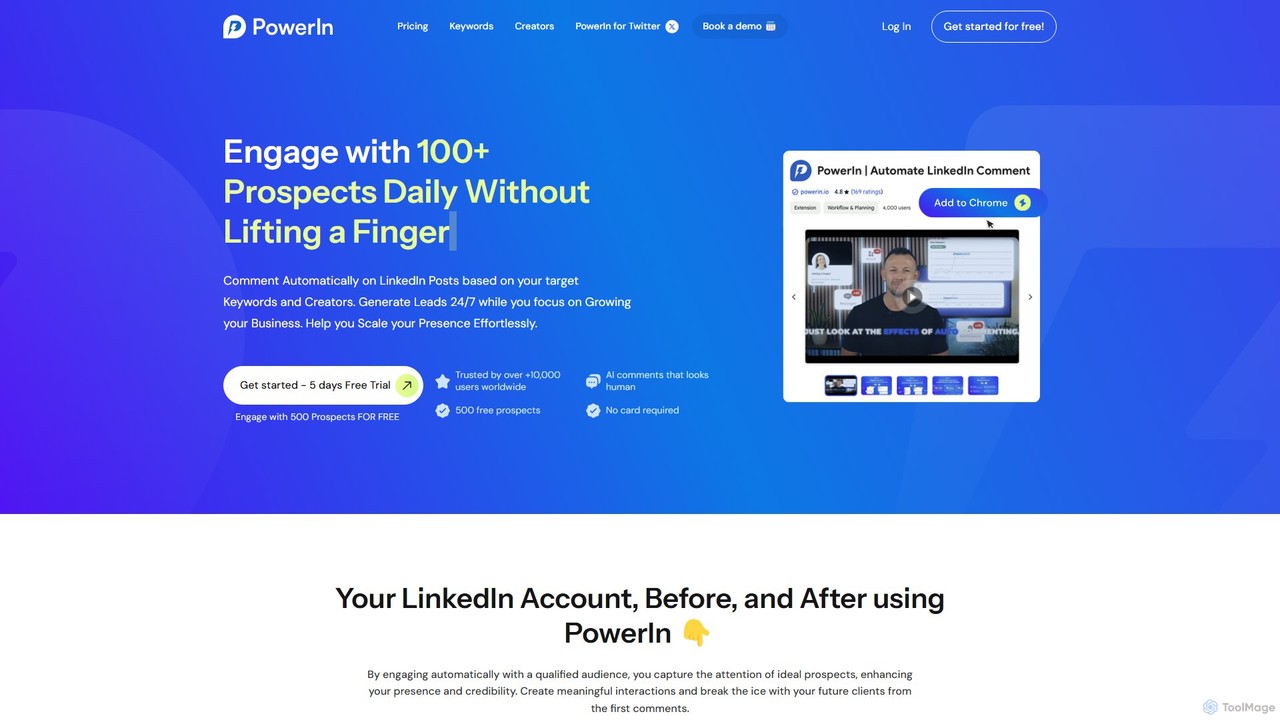
PowerIn is an AI-powered automation tool that generates human-like comments on LinkedIn and Twitter. It helps users scale their online presence, generate leads, and build networks by automatically engaging with posts based on targeted keywords and creators. The tool focuses on creating meaningful, non-spammy interactions to enhance visibility and credibility.

Lead Generation
Visits 49.8KFavorites 107Likes 109

About Engagement

Engagement AI tools are a specialized category within productivity solutions, designed to significantly enhance and automate interactions with users, customers, and audiences. These powerful tools leverage advanced AI capabilities such as natural language processing (NLP), machine learning, and sophisticated personalization algorithms to deliver highly tailored communication and dynamic interactive content. By intelligently streamlining and optimizing various digital touchpoints, Engagement AI tools empower businesses and creators to foster deeper connections, improve user satisfaction, and ultimately boost overall operational productivity in areas like marketing, customer service, and community management.

Core Features

  • Personalized Communication: Delivers highly tailored messages, product recommendations, and relevant content based on individual user data, behavior patterns, and preferences.
  • Interactive Content Generation: Facilitates the creation of dynamic quizzes, polls, surveys, and intelligent chatbots that actively capture user attention and gather valuable insights.
  • Automated Customer Interaction: Provides instant, intelligent, and consistent responses to customer queries across multiple channels (e.g., chat, email), significantly improving support efficiency and availability.
  • Audience Segmentation & Targeting: Analyzes vast amounts of user data to identify distinct audience segments, enabling the deployment of highly targeted and effective engagement strategies.
  • Sentiment Analysis: Utilizes AI to understand the emotional tone and underlying intent behind user feedback, social media comments, and conversations, informing more empathetic and effective response strategies.

Applicable Scenarios

Engagement AI tools are indispensable for organizations and individuals striving to build stronger, more meaningful relationships with their audience while optimizing interaction workflows. They are widely adopted by marketing teams to execute hyper-personalized campaigns, by customer service departments to automate routine support tasks and provide 24/7 assistance, and by content creators to design captivating interactive experiences that not only entertain but also gather crucial feedback and data for future improvements.

Key Selection Criteria

When evaluating and selecting an Engagement AI tool, it's crucial to consider its seamless integration capabilities with your existing technology stack (e.g., CRM, marketing automation platforms, CMS). Assess the level of customization offered for branding and interaction flows, ensuring it aligns with your specific needs. Scalability is vital to handle a growing user base, and robust analytics and reporting features are essential for measuring the impact and effectiveness of your engagement strategies. Furthermore, evaluate the tool's ease of use, the quality of its AI models, and the transparency of its pricing structure to ensure a successful and cost-effective implementation.

Engagement use cases

1

Automating Customer Support with AI Chatbots

E-commerce businesses can deploy AI-powered chatbots to provide instant 24/7 customer support. These chatbots efficiently answer frequently asked questions, guide users through purchasing processes, and troubleshoot common issues, significantly reducing the workload on human agents and improving overall customer satisfaction by offering immediate assistance.

2

Personalizing Marketing Email Campaigns

Marketing teams leverage AI to analyze vast amounts of user behavior and preference data. Based on these insights, AI engagement tools automatically generate and send highly personalized email content, product recommendations, and special offers to individual subscribers, leading to significantly increased open rates, click-through rates, and conversion rates for marketing campaigns.

3

Creating Interactive Quizzes and Polls for Content

Content creators and educators can utilize AI engagement tools to design highly engaging quizzes, polls, and surveys. These interactive elements not only capture audience attention and increase participation but also serve as valuable mechanisms for gathering feedback, testing knowledge, and collecting data that can inform future content strategies or educational improvements.

4

Enhancing Social Media Community Management

Social media managers can deploy AI tools to significantly enhance their community management efforts. These tools monitor mentions across platforms, analyze sentiment in comments and posts, automatically respond to common inquiries, and identify trending topics or potential crises. This proactive approach fosters a more active and positive online community, saving time and ensuring consistent brand messaging.

5

Streamlining Employee Onboarding with Interactive Modules

HR departments can utilize AI engagement tools to create personalized and highly interactive onboarding experiences for new hires. This includes AI-guided tours of company resources, automated Q&A sessions about policies, and progress tracking through interactive training modules. Such an approach improves new employee retention, accelerates their integration into the team, and boosts overall productivity from day one.

6

Dynamic Website Content Personalization

Website administrators and marketers can implement AI engagement tools to dynamically adapt website content, product displays, and calls-to-action based on individual visitor behavior, browsing history, and demographics. This real-time personalization creates a more relevant and engaging user experience, leading to higher conversion rates, reduced bounce rates, and increased time spent on site.

Engagement FAQ

What are AI Engagement tools?

AI Engagement tools are software solutions that use artificial intelligence to automate and enhance interactions with users, customers, or audiences. They leverage natural language processing (NLP), machine learning, and personalization algorithms to deliver tailored content, automate responses, and analyze sentiment, ultimately fostering deeper connections and improving efficiency in areas like marketing, customer service, and community management.

How do AI Engagement tools enhance productivity?

These tools boost productivity by automating repetitive interaction tasks, such as answering routine customer queries or sending personalized marketing messages at scale. They free up human resources to focus on complex issues, provide instant 24/7 support, and optimize communication strategies based on data-driven insights, leading to more efficient workflows and better outcomes across various business functions.

What's the difference between AI Engagement tools and traditional CRM systems?

While both manage customer relationships, traditional CRM systems primarily store and organize customer data for manual outreach and tracking. AI Engagement tools, however, actively *use* AI to *interact* with customers dynamically. They can personalize communication, automate responses, predict needs, and analyze sentiment in real-time, going beyond mere data management to proactive, intelligent engagement that drives action and builds stronger relationships.

What are the key features to look for in an AI Engagement tool?

When selecting an AI Engagement tool, look for robust personalization capabilities that adapt to individual user behavior. Multi-channel support (chat, email, social media) is crucial for consistent interaction. Advanced analytics for performance tracking, seamless integration with your existing tech stack, and strong natural language processing (NLP) for understanding user intent are also vital. Customization options, scalability, and a user-friendly interface ensure effective deployment and long-term value.

Who benefits most from using AI Engagement tools?

A wide range of users benefits, including marketing professionals seeking to personalize campaigns and improve conversion rates, customer service teams aiming to automate support and enhance satisfaction, and content creators looking to build interactive experiences. Businesses of all sizes, from e-commerce to education, can leverage these tools to build stronger relationships, optimize their interaction strategies, and achieve more efficient and impactful communication with their target audience.