experiencewelcome
An AI-powered webinar platform for marketers. It helps create beautifully branded virtual events and automatically repurposes long-form webinar …
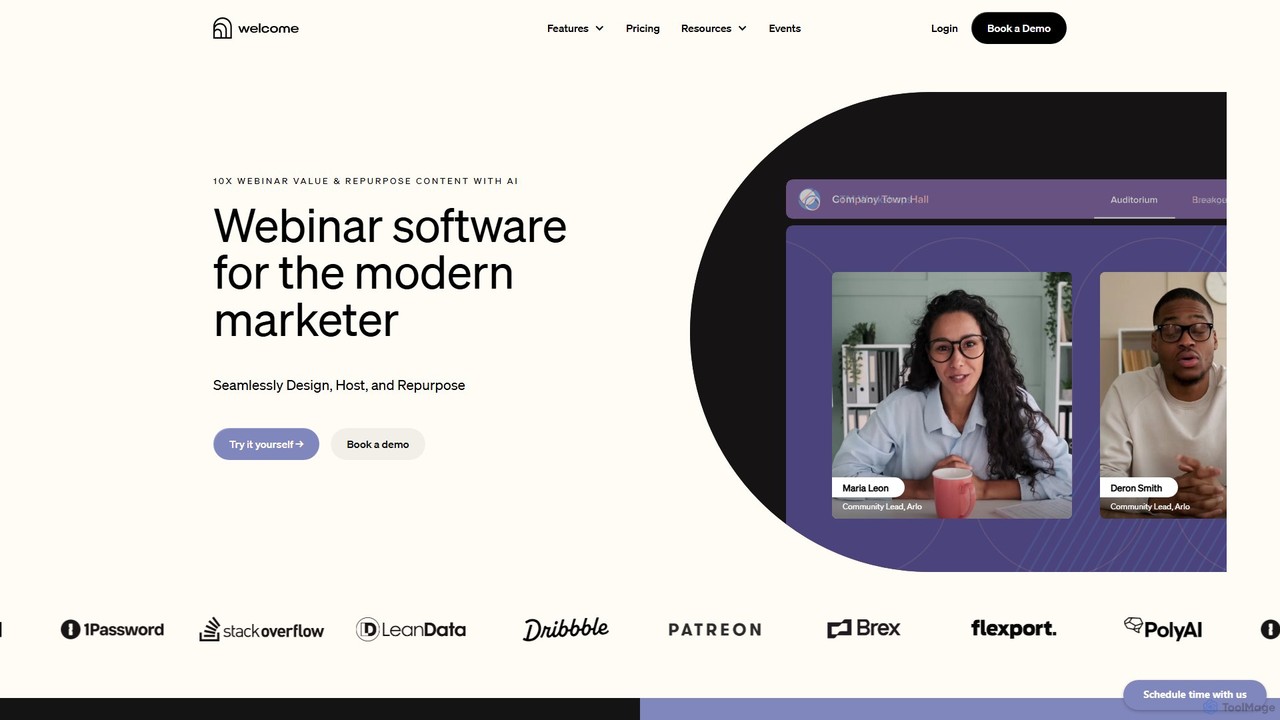
An AI-powered webinar platform for marketers. It helps create beautifully branded virtual events and automatically repurposes long-form webinar content into short, shareable video clips. It focuses on maximizing engagement, streamlining workflows through CRM integrations, and scaling content creation to increase ROI.
About Events
AI Events tools are a specialized category within productivity software that leverage artificial intelligence to streamline and enhance various aspects of event planning, execution, and analysis. These tools utilize machine learning, natural language processing, and data analytics to automate repetitive tasks, personalize attendee experiences, and provide actionable insights. They empower event organizers to manage everything from virtual conferences to large-scale physical gatherings more efficiently, ultimately boosting engagement and optimizing resource allocation.
Core Features
- Automated Scheduling & Logistics: AI algorithms optimize session timings, speaker assignments, and resource allocation to prevent conflicts and maximize flow.
- Personalized Attendee Engagement: AI recommends relevant sessions, networking opportunities, and content based on individual attendee profiles and past interactions.
- Smart Marketing & Promotion: AI generates targeted promotional content, optimizes email campaigns, and identifies ideal audience segments for event outreach.
- Real-time Analytics & Reporting: AI processes live event data to provide instant insights into attendee behavior, engagement levels, and overall event performance.
Applicable Scenarios
Event organizers, marketing teams, and corporate planners utilize AI Events tools to manage complex logistics for large conferences, personalize experiences for virtual attendees, and automate marketing campaigns for workshops. They are crucial for enhancing attendee satisfaction, optimizing operational efficiency, and gaining deeper insights into event ROI across various industries, from tech summits to academic symposiums.
How to Choose
When selecting an AI Events tool, consider its integration capabilities with existing CRM or marketing platforms, the breadth of its automation features (e.g., registration, scheduling, marketing), scalability to handle different event sizes, and the depth of its analytics and reporting functionalities. Evaluate the level of personalization offered for attendees and the ease of use for your team.

EventsUse Cases
Personalized Attendee Journey Mapping
Event organizers leverage AI to analyze attendee data, including registration details, past event interactions, and stated interests. This enables the AI to suggest customized schedules, recommend relevant sessions, and identify potential networking connections. The result is a highly personalized event experience that significantly enhances individual engagement and satisfaction, ensuring attendees get the most value from the event.
Automated Event Marketing Content Generation
Marketing teams responsible for event promotion can use AI to automatically generate compelling content. By inputting event details and target audience profiles, AI crafts engaging social media posts, email snippets, and ad copy. This capability allows marketers to tailor messages to different audience segments, test various headlines, and maximize reach across multiple platforms, significantly reducing manual content creation time and improving campaign effectiveness.
Optimized Session Scheduling and Resource Allocation
Event planners face the complex task of scheduling sessions, speakers, and allocating resources. AI algorithms process vast amounts of data, including speaker availability, venue capacity, and anticipated attendee interest, to create conflict-free and highly engaging event schedules. This optimization extends to efficiently allocating rooms, equipment, and staff, ensuring smooth operations and maximizing the utilization of all event assets.
Real-time Virtual Event Engagement Monitoring
During live virtual events, AI-powered tools continuously track participant interactions, sentiment expressed in chats, and Q&A trends. This real-time monitoring provides organizers with instant feedback on audience engagement levels and emerging topics. With these insights, organizers can proactively adjust content, address common questions, or even modify the event flow to maintain high levels of interest and responsiveness, ensuring a dynamic and successful virtual experience.
Intelligent Lead Qualification at Trade Shows
Exhibitors at trade shows can utilize AI-powered tools to enhance lead qualification. By integrating with CRM systems and analyzing interactions (e.g., booth visits, content downloads, chatbot conversations), AI helps identify high-potential leads. This allows sales teams to prioritize follow-ups, personalize post-event communications based on specific interests, and focus efforts on prospects most likely to convert, significantly improving the ROI of trade show participation.
Comprehensive Post-Event Performance Analytics
After an event, AI tools aggregate and analyze vast amounts of data from registrations, attendance, engagement metrics, and feedback surveys. This comprehensive analysis generates detailed reports, identifies key success metrics, and uncovers actionable insights into what worked well and areas for improvement. Event managers can use these insights to measure ROI accurately, refine future event strategies, and make data-driven decisions for continuous enhancement.