YOMO AI
YOMO AI is an AI-powered product intelligence platform designed for teams to centralize user feedback, automate qualitative research, …
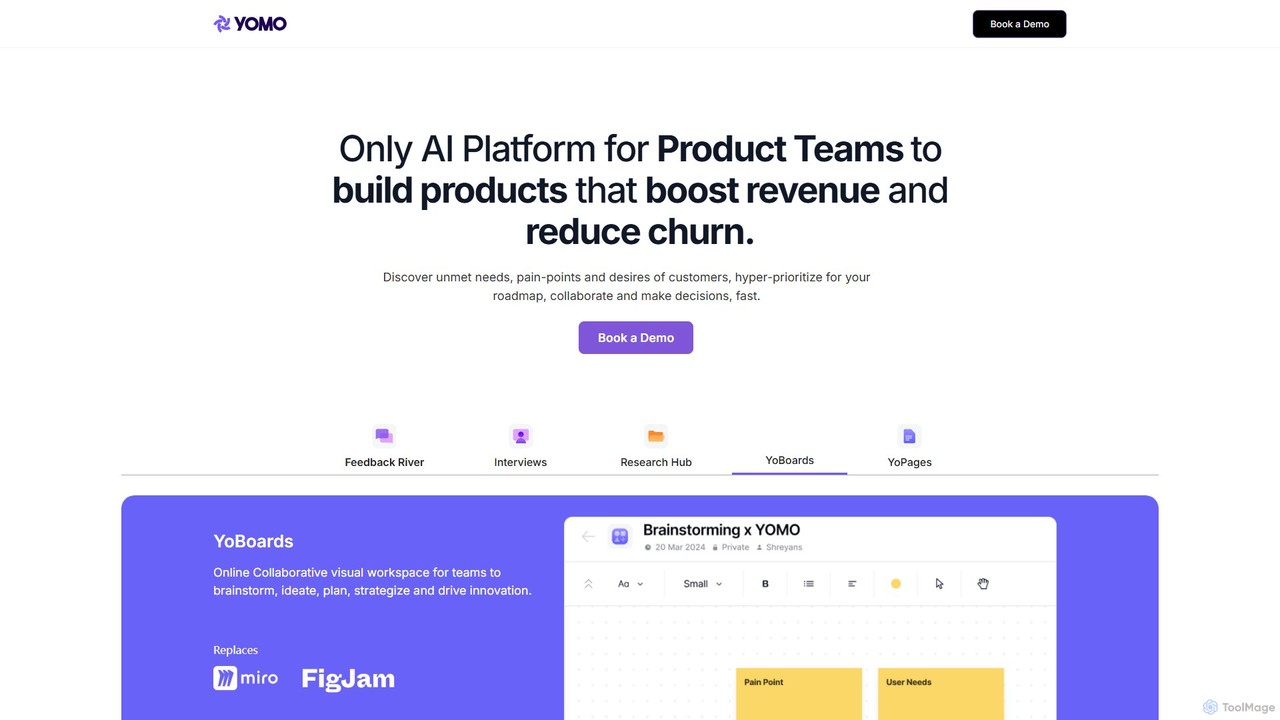
YOMO AI is an AI-powered product intelligence platform designed for teams to centralize user feedback, automate qualitative research, and collaborate on data-driven roadmaps. It integrates feedback collection, AI analysis, and collaborative workspaces to accelerate product development and build products customers truly want.
About Feedback & Research
AI Feedback & Research tools are specialized platforms designed to automate and enhance the collection, analysis, and interpretation of qualitative and quantitative data. Leveraging advanced natural language processing (NLP), machine learning, and statistical algorithms, these tools transform raw feedback, survey responses, user interviews, and market data into actionable insights. They empower businesses and individuals to understand customer sentiment, identify market trends, and make data-driven decisions more efficiently and accurately, significantly boosting productivity within research workflows.
Core Features
- Sentiment Analysis: Automatically detects and categorizes emotional tones and opinions within text data from reviews, social media, and surveys.
- Automated Survey Analysis: Processes open-ended survey responses, identifying common themes, keywords, and sentiment without manual review.
- User Interview Transcription & Thematic Analysis: Converts spoken interviews into text and then extracts key topics, patterns, and insights.
- Market Trend Identification: Analyzes vast datasets to predict emerging trends, competitive landscapes, and consumer preferences.
- Competitor Intelligence: Gathers and analyzes public data on competitors to identify strengths, weaknesses, and strategic opportunities.
Use Cases
These tools are invaluable for product managers seeking to refine features based on user feedback, marketing teams analyzing campaign performance and brand perception, and researchers conducting in-depth market studies. They streamline the process of understanding customer needs, validating product ideas, and staying ahead of market shifts, making research more accessible and impactful across various industries.
How to Choose
When selecting an AI Feedback & Research tool, consider its compatibility with your data sources (e.g., CRM, social media, survey platforms), the depth and types of analysis offered (e.g., sentiment, thematic, predictive), and its integration capabilities with existing workflows. Evaluate the scalability for your data volume, customization options for specific research needs, and the clarity of its insight visualization to ensure it aligns with your organizational goals and technical expertise.

Feedback & ResearchUse Cases
Analyzing Customer Reviews for Product Enhancement
Product managers can utilize AI feedback tools to automatically process thousands of customer reviews from app stores, e-commerce sites, and support tickets. The AI identifies recurring issues, feature requests, and sentiment trends, providing clear, data-backed insights to prioritize development efforts and improve product features, significantly reducing manual review time.
Automating Social Media Sentiment Monitoring
Marketing teams can deploy AI research platforms to continuously monitor social media mentions, comments, and posts related to their brand and competitors. The AI performs real-time sentiment analysis, flagging positive, negative, or neutral discussions, and identifying emerging crises or opportunities, enabling proactive brand management and targeted campaign adjustments.
Extracting Key Themes from User Interview Transcripts
UX researchers often conduct numerous user interviews, generating hours of audio. AI tools can transcribe these interviews accurately and then apply thematic analysis to identify common pain points, user needs, and behavioral patterns across all participants. This accelerates the synthesis of qualitative data, leading to faster design iterations and more user-centric products.
Conducting AI-Powered Market Trend Research
Business strategists and market analysts can leverage AI research tools to scan vast amounts of public data, including news articles, industry reports, academic papers, and financial filings. The AI identifies nascent market trends, shifts in consumer behavior, and competitive movements, providing a comprehensive overview for strategic planning and investment decisions.
Personalizing Survey Questions and Follow-ups
Customer experience professionals can use AI-driven survey platforms to create dynamic questionnaires. Based on a respondent's previous answers or demographic data, the AI can adapt subsequent questions, making surveys more relevant and engaging. This leads to higher completion rates and more nuanced data collection, improving the quality of feedback.
Benchmarking Competitor Strategies through Data Analysis
Strategic intelligence teams can employ AI tools to gather and analyze publicly available data on competitors, such as website changes, pricing models, product launches, and customer reviews. The AI identifies competitor strengths, weaknesses, and strategic moves, providing a clear benchmark for internal performance and informing competitive positioning.