
Productivity Best in category 1 results Fleet Management AI Tool

Popular AI tools in the Fleet Management field of Productivity include Asti Infotech, etc., helping you quickly improve efficiency.

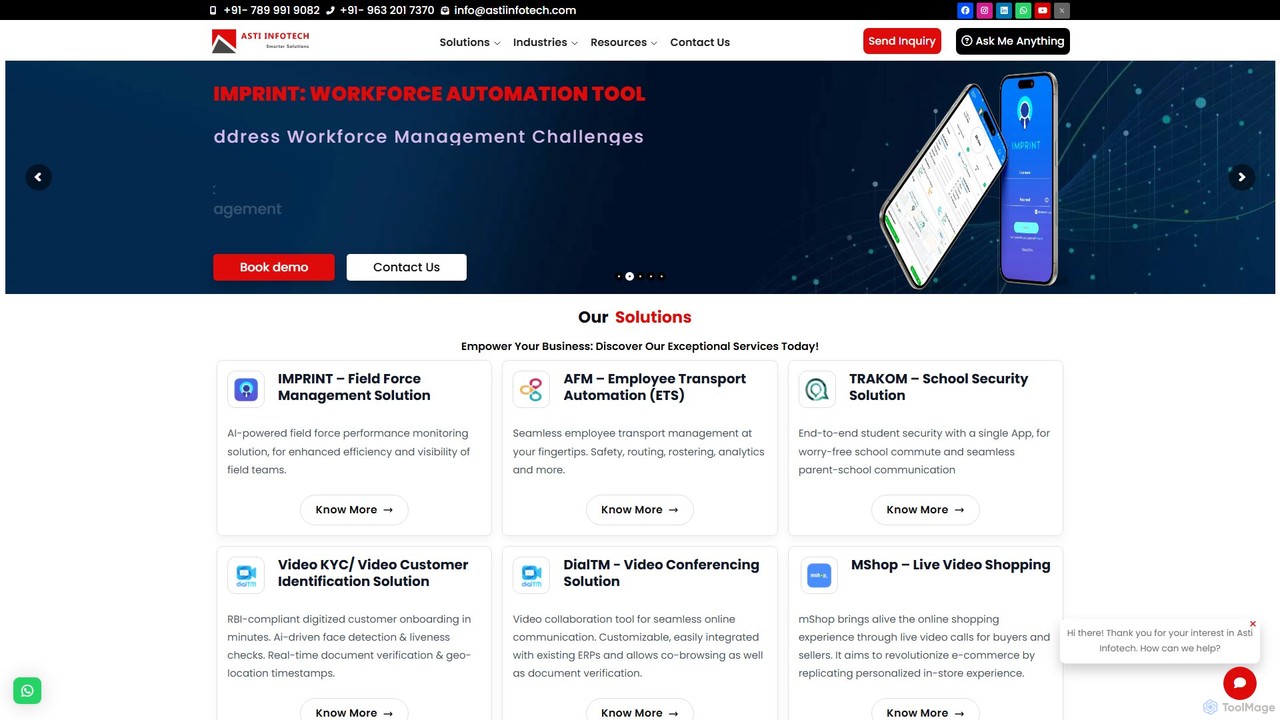
Asti Infotech

Asti Infotech

Asti Infotech provides a suite of AI-powered solutions for intelligent business automation and optimization. Their products simplify operations, …

30.3K

About Fleet Management

AI Fleet Management tools are specialized platforms that use artificial intelligence to optimize the operation, maintenance, and safety of commercial vehicle fleets. These systems analyze vast amounts of data from telematics devices, GPS, and onboard sensors to provide predictive insights and automate complex decisions. By leveraging machine learning, they help businesses reduce fuel costs, improve delivery efficiency, and enhance driver safety. Their key advantage lies in transforming raw data into actionable strategies for proactive fleet oversight.

Core Features

  • Predictive Maintenance: Analyzes vehicle health data to forecast potential component failures and schedule maintenance before breakdowns occur.
  • AI-Powered Route Optimization: Calculates the most efficient routes by considering real-time traffic, weather, delivery windows, and vehicle capacity.
  • Driver Behavior Analysis: Uses computer vision and sensor data to monitor driving patterns like harsh braking or speeding, providing feedback for safety coaching.
  • Fuel Consumption Analytics: Identifies patterns in driving behavior and vehicle performance to recommend strategies for reducing fuel usage.
  • Automated Compliance Reporting: Streamlines the generation of reports for regulations such as Hours of Service (HOS) and fuel tax (IFTA).

Use Cases

AI Fleet Management tools are crucial for industries heavily reliant on transportation and logistics. This includes long-haul trucking companies, local delivery services, public transportation authorities, and construction firms managing heavy equipment. They are used to ensure on-time deliveries in e-commerce, maintain vehicle uptime for critical services, and enforce safety protocols in large-scale operations.

How to Choose

When selecting an AI Fleet Management tool, first assess its integration capabilities with your existing telematics hardware and software. Evaluate the sophistication of its AI models—does it offer real-time dynamic rerouting or just historical analysis? Consider the platform's scalability to grow with your fleet size and its data security protocols. Finally, examine the user interface for both dispatchers and drivers to ensure it is intuitive and easy to adopt.

Fleet ManagementUse Cases

1

Optimize Delivery Routes in Real-Time

A local courier service manager uses an AI fleet management tool to handle daily delivery schedules. When an unexpected road closure occurs, the system automatically re-calculates the most efficient routes for all affected drivers in real-time. It considers traffic patterns, remaining delivery windows, and vehicle locations. This dynamic rerouting prevents significant delays, improves customer satisfaction by maintaining delivery ETAs, and reduces fuel wasted in traffic, directly increasing the profitability of each route.

2

Schedule Predictive Maintenance for a Trucking Fleet

A fleet manager for a long-haul trucking company uses an AI platform to monitor engine diagnostics and sensor data across hundreds of vehicles. The AI model detects subtle anomalies in performance data that indicate a high probability of an alternator failure on a specific truck within the next 1,000 miles. Instead of risking a costly roadside breakdown, the manager proactively schedules a replacement during the truck's next planned stop, maximizing uptime and avoiding emergency repair costs.

3

Improve Driver Safety with AI-Powered Coaching

A public transit authority implements AI-powered dashcams across its bus fleet. The system's computer vision identifies risky behaviors like tailgating, mobile phone use, or signs of drowsiness in real-time. Instead of punitive measures, the system flags these events for review. A safety manager then uses video clips and data reports as constructive coaching tools in one-on-one sessions with drivers, leading to a measurable reduction in safety incidents and lower insurance premiums for the entire fleet.

4

Reduce Fuel Costs Through Idle Time Analysis

A construction company with a fleet of heavy machinery uses an AI tool to analyze telematics data. The AI identifies that specific excavators are idling for over 40% of their operational time on certain job sites, burning excessive fuel. The system sends alerts to site supervisors. By implementing new protocols to shut down machinery during predictable downtimes, based on the AI's analysis, the company reduces its overall fuel consumption by 15% and lowers its carbon footprint.

5

Automate Hours of Service (HOS) Compliance

A compliance officer for a regional logistics company uses an AI fleet management system to monitor driver logs. The system automatically tracks driving time, breaks, and rest periods, cross-referencing them with GPS data to ensure accuracy. It proactively alerts both the driver and the officer of an impending HOS violation, allowing for corrective action before a breach occurs. This automation significantly reduces the administrative burden of manual log audits and minimizes the risk of costly fines during inspections.

6

Optimize Cold Chain Logistics with AI Monitoring

A food distribution company uses AI-powered sensors in its refrigerated trucks. The system continuously monitors temperature and humidity, but its AI model also analyzes patterns related to door openings, external weather, and cooling unit performance. It can predict a potential temperature deviation before it breaches the safe threshold, alerting the driver and operations team to check for an improperly sealed door or a malfunctioning unit. This proactive monitoring prevents spoilage, ensures food safety, and protects revenue.

Fleet ManagementFrequently Asked Questions