ToolMage
Sign in

Best 1 Gardening AI tools for Productivity

Popular Gardening AI tools in Productivity include weedtalk.io, helping you work more efficiently.

weedtalk.io
Freemium

weedtalk.io

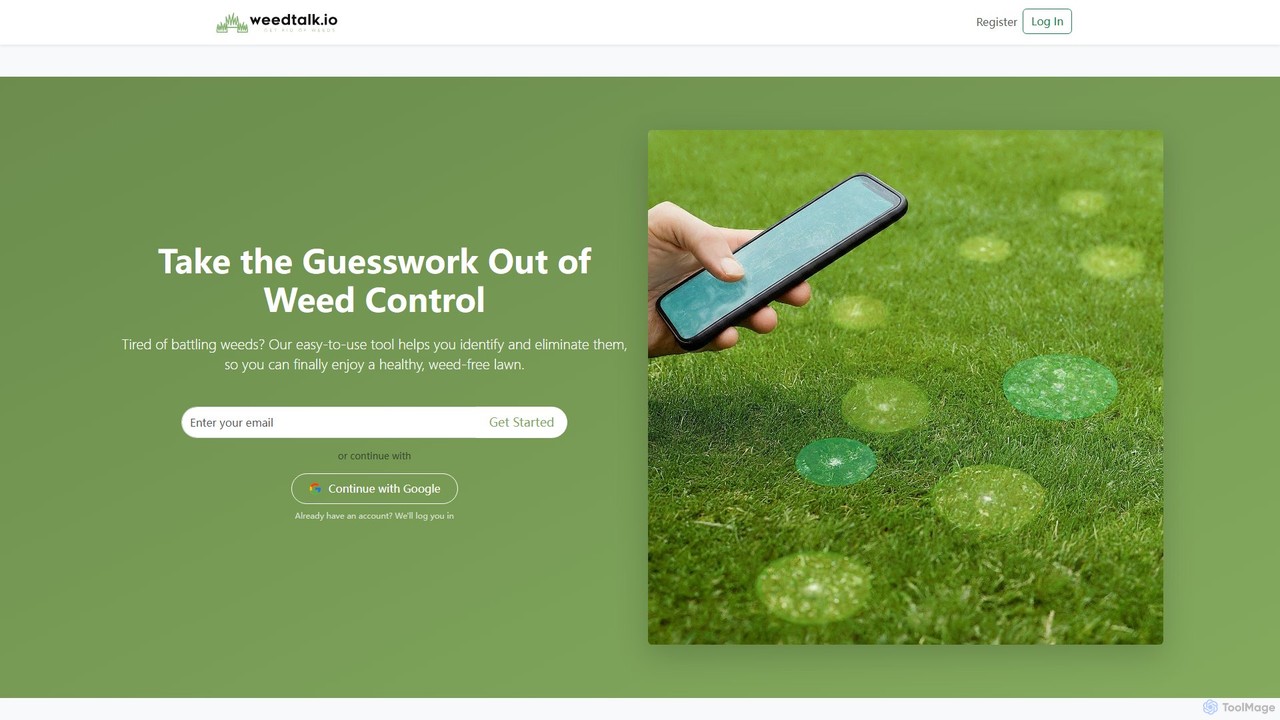
An AI-powered tool that helps gardeners, homeowners, and professional landscapers identify weeds instantly from photos. Upload an image to receive a detailed analysis, including the weed's species, characteristics, and effective control strategies.

Landscaping
Visits 5.4KFavorites 107Likes 117

About Gardening

Gardening AI tools are intelligent applications designed to assist with various aspects of plant care and garden management. Leveraging AI, machine learning, and computer vision, these tools analyze data from images, sensors, and environmental factors to provide personalized insights and automate tasks. They empower gardeners of all levels to optimize plant health, diagnose issues, and plan their green spaces more effectively, enhancing overall productivity in horticulture.

Core Features

  • Plant Identification: Accurately identify plant species, flowers, and trees from photos, providing detailed information.
  • Pest & Disease Diagnosis: Analyze images of affected plants to detect pests or diseases and suggest appropriate treatments.
  • Smart Watering & Fertilizing: Generate optimized schedules based on plant type, soil conditions, weather forecasts, and growth stage.
  • Garden Planning & Layout: Assist in designing garden layouts, recommending suitable plants, and checking compatibility.
  • Environmental Monitoring: Integrate with sensors to track soil moisture, temperature, light, and humidity for optimal conditions.

Applicable Scenarios

These tools are invaluable for home gardeners seeking to improve their plant care, professional landscapers managing multiple projects, and urban farmers aiming for efficient crop production. They streamline tasks from initial planning to ongoing maintenance, ensuring healthier plants and more productive gardens.

How to Choose

When selecting a Gardening AI tool, consider the accuracy of its plant identification and diagnostic capabilities, the breadth of its plant database, and its integration with smart garden devices. Evaluate the customization options for care schedules, the user interface's ease of use, and the availability of expert support or community features to ensure it meets your specific gardening needs.

Gardening use cases

1

Diagnosing a Sick Houseplant

A home gardener notices yellowing leaves on their favorite houseplant but is unsure of the cause. Using an AI gardening tool, they upload a photo of the affected plant. The AI analyzes the image, identifies potential issues like nutrient deficiency or overwatering, and provides immediate, actionable advice on how to restore the plant's health, saving time and preventing further damage.

2

Optimizing Watering for a Vegetable Patch

An urban farmer manages a small vegetable patch and wants to ensure optimal water usage. They input their plant types, soil data, and local weather forecasts into an AI gardening tool. The tool then generates a precise watering schedule, adjusting for rainfall and evaporation, which helps conserve water, prevents over or under-watering, and promotes healthier crop growth, maximizing yield.

3

Designing a New Landscape Layout

A landscape designer is planning a new garden for a client and needs to select plants that thrive in specific light and soil conditions while complementing each other aesthetically. They use an AI tool to input site parameters and desired styles. The AI suggests compatible plant combinations, visualizes the layout, and provides growth projections, significantly speeding up the design process and ensuring long-term success.

4

Identifying and Treating Garden Pests

A gardener discovers unfamiliar insects on their rose bushes and fears a pest infestation. They capture clear photos of the insects and the damaged leaves, uploading them to an AI gardening app. The AI quickly identifies the specific pest, such as aphids or spider mites, and recommends organic or chemical treatment options, along with preventative measures, helping to protect their plants effectively.

5

Personalized Care for New Plants

A beginner gardener purchases several new, exotic plants and is overwhelmed by their diverse care requirements. They use an AI gardening tool to scan the plant tags or upload photos. The tool then provides tailored care instructions, including light exposure, watering frequency, humidity levels, and fertilization tips, simplifying the learning curve and ensuring the new plants thrive from day one.

6

Learning About Local Flora and Fauna

An outdoor enthusiast wants to learn more about the plants and insects encountered during hikes in their local area. They use an AI gardening and nature identification app to snap pictures of unknown species. The AI identifies the flora or fauna, provides ecological information, and suggests whether it's native or invasive, enriching their understanding of the local ecosystem and promoting biodiversity awareness.

Gardening FAQ

What are AI Gardening tools?

AI Gardening tools are software applications or smart devices that use artificial intelligence, machine learning, and computer vision to assist with various gardening tasks. They can identify plants, diagnose diseases, optimize watering schedules, and help with garden planning. These tools aim to make gardening more efficient, sustainable, and accessible for everyone, from beginners to seasoned professionals.

How do AI Gardening tools improve plant health?

AI Gardening tools improve plant health by providing precise, data-driven insights and recommendations. They can detect issues like pests or diseases early through image analysis, suggest optimal watering and fertilization based on real-time environmental data, and offer tailored care instructions for specific plant species. This proactive and personalized approach helps prevent common gardening mistakes and ensures plants receive exactly what they need to thrive.

What specific tasks can AI Gardening tools help with?

AI Gardening tools can assist with a wide range of tasks. Key functions include accurate plant identification from photos, diagnosing plant diseases and pest infestations, generating customized watering and fertilization schedules, and providing guidance for garden design and plant placement. Some advanced tools also offer environmental monitoring, yield prediction, and even automated irrigation system control, significantly streamlining garden management.

How do AI Gardening tools differ from traditional gardening apps?

Traditional gardening apps often rely on manual data entry or static databases for information. In contrast, AI Gardening tools leverage advanced algorithms to "learn" and adapt. They can analyze images in real-time, interpret sensor data, and make predictive recommendations based on complex variables like weather patterns and soil composition. This allows for more dynamic, personalized, and accurate advice, moving beyond simple information lookup to intelligent problem-solving and optimization.

How do AI Gardening tools fit into the broader 'Productivity' category?

As a sub-category of 'Productivity', AI Gardening tools enhance efficiency and effectiveness in horticultural tasks. They automate data analysis, provide instant expert advice, and optimize resource usage (like water and fertilizer), saving gardeners significant time and effort. By reducing guesswork and preventing common problems, these tools enable users to achieve better gardening outcomes with less manual intervention, directly contributing to increased productivity in managing green spaces.