10xwinners
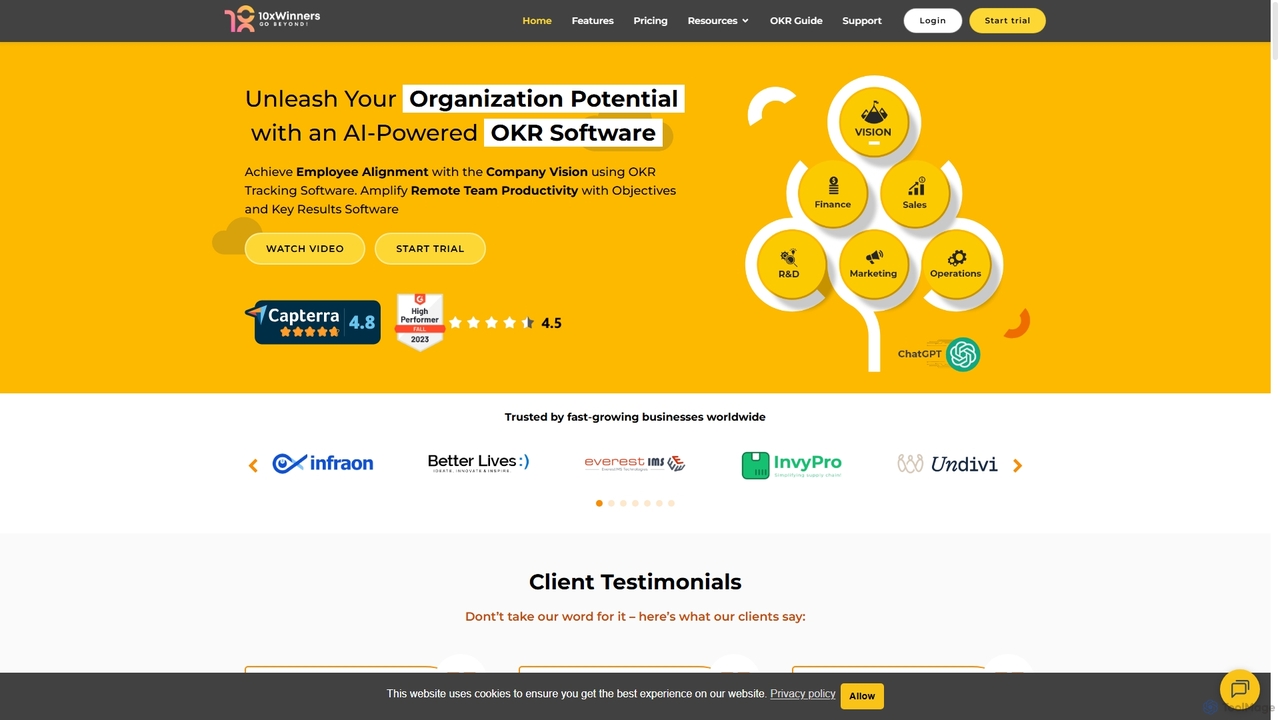
10xwinners is an AI-powered OKR (Objectives and Key Results) software designed to align teams, enhance productivity, and drive …
10xwinners is an AI-powered OKR (Objectives and Key Results) software designed to align teams, enhance productivity, and drive business growth. It helps organizations set, track, and manage goals transparently, fostering a culture of collaboration and accountability. With features like AI-driven suggestions, intuitive dashboards, and seamless integrations, it's built for fast-growing businesses of all sizes.
About Goal Management
AI Goal Management tools are a specialized category of productivity software that uses artificial intelligence to help users define, track, and achieve objectives. These tools leverage algorithms to break down large goals into actionable steps, predict potential obstacles, and offer personalized guidance. This transforms goal setting from a static to-do list into a dynamic, adaptive process, significantly increasing the likelihood of success for both individuals and teams. They provide a clear connection between daily tasks and long-term ambitions.
Core Features
- AI-Powered Goal Decomposition: Automatically breaks down complex objectives into smaller, manageable sub-tasks and milestones.
- Predictive Progress Analytics: Analyzes performance data to forecast completion dates, identify bottlenecks, and flag at-risk goals.
- Personalized Action Plans: Recommends next steps, habits, or resources tailored to the user's specific goal and progress.
- Intelligent Reminders & Motivation: Delivers smart nudges and encouragement based on behavior patterns to maintain momentum.
- OKR & SMART Framework Support: Guides users in structuring goals according to proven methodologies like Objectives and Key Results (OKRs) or SMART criteria.
Use Cases
These tools are valuable across various contexts. In a corporate setting, they are used to implement and monitor company-wide OKRs, ensuring alignment from leadership to individual contributors. Project managers use them to track team milestones against strategic project outcomes. Individuals also leverage them for personal development, such as learning a new skill, achieving fitness targets, or managing long-term career aspirations.
How to Choose
When selecting an AI Goal Management tool, first consider the supported frameworks (e.g., OKR, SMART, KPI). Evaluate its integration capabilities with your existing software stack, such as calendars, communication platforms, and project managers. Assess the depth of its analytics and reporting features for actionable insights. Finally, determine if the tool is designed for individual use, small teams, or large-scale enterprise deployment to ensure it matches your scope.

Goal ManagementUse Cases
Implementing Corporate OKRs
A fast-growing tech company uses an AI Goal Management tool to align its quarterly Objectives and Key Results (OKRs). The CEO sets top-level objectives, and the AI assists department heads in creating aligned departmental OKRs by suggesting relevant key results. The tool integrates with Salesforce and Jira, automatically updating progress on key results based on sales data and development sprints. This provides real-time visibility into company-wide performance and helps teams proactively adjust strategies to stay on track, replacing manual spreadsheet updates and saving hours in reporting time.
Personal Skill Development Plan
A software developer aims to become proficient in machine learning within a year. They use an AI Goal Management tool to structure their learning path. After inputting the main goal, the AI breaks it down into key milestones: 'Complete Python for Data Science course,' 'Build 3 portfolio projects,' and 'Contribute to an open-source AI library.' The tool suggests relevant online courses, tracks weekly study hours, and sets reminders for project deadlines. This structured approach helps the developer stay focused and measure tangible progress beyond just watching tutorials.
Managing Sales Team Quotas
A sales manager uses an AI Goal Management platform to set and track monthly quotas for their team. Each sales representative has a personalized dashboard showing their progress towards their target. The AI analyzes historical sales data and current pipeline activity from the integrated CRM to provide a forecast of whether each rep is on track to meet their goal. If someone is falling behind, the system can suggest focusing on high-probability leads or recommend specific coaching modules, enabling the manager to provide targeted support where it's needed most.
Coordinating a Startup Product Launch
A startup founder is managing the launch of a new mobile app. They use an AI Goal Management tool to coordinate efforts across marketing, development, and operations. The primary goal, 'Successful App Launch in Q3,' is broken down by the AI into key results like 'Achieve 10,000 pre-registrations,' 'Pass App Store review on first submission,' and 'Secure 3 media features.' The tool visualizes dependencies between tasks, alerting the founder if a delay in development will impact the marketing timeline. This provides a holistic view and prevents critical tasks from falling through the cracks.
Tracking Fitness and Wellness Goals
An individual sets a personal goal to run a half-marathon in six months. They use an AI Goal Management app that integrates with their fitness tracker. The AI creates a progressive training plan, scheduling runs of increasing distance and intensity each week. It monitors their actual performance data (pace, distance, heart rate) and adjusts the plan if they are progressing faster than expected or showing signs of overtraining. The app also provides motivational messages after a tough workout and reminds them of their long-term goal, keeping them engaged throughout the journey.
Academic Research Project Management
A PhD student uses an AI Goal Management tool to manage their dissertation project. The overarching goal, 'Complete Dissertation in 2 Years,' is broken down into phases: Literature Review, Data Collection, Analysis, and Writing. The AI helps set realistic deadlines for each chapter and tracks progress based on completed tasks and word count goals. It can also integrate with reference managers to track reading progress. By visualizing the entire project timeline and sending reminders for key milestones, the tool helps the student avoid procrastination and manage the immense scope of the project effectively.