
TypingDNA
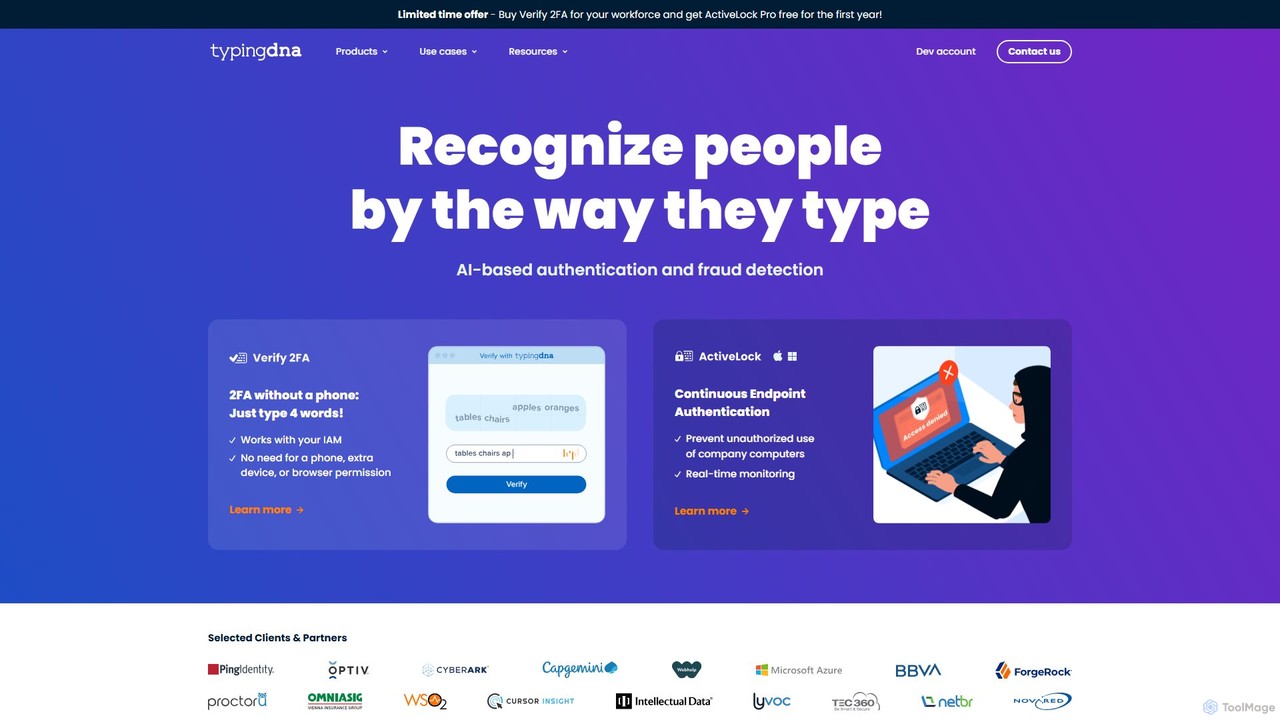
TypingDNA offers advanced user authentication through typing biometrics. It verifies users based on their unique typing patterns, providing …
TypingDNA offers advanced user authentication through typing biometrics. It verifies users based on their unique typing patterns, providing a frictionless and secure alternative to traditional 2FA. Its solutions include a ready-to-use 2FA product and a flexible Authentication API for custom integrations, enhancing security for finance, education, and enterprise applications without compromising user experience.
About Identity Management
AI Identity Management tools are systems that use artificial intelligence to automate and secure user access to digital resources. They leverage machine learning to analyze user behavior, detect threats in real-time, and provide adaptive authentication. This approach enhances security beyond static passwords and rules, streamlining access for legitimate users while preventing unauthorized entry, thereby boosting organizational productivity and security posture.
Core Features
- Adaptive Multi-Factor Authentication (MFA): Dynamically adjusts authentication requirements based on real-time risk assessment, such as location or device.
- Behavioral Biometrics: Analyzes patterns like typing speed and mouse movements to continuously verify user identity without intrusion.
- AI-Powered Threat Detection: Identifies anomalous access patterns and potential account takeover attempts using predictive analytics.
- Automated Lifecycle Management: Intelligently manages user access rights from onboarding to offboarding based on roles and policies.
Use Cases
These tools are crucial for enterprises securing a remote workforce, financial institutions preventing fraud, and SaaS platforms offering secure, frictionless user logins. They are also vital in healthcare for protecting patient data and in e-commerce for securing customer accounts against takeovers.
How to Choose
When selecting an AI Identity Management tool, evaluate its integration capabilities with your existing systems (e.g., HRIS, Active Directory). Assess the sophistication of its AI threat detection models, its compliance with regulations like GDPR and HIPAA, and its scalability to support future user growth.
Identity ManagementUse Cases
Secure Remote Workforce Access
An IT administrator for a global company uses an AI Identity Management tool to secure access for remote employees. The system analyzes login context like location, device health, and time of day. If an employee tries to log in from an unrecognized network, the AI flags it as a higher risk and automatically triggers a step-up authentication, such as a biometric scan, instead of just a password. This dynamic approach prevents unauthorized access to sensitive company data without inconveniencing legitimate users during their normal workflow.
Prevent E-commerce Account Takeover
An e-commerce platform integrates an AI identity tool to protect customer accounts. The tool builds a behavioral profile for each user, learning their typical navigation patterns, typing speed, and mouse movements. If a fraudster gains access to a user's credentials and tries to make a large purchase, their behavior will deviate from the established profile. The AI detects this anomaly in real-time, blocks the transaction, and prompts for additional verification, effectively preventing account takeover fraud and protecting customer assets.
Automate Employee Lifecycle Management
An HR manager at a fast-growing tech company uses an AI identity platform integrated with their HRIS. When a new software developer is hired, the system automatically provisions access to specific tools like GitHub, Jira, and the development server based on their pre-defined role. The AI can also suggest additional access rights based on the patterns of other developers. When the employee is promoted or leaves the company, the system instantly updates or revokes all permissions, eliminating manual errors and closing security gaps immediately.
Frictionless Customer Onboarding for FinTech
A new digital bank uses an AI identity verification service to onboard customers quickly and securely. When a user signs up, they are prompted to take a photo of their government-issued ID and a selfie. The AI tool performs document authenticity checks, extracts data via OCR, and uses facial recognition to match the selfie to the ID photo. This entire process takes less than a minute, significantly reducing customer drop-off rates compared to manual verification processes, while still meeting strict KYC (Know Your Customer) compliance requirements.
Implement Risk-Based Access for Healthcare Data
A hospital network deploys an AI identity system to protect electronic health records (EHR). The system establishes a baseline of normal access patterns for each clinician. A doctor accessing patient records from a hospital-issued tablet during work hours is granted seamless access. However, if the same doctor's credentials are used to access an unusually high number of records from an off-site location at 3 AM, the AI flags this as high-risk behavior. It then automatically restricts access and sends an alert to the security team, helping to ensure HIPAA compliance and prevent data breaches.
Secure Privileged Access for DevOps
A software company uses an AI-powered Privileged Access Management (PAM) tool to monitor its DevOps team. The tool grants just-in-time access to critical production servers, meaning permissions are temporary and specific to a task. The AI continuously monitors sessions, analyzing commands and actions. If a developer runs a command that deviates from their typical behavior or matches a known threat pattern (e.g., attempting to export a large database), the system can automatically terminate the session and alert a security officer, mitigating insider threats and external attacks.