Productivity Best in category 1 results Information AI Tool

Popular AI tools in the Information field of Productivity include Frondly, etc., helping you quickly improve efficiency.

Frondly

Frondly

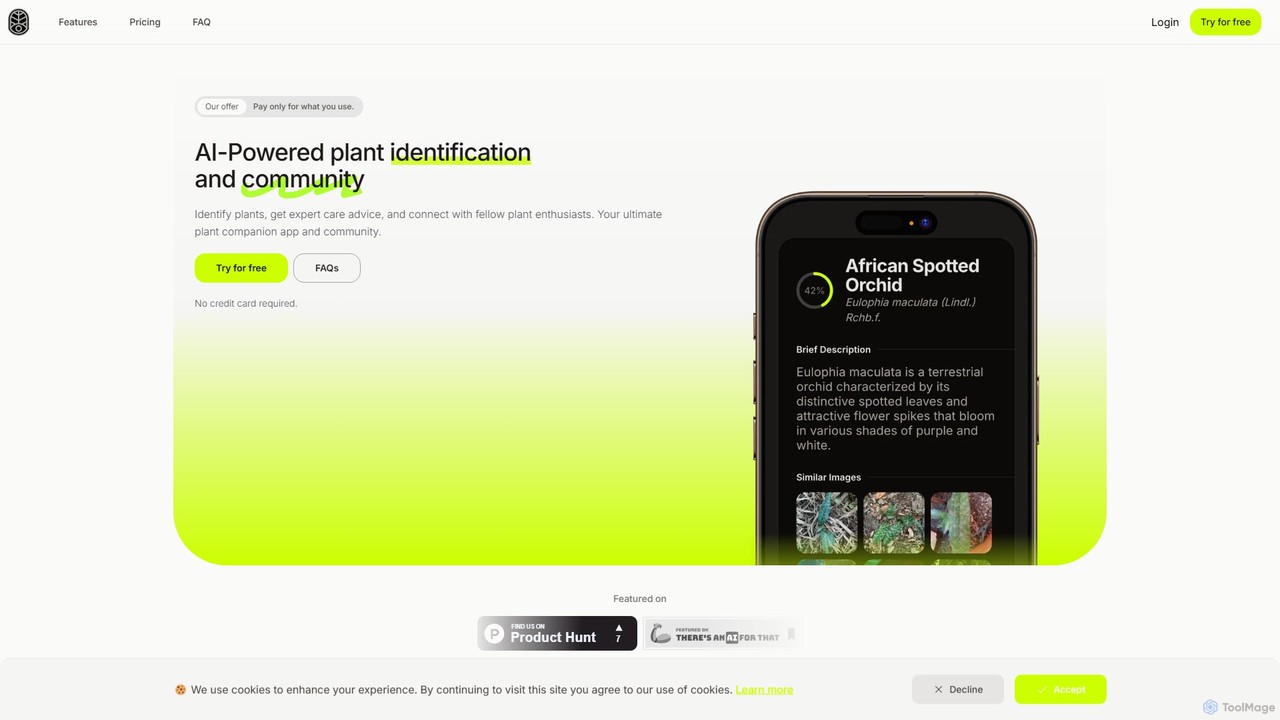
Frondly is an AI-powered plant identification tool. Snap a photo to instantly identify plants, receive detailed care guides, …

2.5K

About Information

AI Information tools are intelligent systems designed to help users capture, organize, and interact with large volumes of data. Leveraging Natural Language Processing (NLP) and semantic search, these tools go beyond simple keyword matching to understand the context and relationships within your documents and notes. They transform scattered files, articles, and web clippings into a cohesive, searchable knowledge base. This enables users to quickly find precise answers, uncover hidden connections, and synthesize complex topics, effectively combating information overload and enhancing productivity.

Core Features

  • Semantic Search: Finds information based on conceptual meaning and context, not just exact keywords.
  • Automated Summarization: Condenses long documents, reports, or articles into concise, digestible summaries.
  • Document Q&A: Allows users to ask questions in natural language and receive direct answers sourced from their uploaded files.
  • Knowledge Graph: Automatically identifies and visualizes the connections between different pieces of information, creating a map of your knowledge.
  • Intelligent Tagging: Analyzes content and suggests or applies relevant tags and categories for better organization.

Use Cases

These tools are widely used by researchers, students, and analysts for literature reviews and data analysis. In business, they support market intelligence, legal document review, and the creation of internal knowledge bases. They are also popular among individuals for building personal knowledge management (PKM) systems or a 'second brain' to organize learning and ideas.

How to Choose

When selecting an AI Information tool, evaluate the types of data sources it supports (e.g., PDF, web pages, audio). Assess the accuracy of its search and summarization capabilities. Consider its integration with other applications like note-taking apps or cloud storage. Finally, review the platform's data privacy policy and collaboration features if you plan to use it with a team.

InformationUse Cases

1

Accelerating Academic Literature Reviews

A postgraduate researcher is facing the challenge of reviewing over 100 academic papers for their thesis. Instead of manually reading each one, they upload all PDFs into an AI Information tool. Using the Document Q&A feature, they ask complex questions like 'What are the main criticisms of Theory X across these papers?' or 'Summarize the methodologies used to study phenomenon Y.' The tool instantly synthesizes answers from all documents, providing direct quotes and source citations. This process reduces the initial review time from weeks to a few days, allowing the researcher to focus on analysis and writing.

2

Creating a Corporate Knowledge Base

A fast-growing company needs to centralize its internal documentation, including HR policies, project reports, and technical guides. An operations manager uses an AI Information tool to create a unified knowledge base. They connect it to Google Drive and Confluence, allowing the AI to index all existing documents. Now, when a new employee has a question like 'What is our reimbursement policy for travel?', they can ask the AI tool directly and get an immediate, accurate answer with a link to the source document, instead of searching through folders or asking colleagues.

3

Building a Personal Knowledge Management (PKM) System

A lifelong learner wants to build a 'second brain' to connect ideas from books, articles, and podcasts they consume. They use an AI Information tool's web clipper to save interesting articles and a mobile app to upload photos of book pages. The AI automatically transcribes the text, summarizes the key points, and suggests tags like 'psychology' or 'productivity'. Over time, the Knowledge Graph feature reveals unexpected connections between a concept from a business book and a theory from a science podcast, sparking new insights and creative ideas for their personal projects.

4

Streamlining Market Intelligence Analysis

A business analyst is tasked with monitoring competitors and industry trends. They set up an AI Information tool to automatically pull in news articles, press releases, and analyst reports related to their industry. Each morning, the tool presents a summarized digest of the most important developments. The analyst can then ask specific questions like 'What are the recent pricing strategy changes from Competitor A?' The AI scans all the collected data and provides a synthesized answer, saving the analyst hours of manual research and allowing them to deliver timely insights to stakeholders.

5

Efficient Legal Document Review

A paralegal is working on a case involving thousands of pages of discovery documents and contracts. Manually searching for specific clauses or precedents would be extremely time-consuming. By uploading all documents to an AI Information platform, they can use semantic search to find relevant information instantly. For example, they can search for 'all clauses related to liability limitations' and the AI will find them, even if the exact phrasing varies. This allows the legal team to build their case faster and more thoroughly, without missing critical details hidden in the text.

6

Organizing Research for Content Creation

A content creator specializing in video essays gathers information from various sources: web articles, interview transcripts, and academic papers. They use an AI Information tool to centralize all this research. Before writing a script, they ask the tool to 'summarize the key arguments about Topic Z' or 'find all statistics related to this event.' The tool provides a clean, organized output that forms the backbone of their script. The knowledge graph also helps them find interesting, non-obvious connections between topics, leading to more original and insightful content for their audience.

InformationFrequently Asked Questions