ToolMage
Sign in

Best 2 Lead Management AI tools for Productivity

Popular Lead Management AI tools in Productivity include FirstQuadrant and ViveLead, helping you work more efficiently.

ViveLead
Paid

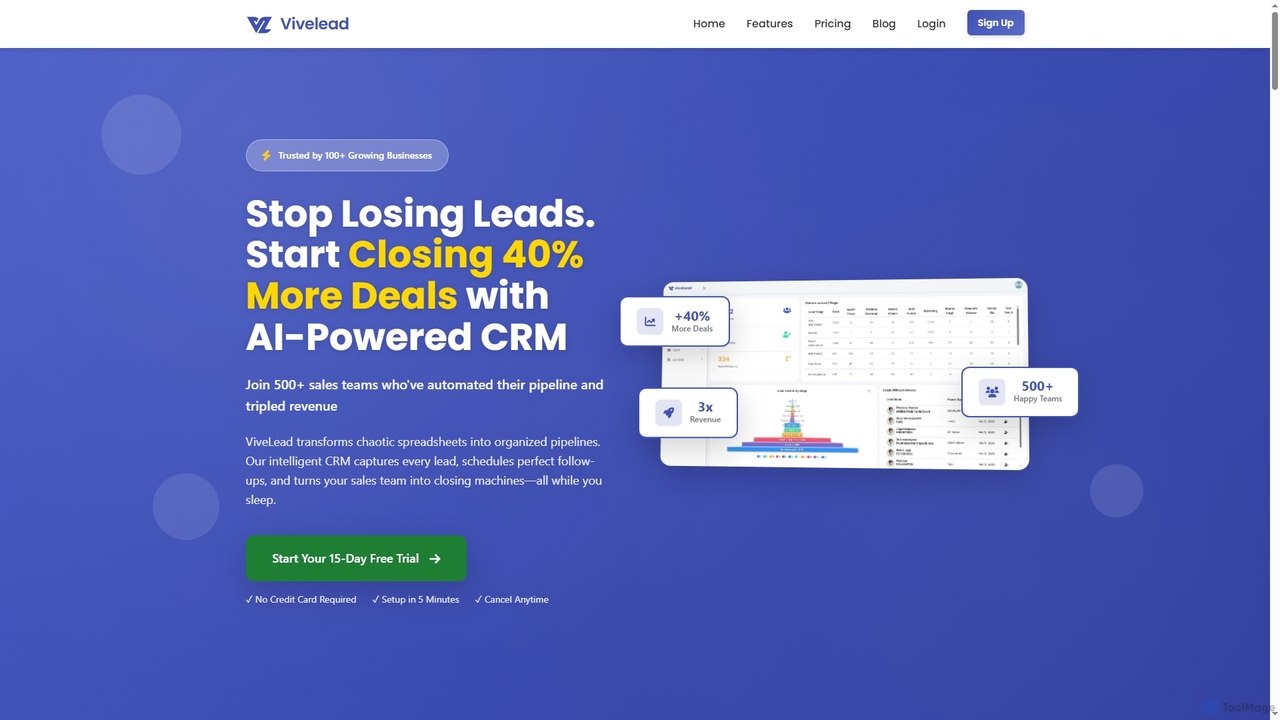
ViveLead

ViveLead is an AI-powered CRM designed for small to scaling businesses, transforming chaotic lead management into organized sales pipelines. It automates lead capture, follow-ups, and sales processes, helping teams close more deals and triple revenue efficiently with its all-in-one platform.

Automation
Visits 6.4KFavorites 99Likes 101
FirstQuadrant
Freemium

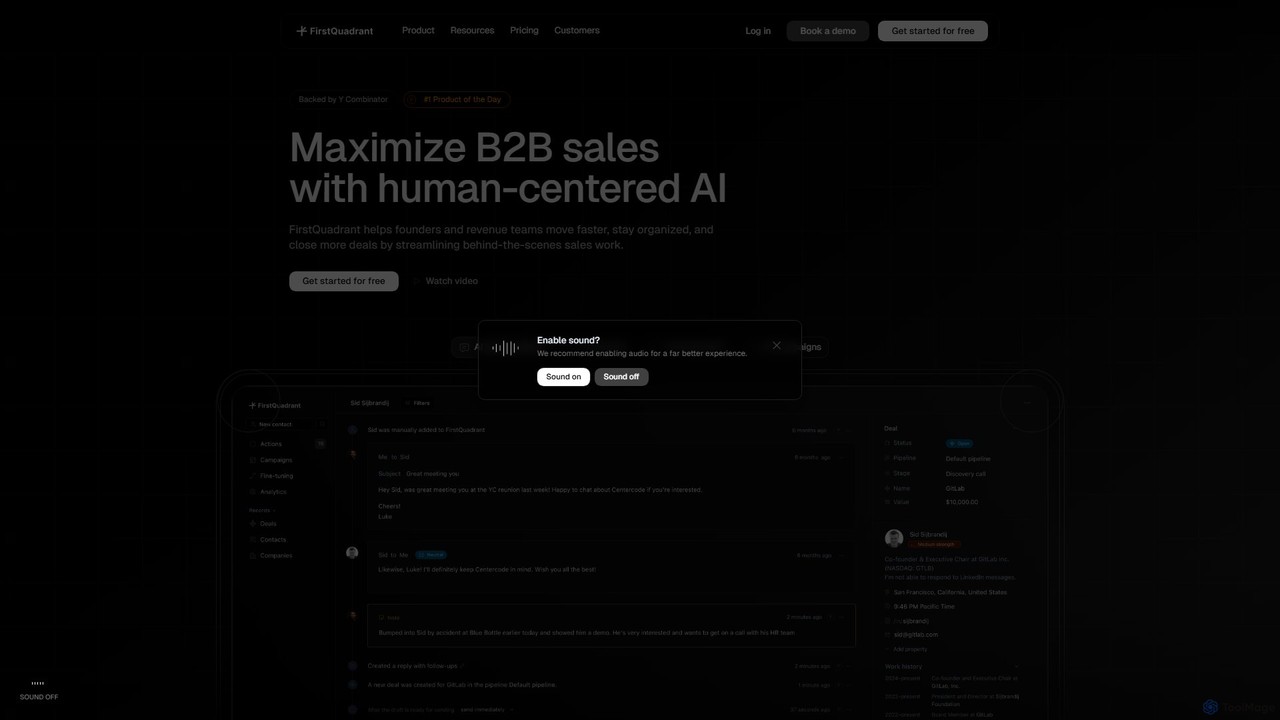
FirstQuadrant

FirstQuadrant is a human-centered AI platform designed to automate and scale B2B sales operations. It acts as an AI sales representative, handling everything from lead engagement and personalized follow-ups to meeting scheduling, allowing sales teams to maximize their efficiency and close more deals.

Email Marketing
Visits 6.8KFavorites 110Likes 114

About Lead Management

Lead Management tools are AI-powered solutions designed to automate and optimize the entire process of identifying, nurturing, and converting potential customers. These tools leverage machine learning and predictive analytics to streamline the sales pipeline, from initial contact to qualified lead. They enhance efficiency and effectiveness by providing data-driven insights and automating repetitive tasks, allowing sales and marketing teams to focus on high-potential prospects.

Core Features

  • AI Lead Scoring: Automatically ranks leads based on their likelihood to convert, using historical data and behavioral patterns.
  • Predictive Analytics: Forecasts lead behavior and identifies optimal engagement strategies to maximize conversion rates.
  • Automated Nurturing: Delivers personalized content and follow-up communications based on individual lead interactions and progress.
  • Intelligent Lead Routing: Assigns qualified leads to the most suitable sales representative based on predefined criteria and AI insights.
  • Conversation AI: Powers chatbots and virtual assistants for initial lead qualification, information gathering, and instant engagement.

Applicable Scenarios

AI-driven lead management is crucial for businesses with high lead volumes, complex sales cycles, or a need for highly personalized customer journeys. It's widely adopted by B2B sales organizations, SaaS companies, and e-commerce businesses to efficiently manage and convert prospects.

How to Choose

When selecting a Lead Management tool, consider its integration capabilities with your existing CRM and marketing automation platforms. Evaluate the customization options for its AI models, the breadth of its automation features, and its scalability to accommodate future growth. User-friendliness and robust analytics reporting are also key factors.

Lead Management use cases

1

Automated Lead Qualification with AI Chatbots

A marketing manager implements an AI chatbot on their website to engage visitors 24/7. The chatbot asks qualifying questions, gathers essential contact information, and assesses the visitor's needs and budget. Only leads meeting predefined criteria are then seamlessly handed off to the sales team, significantly reducing the manual effort of initial qualification and ensuring sales reps focus on genuinely interested prospects.

2

Prioritizing Sales Efforts with Predictive Lead Scoring

A B2B sales team uses an AI-powered lead management tool to assign a dynamic score to each inbound lead. The AI analyzes factors like company size, industry, website engagement, and past interactions to predict conversion probability. Sales representatives can then prioritize their outreach to leads with the highest scores, optimizing their time and increasing the likelihood of closing deals, rather than chasing less promising prospects.

3

Personalized Lead Nurturing Campaigns

A marketing team leverages AI to create highly personalized lead nurturing campaigns. The AI analyzes each lead's browsing history, downloaded content, and email engagement to determine their specific interests and stage in the buyer's journey. It then automatically triggers tailored emails, recommends relevant resources, and suggests next steps, ensuring leads receive content that resonates with them, fostering stronger engagement and moving them closer to conversion.

4

Intelligent Lead Assignment for Sales Teams

A large enterprise sales organization uses an AI-powered lead management system to intelligently assign incoming leads. The AI considers factors such as the lead's industry, company size, geographical location, product interest, and the sales rep's expertise, current workload, and past success rates. This ensures that each lead is routed to the most qualified and available sales representative, leading to faster response times and higher conversion rates by matching the right rep to the right opportunity.

5

Identifying Upsell and Cross-sell Opportunities

A SaaS company utilizes AI lead management to analyze existing customer data, including product usage, support tickets, and engagement with new features. The AI identifies patterns and predicts which customers are most likely to benefit from an upgrade (upsell) or an additional product/service (cross-sell). This allows account managers to proactively reach out with highly relevant offers, enhancing customer lifetime value and driving additional revenue streams.

6

Proactive Churn Risk Prediction for Leads

A subscription-based service employs AI lead management to monitor the engagement and behavior of leads in their trial period or early customer journey. The AI analyzes metrics like feature usage, login frequency, and interaction with onboarding materials to identify early warning signs of disengagement or potential churn. This enables the customer success team to intervene proactively with targeted support or personalized offers, preventing potential churn before it occurs and retaining valuable leads.

Lead Management FAQ

What is AI Lead Management?

AI Lead Management refers to the use of artificial intelligence technologies to automate and enhance various stages of the lead lifecycle. It leverages machine learning, natural language processing, and predictive analytics to identify, qualify, nurture, and convert potential customers more efficiently. These tools go beyond traditional CRM by providing data-driven insights and automating personalized interactions, optimizing the entire sales and marketing funnel.

How does AI improve lead scoring?

AI significantly enhances lead scoring by moving beyond static, rule-based systems. It analyzes vast datasets of historical lead behavior, demographic information, engagement patterns, and conversion outcomes to identify complex correlations. This allows AI to assign a dynamic, more accurate score to each lead, predicting their likelihood to convert with higher precision. Sales teams can then prioritize their efforts on the most promising leads, leading to improved efficiency and higher conversion rates.

What are the key benefits of using AI in lead management?

Integrating AI into lead management offers several key benefits. It significantly increases sales efficiency by automating repetitive tasks and prioritizing high-value leads. Conversion rates improve through personalized nurturing and timely, relevant interactions. AI also provides deeper insights into lead behavior and market trends, enabling more informed decision-making. Ultimately, it reduces manual workload, optimizes resource allocation, and leads to a more predictable and robust sales pipeline.

How does AI Lead Management differ from traditional CRM?

Traditional CRM (Customer Relationship Management) systems primarily focus on storing, organizing, and managing customer data and interactions. While essential, they are largely reactive. AI Lead Management, on the other hand, actively analyzes that data using machine learning to generate actionable insights, predict behavior, and automate proactive engagements. It transforms CRM from a data repository into an intelligent, predictive, and automated engine that optimizes the entire lead journey, enhancing efficiency and effectiveness beyond mere data management.

What should I consider when choosing an AI Lead Management tool?

When selecting an AI Lead Management tool, prioritize its integration capabilities with your existing CRM, marketing automation, and sales enablement platforms to ensure seamless data flow. Evaluate the flexibility and customization options of its AI models, especially for lead scoring and predictive analytics, to align with your specific business needs. Consider the breadth of its automation features, its scalability to handle growing lead volumes, and the quality of its analytics and reporting. User experience and vendor support are also crucial for successful adoption.