ToolMage
Sign in

Best 1 Leadership AI tools for Productivity

Popular Leadership AI tools in Productivity include glenngow, helping you work more efficiently.

glenngow
Paid

glenngow

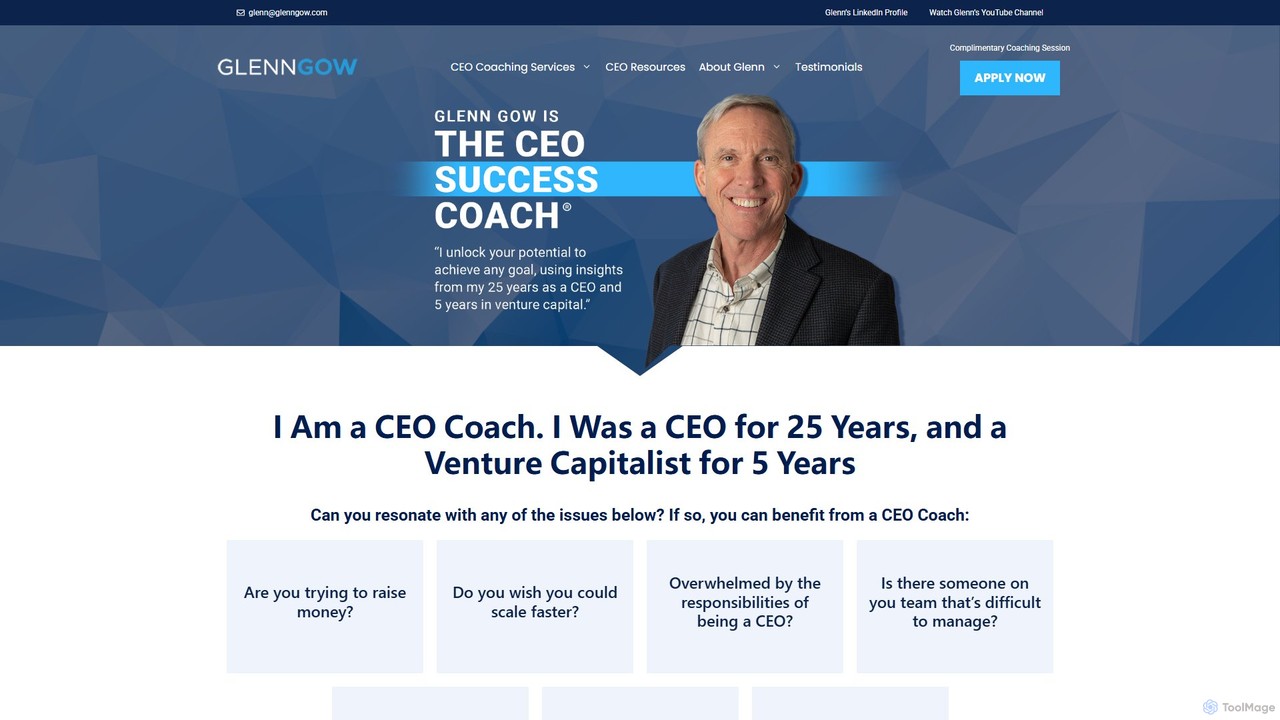
Glenn Gow offers elite CEO coaching services, leveraging 25 years of CEO experience and AI expertise to help leaders scale their companies, raise capital, and navigate complex challenges. This service acts as a strategic tool for executives seeking to enhance their leadership and integrate AI for business growth.

Consulting
Visits 8.6KFavorites 159Likes 157

About Leadership

Leadership AI tools are specialized artificial intelligence applications designed to empower managers, executives, and team leaders with enhanced capabilities for strategic decision-making, team management, and personal development. These tools leverage advanced analytics, natural language processing, and machine learning to provide data-driven insights, automate routine leadership tasks, and foster more effective communication. By integrating AI into leadership workflows, organizations can achieve greater agility, improve employee engagement, and drive sustainable growth, positioning these tools as a vital extension of broader productivity enhancements.

Core Features

  • Strategic Insights: Analyzes market data, internal performance, and trends to inform strategic planning and risk assessment.
  • Team Performance Management: Monitors individual and team progress, provides objective feedback, and suggests personalized development paths.
  • Communication Optimization: Assists in drafting impactful messages, analyzes sentiment, and recommends tailored communication strategies for diverse audiences.
  • Bias Detection & Fairness: Identifies potential biases in hiring, promotion, and performance reviews to promote equitable talent management.
  • Leadership Coaching & Development: Offers personalized guidance, skill assessments, and learning resources for continuous leadership improvement.

Use Cases

Leadership AI tools are indispensable for executives shaping organizational strategy, HR professionals optimizing talent development, and team leads fostering high-performing teams. They are used to transform raw data into actionable intelligence for critical decisions, streamline complex feedback processes, and ensure consistent, fair practices across the organization.

How to Choose

When selecting Leadership AI tools, prioritize solutions that align with your specific leadership challenges, such as strategic planning, team development, or communication. Evaluate their integration capabilities with existing HR and productivity platforms, data security protocols, and the ethical AI principles they uphold. Consider the scalability of the solution and the level of customization offered to meet unique organizational needs.

Leadership use cases

1

Enhancing Strategic Planning with Data

A CEO utilizes Leadership AI to synthesize vast amounts of market research, competitor analysis, and internal operational data. The AI identifies emerging trends, potential risks, and growth opportunities, presenting actionable insights that inform long-term strategic decisions and resource allocation, significantly reducing the time spent on manual data aggregation and analysis.

2

Personalized Employee Development & Coaching

An HR Director deploys AI leadership tools to analyze employee performance reviews, skill assessments, and career aspirations. The AI generates personalized development plans, recommends relevant training modules, and provides managers with tailored coaching prompts, fostering individual growth and improving overall workforce capabilities.

3

Optimizing Cross-Functional Team Collaboration

A Project Manager uses AI to monitor communication patterns and task dependencies across diverse teams. The AI identifies potential bottlenecks, suggests optimal communication channels, and provides insights into team dynamics, enabling the manager to proactively address issues and enhance collaborative efficiency and project delivery.

4

Automating Objective Performance Feedback

A Department Head leverages Leadership AI to consolidate performance metrics, project contributions, and peer feedback. The AI generates objective, constructive feedback reports for team members, highlighting achievements and areas for improvement, which saves significant time and ensures consistency and fairness in performance evaluations.

5

Mitigating Bias in Talent Management

A Talent Acquisition Lead integrates AI leadership tools into the recruitment and promotion processes. The AI analyzes job descriptions, candidate resumes, and interview notes to detect subtle biases in language or evaluation criteria, helping to ensure a more equitable and diverse talent pipeline and fostering an inclusive workplace culture.

6

Facilitating Effective Change Management Communication

A Senior Leader employs AI to craft and disseminate communications during periods of organizational change. The AI analyzes employee sentiment, identifies key concerns, and suggests optimal messaging strategies for different departments, ensuring clarity, addressing resistance, and maintaining employee morale throughout the transition.

Leadership FAQ

What are Leadership AI tools and how do they differ from general productivity tools?

Leadership AI tools are specialized applications that leverage artificial intelligence to support strategic decision-making, team management, and personal leadership development. Unlike general productivity tools that focus on automating individual tasks or streamlining workflows (e.g., scheduling, document creation), Leadership AI specifically addresses the complex, nuanced challenges faced by leaders, such as providing data-driven insights for strategy, optimizing team dynamics, and enhancing communication effectiveness. They aim to augment a leader's cognitive abilities and managerial impact.

How do Leadership AI tools enhance strategic decision-making?

Leadership AI tools enhance strategic decision-making by processing and analyzing vast datasets from internal operations, market trends, and external factors. They can identify patterns, predict outcomes, and simulate various scenarios, providing leaders with comprehensive, data-driven insights. This allows for more informed, agile, and proactive strategic choices, reducing reliance on intuition alone and mitigating risks associated with complex business environments.

Can Leadership AI assist with improving team performance and employee engagement?

Yes, Leadership AI can significantly assist with improving team performance and employee engagement. These tools can analyze performance data, communication patterns, and feedback to identify individual and team strengths, weaknesses, and potential areas for burnout. They can then suggest personalized coaching interventions, optimize task assignments, and recommend strategies to foster a more collaborative and engaging work environment, ultimately boosting productivity and morale.

What are the key ethical considerations when implementing Leadership AI?

Key ethical considerations for Leadership AI include data privacy and security, ensuring fairness and preventing algorithmic bias in decision-making (e.g., hiring, promotions), transparency in how AI-driven insights are generated, and maintaining human oversight. It's crucial to implement these tools responsibly, ensuring they augment human leadership rather than replace it, and that employee well-being and trust are prioritized.

What features should I look for when choosing a Leadership AI platform?

When choosing a Leadership AI platform, look for features such as robust data analytics for strategic insights, comprehensive team performance tracking and feedback mechanisms, advanced communication optimization tools, and bias detection capabilities. Additionally, consider its integration with your existing HR and productivity systems, the level of customization offered, data security measures, and the platform's commitment to ethical AI practices and continuous development.