
Productivity Best in category 1 results Learning Management System AI Tool

Popular AI tools in the Learning Management System field of Productivity include GoodCourse, etc., helping you quickly improve efficiency.

GoodCourse

GoodCourse

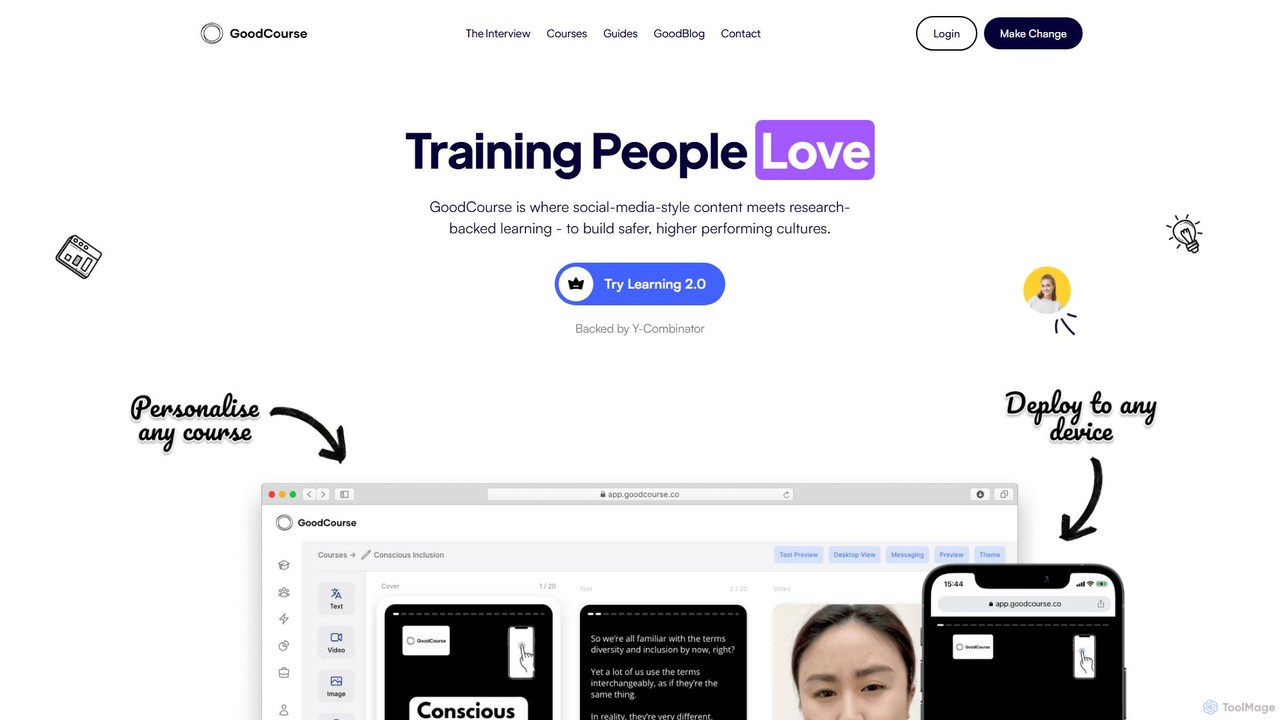
GoodCourse is a micro-learning platform that transforms corporate and student training into engaging, social-media-style experiences. It delivers short, …

10.4K

About Learning Management System

A Learning Management System (LMS) is a software application designed to administer, document, track, report, and deliver educational courses or training programs. These productivity tools streamline the entire learning process by centralizing content, managing users, and monitoring progress. An LMS enhances efficiency in education and corporate training, making it easier to deploy and manage diverse learning initiatives.

Core Features

  • Course Management: Create, organize, and deliver various types of learning content, including modules, lessons, and multimedia.
  • User Administration: Manage learner profiles, assign roles, and enroll users in specific courses or groups.
  • Progress Tracking & Reporting: Monitor learner activity, track completion rates, and generate detailed reports on performance and engagement.
  • Assessment Tools: Develop and deploy quizzes, assignments, and exams to evaluate learning outcomes.
  • Communication & Collaboration: Facilitate interaction through forums, messaging, and virtual classrooms.

Use Cases

Learning Management Systems are widely adopted across various sectors to manage educational and training needs. They are essential for corporate HR departments to onboard new employees and conduct ongoing professional development, for academic institutions to deliver online courses and manage student learning, and for independent educators to host and sell their digital content.

How to Choose

When selecting an LMS, consider its scalability to accommodate future growth, integration capabilities with existing HR or student information systems, and user-friendliness for both administrators and learners. Evaluate the range of features offered, such as mobile access and gamification, along with pricing models and the level of customer support provided to ensure it aligns with your organizational needs and budget.

Learning Management SystemUse Cases

1

Corporate Employee Onboarding & Training

HR departments utilize an LMS to standardize and automate the onboarding process for new hires, delivering essential company policies, compliance training, and role-specific skills development. This ensures consistent training quality, reduces manual administrative tasks, and accelerates new employees' time-to-productivity.

2

Academic Course Delivery & Management

Universities and schools leverage an LMS to host online courses, distribute learning materials, manage assignments, and facilitate student-teacher communication. It provides a centralized platform for blended or fully remote learning, enabling educators to track student progress and engagement effectively.

3

Professional Certification & Compliance

Organizations in regulated industries use an LMS to deliver mandatory compliance training and manage professional certification programs. The system tracks completion, issues certificates, and provides audit trails, ensuring employees meet industry standards and regulatory requirements efficiently.

4

Sales Team Product Knowledge Training

Sales managers deploy an LMS to educate their teams on new product features, sales techniques, and market trends. This allows for rapid dissemination of critical information, consistent messaging, and measurable improvements in sales performance through targeted training modules and assessments.

5

Customer & Partner Education Programs

Businesses use an LMS to train customers on product usage or educate partners on sales strategies and support protocols. This improves customer satisfaction, reduces support inquiries, and empowers partners with the knowledge needed to effectively sell and support products.

6

Online Course Creation & Monetization

Independent educators, coaches, and content creators use an LMS to build, host, and sell their online courses. It provides tools for content delivery, student management, payment processing, and community building, enabling them to scale their educational offerings and reach a global audience.

Learning Management SystemFrequently Asked Questions