Productivity Best in category 2 results Learning Management AI Tool

Popular AI tools in the Learning Management field of Productivity include CoachSMA、Trenaro, etc., helping you quickly improve efficiency.

CoachSMA

CoachSMA

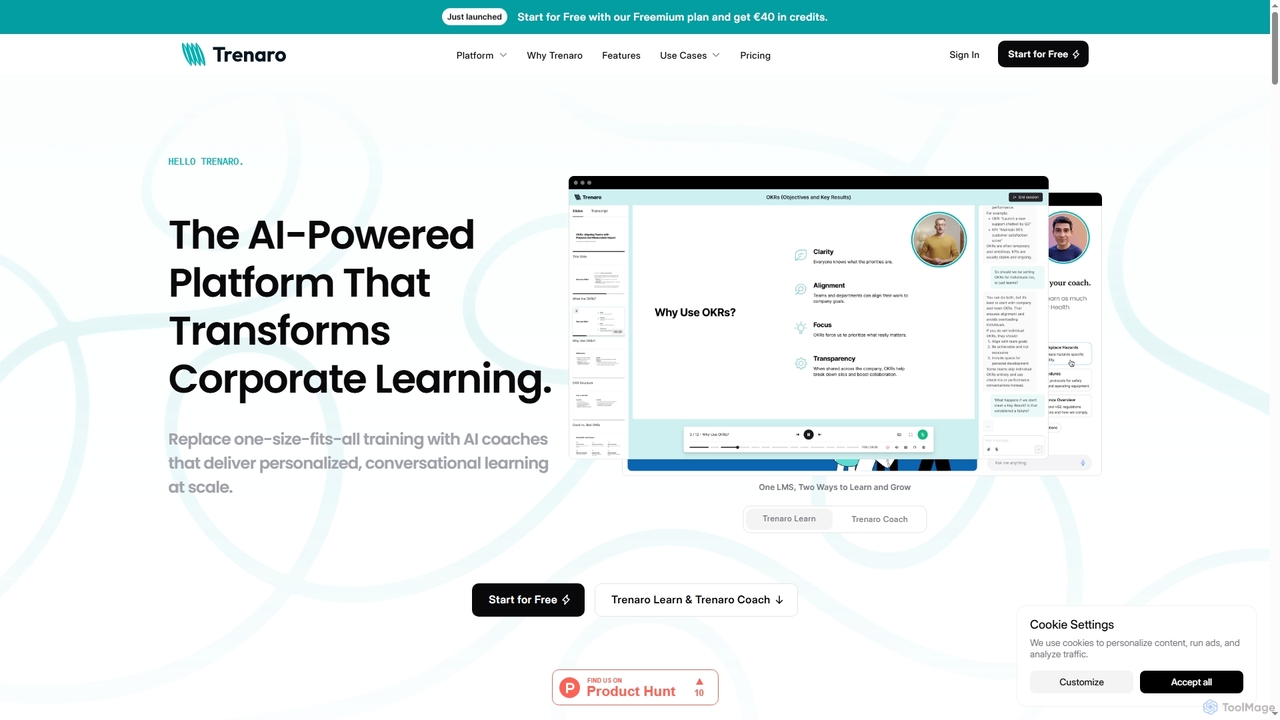
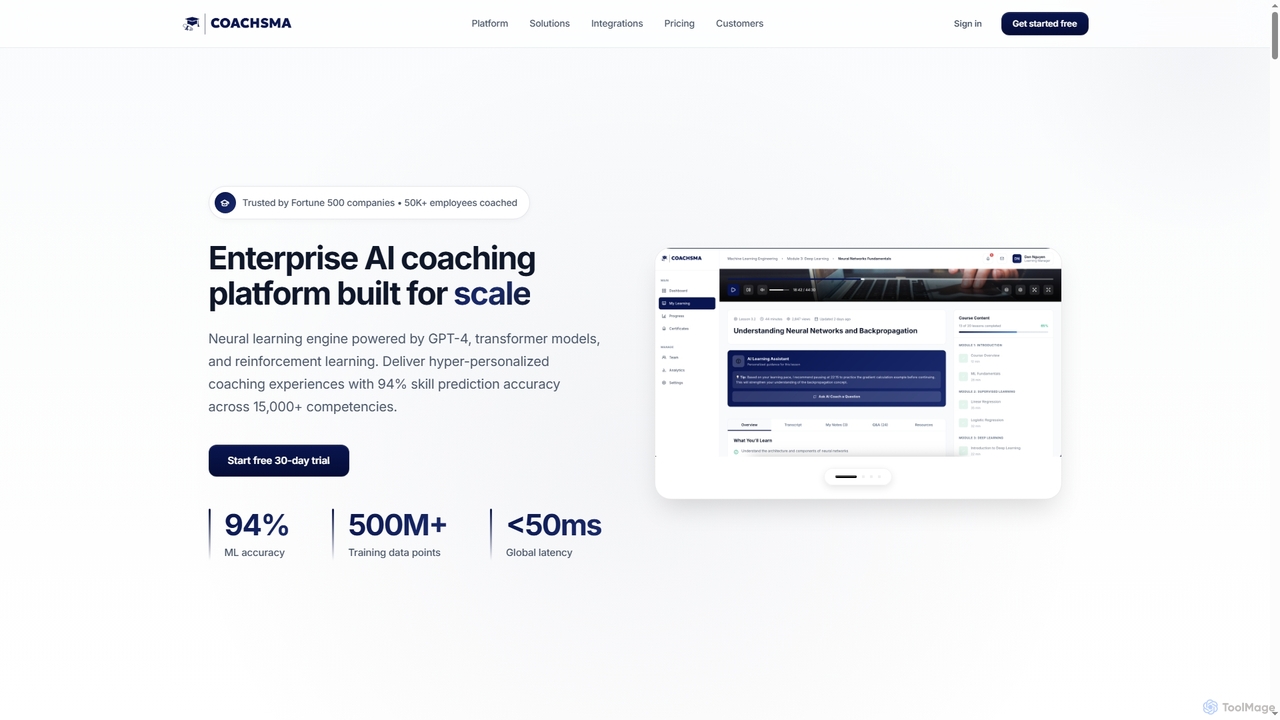
CoachSMA is an enterprise AI coaching platform that delivers hyper-personalized employee training experiences. Leveraging GPT-4, transformer models, and …

2.6K
Trenaro

Trenaro

Trenaro is an AI-powered learning platform designed for corporate training, transforming existing content into interactive courses and providing …

2.5K

About Learning Management

AI Learning Management tools are platforms designed to administer, document, track, and deliver educational courses or training programs using artificial intelligence. They enhance traditional Learning Management Systems (LMS) by leveraging AI to create personalized learning paths, automate content creation, and provide deep analytical insights into learner performance. This approach transforms learning from a static process into a dynamic, adaptive experience, significantly boosting engagement and knowledge retention for corporate training and academic education. As a specialized area of productivity, these tools focus on optimizing the efficiency and effectiveness of the entire learning lifecycle.

Core Features

  • Personalized Learning Paths: AI analyzes individual performance and learning styles to recommend custom content, modules, and difficulty levels.
  • Automated Content Generation: Assists educators in creating quizzes, summaries, and even draft course materials from existing documents or videos.
  • Intelligent Assessment: Automates the grading of objective tests and provides AI-driven feedback on subjective assignments like essays.
  • Predictive Analytics: Identifies at-risk learners, predicts future performance, and offers insights for curriculum improvement.
  • AI-Powered Search: Enables learners to use natural language queries to find specific information across a vast library of course content.

Applicable Scenarios

These tools are widely used in corporate environments for employee onboarding, compliance training, and continuous skill development. Educational institutions, from K-12 to universities, use them to deliver personalized instruction and manage coursework at scale. Online course creators and professional certification bodies also rely on them to manage and deliver their content effectively to a global audience.

Selection Criteria

When choosing an AI Learning Management tool, evaluate the sophistication of its AI features, particularly in personalization and analytics. Consider its integration capabilities with other systems like HRIS or CRM. Assess its scalability to support your user base, the intuitiveness of both the learner and administrator interfaces, and the content authoring tools it provides.

Learning ManagementUse Cases

1

Automating Corporate Employee Onboarding

An HR manager at a growing tech company uses an AI Learning Management tool to streamline the onboarding process for new hires. They upload company policies, product documentation, and role-specific training videos. The AI automatically structures this content into an interactive onboarding curriculum. For each new employee, the system creates a personalized learning path based on their department and role, tracking their progress in real-time and using predictive analytics to flag anyone who might be falling behind. This reduces the manual administrative burden on HR by over 60% and ensures a consistent, comprehensive onboarding experience for every new team member.

2

Creating Adaptive University Courses

A university professor for a large introductory computer science class uses an AI LMS to manage their course. Instead of a one-size-fits-all curriculum, the AI assesses each student's baseline knowledge through an initial quiz. Based on the results, it recommends prerequisite modules for some and allows others to jump to more advanced topics. As students progress, the AI generates personalized practice problems and provides instant feedback on coding assignments. This adaptive approach helps bridge knowledge gaps and keeps advanced students engaged, leading to a 15% improvement in average final grades across the class.

3

Scaling an Online Course Business

An independent online course creator specializing in digital marketing wants to scale their business without hiring more staff. They migrate their courses to an AI Learning Management platform. The AI helps by automatically generating summaries and quizzes for each video lesson. It also powers a 24/7 chatbot that answers common student questions, freeing up the creator's time. The platform's analytics identify which topics students struggle with the most, providing valuable data for creating new, targeted content. This automation allows the creator to support ten times more students with the same amount of personal effort.

4

Personalized Professional Skill Development

A software engineer wants to learn a new programming language to advance their career. They enroll in a course on an AI-powered learning platform. The platform first assesses their existing coding knowledge. It then curates a learning path that skips concepts they already know and focuses on the new syntax and advanced features. The AI provides interactive coding challenges with real-time debugging suggestions, simulating a pair-programming experience. This personalized approach allows the engineer to master the new language in 40% less time compared to a traditional, linear online course.

5

Enhancing Sales Team Product Knowledge

A sales manager for a medical device company needs to ensure their team is always up-to-date on a complex and evolving product line. They use an AI LMS to deliver bite-sized training modules. The AI creates role-playing scenarios where salespeople practice their pitches to an AI-powered 'client'. The system provides instant feedback on product feature accuracy and communication style. The manager receives a dashboard with analytics showing team-wide knowledge gaps, allowing them to schedule targeted group training sessions. This continuous, adaptive training leads to a 20% increase in sales conversion rates.

6

Automating Compliance and Certification Training

A financial services firm must provide annual compliance training to all employees and track completion for regulatory audits. They use an AI LMS to automate this entire process. The system automatically enrolls employees, sends reminders, and delivers the training content. The AI generates different versions of the final assessment to prevent cheating. Upon successful completion, it automatically issues a digital certificate and logs the record in a secure, audit-ready database. This automation saves hundreds of administrative hours and reduces the risk of non-compliance penalties.

Learning ManagementFrequently Asked Questions