Productivity Best in category 1 results Legal Research AI Tool

Popular AI tools in the Legal Research field of Productivity include Fazhi, etc., helping you quickly improve efficiency.

Fazhi

Fazhi

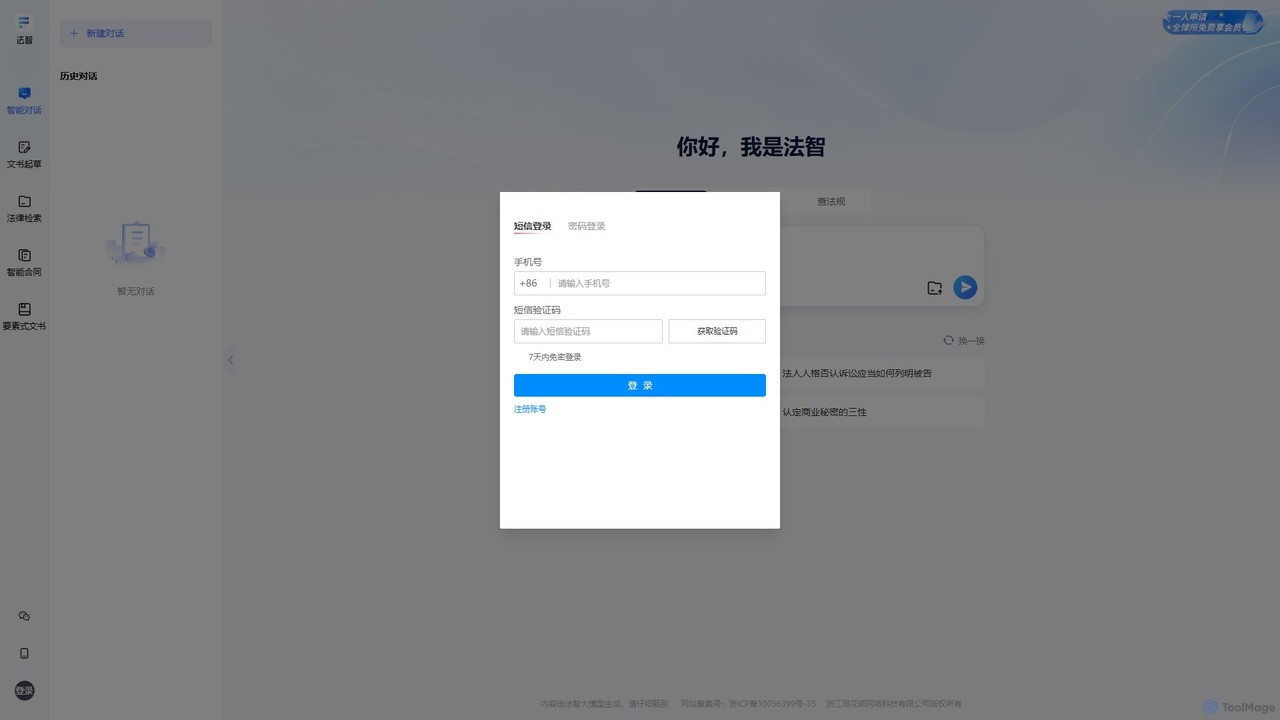
Fazhi is an AI-powered legal assistant designed for the Chinese legal system. It offers intelligent dialogue for legal …

697

About Legal Research

AI Legal Research tools are specialized platforms that leverage natural language processing (NLP) and machine learning to analyze vast legal databases. They go beyond simple keyword matching to understand legal concepts, context, and relationships within case law, statutes, and regulatory documents. This enables legal professionals to uncover relevant precedents, analyze arguments, and assess risks with greater speed and accuracy. These tools transform the traditionally time-consuming research process into a more efficient and insightful workflow, forming a critical part of the modern productivity toolkit for the legal industry.

Core Features

  • Semantic Search: Finds conceptually relevant documents, even if they don't contain the exact keywords used in the query.
  • Case Law Analysis: Automatically identifies key precedents, summarizes judicial opinions, and maps out citation networks.
  • Automated Summarization: Generates concise summaries of lengthy legal documents, contracts, or court filings.
  • Argument Extraction: Pinpoints and extracts key legal arguments and reasoning from judicial decisions.
  • Regulatory Tracking: Monitors and alerts users to changes in legislation and regulations relevant to their practice area.

Use Cases

These tools are primarily used by law firms, corporate legal departments, government agencies, and academic institutions. For instance, a litigator can quickly find supporting case law for a motion, while a corporate counsel can perform rapid due diligence by analyzing thousands of contracts for specific clauses. They are essential for any task requiring deep, comprehensive, and efficient analysis of legal texts.

How to Choose

When selecting an AI Legal Research tool, consider the scope and jurisdiction of its database. Evaluate the sophistication of its analytical features, such as its ability to identify case sentiment or predict outcomes. Also, assess its integration capabilities with existing case management systems and prioritize platforms with robust data security and confidentiality protocols to protect sensitive client information.

Legal ResearchUse Cases

1

Discovering Case Precedents for Litigation

A litigator is preparing a motion to dismiss and needs to find binding precedents. Instead of spending hours with keyword searches, they use an AI tool to input a summary of their legal argument. The AI analyzes the conceptual basis of the argument and returns a ranked list of the most relevant cases from the correct jurisdiction, including obscure or recent rulings that keyword searches might miss. This process reduces research time by over 70% and strengthens the legal motion with more precise and powerful citations.

2

Accelerating Due Diligence in M&A Deals

A corporate legal team is conducting due diligence for a major acquisition. They are faced with reviewing over 10,000 contracts from the target company. Using an AI legal research tool with document analysis capabilities, they can automatically scan all documents to identify non-standard clauses, change of control provisions, and potential liabilities. The tool flags high-risk contracts for human review, transforming a multi-week manual process into a matter of days and enabling the team to provide faster, more comprehensive risk assessments to business leaders.

3

Drafting Legal Memos and Summaries

A junior associate is tasked with drafting a research memo on a complex point of law. They use an AI tool to input the legal question. The AI scans relevant statutes and case law, identifies the controlling legal principles, and generates a structured draft memo. This draft includes summaries of key cases and direct quotes from relevant legal texts. The associate then uses this AI-generated draft as a foundation, focusing their time on refining the analysis and tailoring the argument, rather than starting from scratch. This improves productivity and serves as a valuable training aid.

4

Monitoring Regulatory Compliance Changes

A compliance officer at a financial institution is responsible for ensuring the company adheres to evolving banking regulations. They use an AI legal tool to set up automated monitoring for specific regulatory bodies and topics. The tool continuously scans for new legislation, proposed rules, and regulatory guidance. When a relevant change is detected, it sends an alert with a summary of the change and an analysis of its potential impact. This proactive approach replaces manual tracking, reduces the risk of non-compliance, and allows the compliance team to focus on implementation rather than discovery.

5

Conducting Academic Legal Research

A law professor is researching the historical evolution of a specific legal doctrine. Traditional research methods would involve manually tracing citations through decades of case law. By using an AI research platform, the professor can visualize the entire citation network for a landmark case, identify seminal articles that influenced the doctrine, and track how different courts have interpreted it over time. The AI can also surface related concepts from other areas of law, potentially uncovering novel interdisciplinary connections and arguments for their scholarly work.

6

Streamlining eDiscovery Document Review

In a large-scale litigation, a legal team must review millions of documents for relevance and privilege. An AI legal research tool with eDiscovery features uses Technology Assisted Review (TAR) or predictive coding. The team trains the AI by manually coding a small sample of documents. The AI then applies this learning to classify the entire document set, prioritizing the most likely relevant documents for human review. This drastically reduces the volume of documents needing manual inspection, saving thousands of hours and significantly cutting litigation costs.

Legal ResearchFrequently Asked Questions