ToolMage
Sign in

Best 2 Life Coach AI tools for Productivity

Popular Life Coach AI tools in Productivity include fixmylife.ai and Thoughtful, helping you work more efficiently.

fixmylife.ai
Freemium

fixmylife.ai

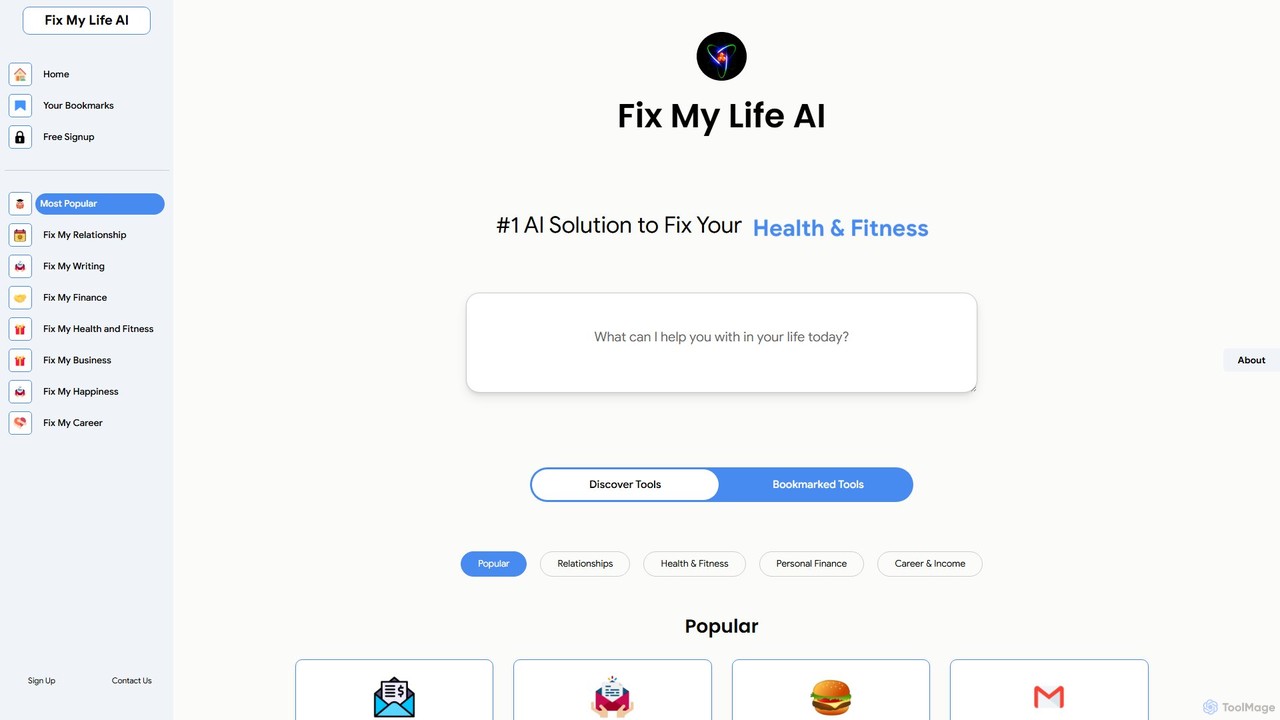
fixmylife.ai is an AI-powered life coach designed to help you solve personal and professional problems. By analyzing your challenges, it provides structured guidance, actionable steps, and personalized strategies for self-improvement. Whether you're facing a career dilemma, a personal conflict, or need help with goal setting, this tool offers a confidential and accessible space to find clarity and direction.

Mental Wellness
Visits 5.8KFavorites 132Likes 141
Thoughtful
Freemium

Thoughtful

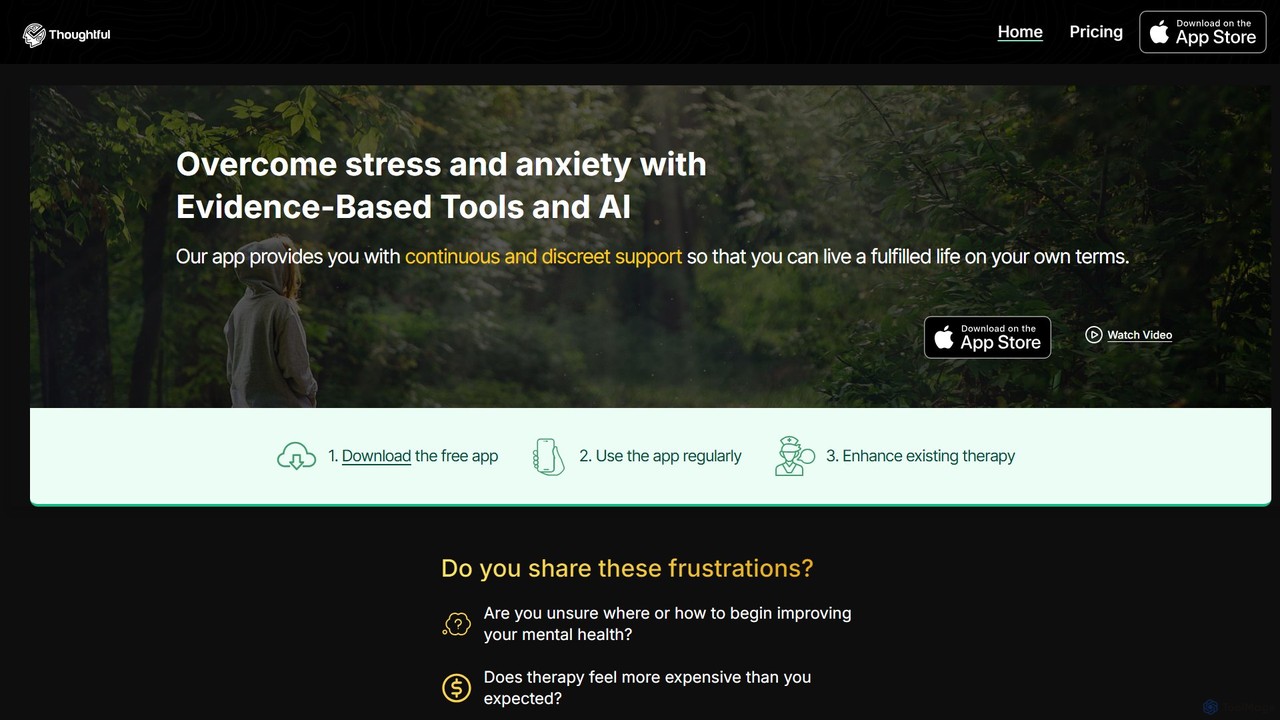
Thoughtful is an AI-powered mental wellness app that acts as a self-directed life coach in your pocket. Using evidence-based Cognitive Behavioral Therapy (CBT) tools, it helps users manage stress, anxiety, and depression. The app provides personalized insights, thought tracking, mental reminders, and instant feedback to support your mental health journey, either independently or as a complement to traditional therapy.

Mental Health
Visits 5.7KFavorites 128Likes 123

About Life Coach

AI Life Coach tools are personalized digital companions designed to guide users in achieving personal and professional goals. They leverage artificial intelligence, particularly Natural Language Processing (NLP) and machine learning, to provide tailored advice, track progress, and offer motivational support. These tools function as an accessible, 24/7 partner for self-improvement, helping users build positive habits, manage stress, and enhance overall productivity and well-being. Their key value lies in making personalized coaching principles available to a broader audience through an interactive, data-driven platform.

Core Features

  • Personalized Goal Setting: AI algorithms help users define clear, achievable goals and break them down into manageable steps.
  • Intelligent Habit Tracking: Monitors consistency, provides smart reminders, and uses positive reinforcement to help solidify new routines.
  • Conversational Support: Engages users in text or voice-based conversations to offer encouragement, overcome obstacles, and provide accountability.
  • Mindfulness & Well-being Modules: Includes guided meditations, journaling prompts, and stress-reduction exercises based on user-reported moods.
  • Progress Analytics: Visualizes data on habits, goal completion, and mood patterns to offer actionable insights for growth.

Use Cases

These tools are widely used by professionals seeking better work-life balance, students aiming to improve study habits and time management, and individuals focused on personal development, fitness, or mental wellness. For example, a user can set a goal to improve public speaking skills, and the AI coach will create a plan with daily practice exercises and weekly check-ins.

How to Choose

When selecting an AI Life Coach, consider the underlying coaching methodology (e.g., CBT, positive psychology). Evaluate the level of personalization and the quality of its conversational AI. Also, check its integration capabilities with other apps like calendars or fitness trackers, and carefully review the data privacy policy to ensure your personal information is secure.

Life Coach use cases

1

Achieving Career Development Goals

A mid-level manager aims for a promotion within the next year. They use an AI Life Coach to set this as a primary goal. The AI helps break it down into smaller, actionable objectives, such as 'Complete a leadership course,' 'Mentor a junior colleague,' and 'Lead a high-impact project.' The coach schedules weekly check-ins, prompting the manager to reflect on progress and challenges. It provides motivational messages when progress stalls and offers resources like articles on leadership, helping the user stay focused and accountable throughout their journey.

2

Building a Consistent Morning Routine

An individual struggles with waking up early and starting their day productively. They use an AI Life Coach to design a consistent morning routine, including waking up at 6 AM, meditating for 10 minutes, and exercising for 20 minutes. The AI tool sends a gentle alarm, followed by a guided meditation audio. It then prompts the user to start their workout and tracks completion. By using streaks and rewarding badges for consistency, the coach gamifies the process, making it more engaging and helping the user build a lasting, positive habit that boosts their daily energy and focus.

3

Managing Daily Stress and Anxiety

A university student feeling overwhelmed by academic pressure uses an AI Life Coach for mental well-being. The coach offers daily check-ins, asking about their mood and stress levels. Based on the responses, it suggests personalized coping mechanisms, such as a 5-minute breathing exercise before an exam or a guided journaling session to process anxious thoughts. The AI can identify patterns over time, noting if stress levels peak on certain days, and provides insights to help the student proactively manage their mental health and build resilience.

4

Improving Financial Literacy and Habits

A young professional wants to save for a down payment on a house but struggles with budgeting. They use an AI Life Coach focused on financial wellness. The user sets a savings goal and connects their bank accounts. The AI coach analyzes spending patterns, identifies areas for potential savings (e.g., 'You spent 30% more on dining out this month'), and helps create a realistic budget. It provides daily tips on financial literacy and sends alerts when the user is close to their budget limits, acting as a non-judgmental financial accountability partner.

5

Enhancing Focus and Reducing Procrastination

A freelance writer often struggles with procrastination and distractions. They use an AI Life Coach to implement time management techniques like the Pomodoro method. The coach helps them break down large writing projects into focused 25-minute sessions. It starts a timer, blocks distracting notifications, and provides a short break reminder. Through conversational check-ins, the AI asks, 'What's one small step you can take right now?' to help overcome the initial inertia. Over time, it analyzes productivity data to suggest the writer's most focused hours of the day.

6

Preparing for a Major Life Transition

Someone planning to move to a new city for a job uses an AI Life Coach to manage the complex process. The coach helps them create a comprehensive checklist, from finding housing to setting up utilities. It breaks the transition into weekly goals and provides reminders for important deadlines. Furthermore, the conversational AI offers emotional support, allowing the user to journal about their anxieties and excitement. It can provide prompts like, 'What are you most looking forward to in the new city?' to help maintain a positive outlook during a stressful period.

Life Coach FAQ

What is an AI Life Coach?

An AI Life Coach is a software application that uses artificial intelligence to provide personalized guidance for self-improvement and goal achievement. Unlike simple productivity apps, it engages in conversational interactions to understand a user's goals, motivations, and challenges. Key features typically include:

  • Personalized goal setting and task breakdown.
  • Intelligent habit tracking with motivational feedback.
  • Conversational check-ins for accountability.
  • Mindfulness and stress-management exercises.
Essentially, it acts as a digital partner to help you structure your personal development journey and stay motivated.

How is an AI Life Coach different from a task manager or to-do list app?

The primary difference lies in context and interaction. A task manager is a static tool for organizing what you need to do. An AI Life Coach is a dynamic partner focused on why and how you do it. Key distinctions include:

  • Guidance vs. Organization: A task manager organizes tasks. An AI coach helps you define meaningful goals, breaks them down, and provides strategies to achieve them.
  • Motivation & Accountability: AI coaches use conversational AI, reminders, and positive reinforcement to keep you motivated, a feature absent in most to-do lists.
  • Adaptability: An AI coach can learn from your progress and setbacks, adjusting its suggestions over time. A task manager simply tracks completion.
In short, a task manager holds your tasks, while an AI Life Coach helps hold you accountable to your ambitions.

Can an AI Life Coach replace a human coach?

An AI Life Coach is best viewed as a complementary tool, not a replacement for a human coach. AI coaches excel at providing 24/7 accessibility, data tracking, and consistent reminders for daily habits and tasks. They are highly effective for structured goal-setting and maintaining momentum. However, a human coach offers deep empathy, nuanced understanding of complex life situations, and a level of creative problem-solving and accountability that AI cannot yet replicate. For many, the ideal approach is using an AI coach for daily accountability and a human coach for deeper, strategic life planning and emotional support.

How do I choose the right AI Life Coach tool?

Selecting the right tool depends on your specific goals. Consider these factors:

  • Coaching Focus: Does the tool specialize in career development, wellness, fitness, or general productivity? Choose one that aligns with your primary objective.
  • Methodology: Some tools are based on principles like Cognitive Behavioral Therapy (CBT) or positive psychology. Research which approach resonates with you.
  • User Interface: Is the app intuitive and engaging? A tool you enjoy using is one you'll stick with. Look for features like conversational chat, progress visualization, and gamification.
  • Data Privacy: Since you'll be sharing personal information, carefully review the app's privacy policy to understand how your data is stored and used.
Start by identifying your main goal, then look for a tool whose features and philosophy best support that goal.

Is my data safe with an AI Life Coach?

Data privacy is a critical consideration for AI Life Coach tools. Reputable developers prioritize security and use encryption to protect user data both in transit and at rest. Most platforms anonymize data used for training their AI models to prevent personal identification. However, policies can vary significantly between applications. Before committing to a tool, it is essential to:

  • Read the privacy policy and terms of service carefully.
  • Understand what data is collected and for what purpose.
  • Check if the company complies with data protection regulations like GDPR or CCPA.
  • Look for options to export or delete your data.
Choosing tools from established developers with transparent privacy practices is the best way to ensure your information is handled responsibly.