ToolMage
Sign in

Best 2 Memorization AI tools for Productivity

Popular Memorization AI tools in Productivity include Memozora and StudyCards App, helping you work more efficiently.

Memozora
Freemium

Memozora

Memozora is an AI-powered online flashcard maker designed for effective learning through the science of spaced repetition. It's particularly optimized for language learners, featuring built-in multi-language dictionaries and natural text-to-speech. Create, study, and track your progress seamlessly across devices to memorize anything and never forget.

Learning
Visits 10.7KFavorites 143Likes 154
StudyCards App
Freemium

StudyCards App

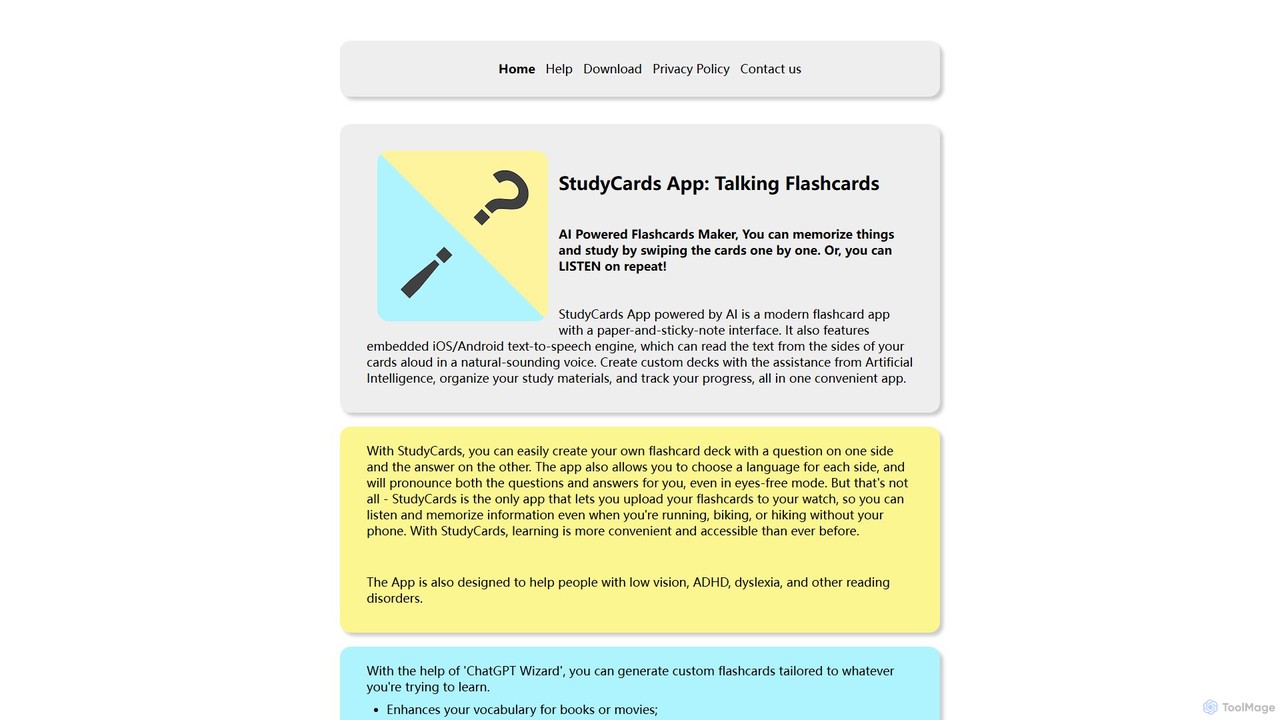
StudyCards App is an AI-powered flashcard maker for efficient learning on the go. It uses a 'ChatGPT Wizard' to instantly generate custom study decks on any topic. Key features include text-to-speech for auditory learning, smartwatch synchronization for phone-free studying, and CSV import. It's built with accessibility in mind, aiding users with dyslexia or ADHD. Available on iOS and Android, it makes memorization easy and accessible for everyone, from students to professionals.

Learning
Visits 7.2KFavorites 97Likes 94

About Memorization

Memorization AI tools are designed to optimize the process of acquiring, retaining, and recalling information using artificial intelligence. These tools leverage advanced algorithms like spaced repetition and active recall to create personalized learning paths and enhance long-term memory. They significantly boost learning efficiency and knowledge retention for students, professionals, and lifelong learners. By automating review schedules and identifying knowledge gaps, they transform how individuals master new subjects and skills.

Core Features

  • Spaced Repetition Systems: Automatically schedules review sessions for optimal memory retention, based on forgetting curves.
  • Active Recall Prompts: Generates questions or prompts to encourage active retrieval of information, strengthening neural pathways.
  • Personalized Learning Paths: Adapts content and review frequency to individual learning pace and performance.
  • Content Summarization: Uses AI to condense long texts or lectures into key points for easier memorization.
  • Flashcard Generation: Automatically creates digital flashcards from notes or study materials.

Use Cases

Students preparing for exams, professionals learning new industry skills, and individuals mastering new languages all benefit from AI memorization tools. They are particularly useful for retaining complex information, such as medical terminology, legal precedents, or programming syntax, by ensuring timely and targeted review.

How to Choose

When selecting an AI memorization tool, consider its core learning methodology (e.g., spaced repetition algorithm), the types of content it supports (text, audio, images), its integration capabilities with existing study platforms, and the level of personalization offered. Evaluate the user interface for ease of use and assess the accuracy of its content generation or summarization features.

Featured tool rankings

Memorization use cases

1

Mastering Academic Subjects

University students use AI memorization tools to efficiently learn complex course material, from historical dates to scientific formulas, by scheduling optimal review times and practicing active recall. This helps them retain vast amounts of information for exams and long-term understanding, reducing study time while improving comprehension and recall accuracy.

2

Accelerating Language Acquisition

Language learners leverage these tools to memorize vocabulary, grammar rules, and idiomatic expressions through intelligent flashcards and spaced repetition, significantly speeding up fluency development. The personalized review schedules ensure that challenging words are revisited more frequently, leading to faster and more robust language retention.

3

Professional Skill Development

Professionals in fields like medicine, law, or IT utilize AI memorization platforms to retain vast amounts of specialized knowledge, certifications, and compliance regulations, ensuring continuous competence. These tools help them stay updated with industry changes and maintain high performance by reinforcing critical information at optimal intervals.

4

Preparing for Certification Exams

Individuals studying for professional certifications (e.g., PMP, CFA, AWS) employ these tools to systematically review key concepts and practice questions, identifying and strengthening weak areas for exam success. The adaptive nature of AI memorization ensures focused study on areas needing improvement, maximizing preparation efficiency.

5

Retaining Business Knowledge

Sales teams or corporate trainers use AI memorization tools to ensure employees effectively retain product knowledge, sales pitches, and company policies, leading to better performance and customer service. This systematic approach to knowledge retention reduces onboarding time and ensures consistent, high-quality interactions with clients.

6

Personal Knowledge Management

Lifelong learners and researchers use these tools to organize and retain information from books, articles, and lectures, building a robust personal knowledge base for future reference and creative work. By actively reviewing and connecting disparate pieces of information, they foster deeper understanding and facilitate innovative thinking.

Memorization FAQ

What are AI Memorization Tools?

AI Memorization Tools are applications that use artificial intelligence to enhance learning and knowledge retention. They typically employ techniques like spaced repetition and active recall to personalize study schedules, generate review prompts, and help users efficiently commit information to long-term memory. These tools are a subset of productivity software, focusing on optimizing the learning process.

How do AI Memorization Tools improve learning efficiency?

These tools improve efficiency by intelligently scheduling review sessions based on the "forgetting curve," ensuring users review information just before they're likely to forget it. They also promote active recall, which is a more effective learning strategy than passive re-reading, by prompting users to retrieve information rather than just recognize it. This targeted approach saves time and strengthens memory.

What is the difference between AI Memorization Tools and traditional flashcards?

Traditional flashcards rely on manual review and organization, often leading to inefficient study habits. AI Memorization Tools, however, automate the review process using algorithms like spaced repetition, dynamically adjusting the review interval for each item based on user performance. They can also automatically generate flashcards from content and offer personalized learning paths, making them significantly more adaptive and effective.

Who can benefit most from using AI Memorization Tools?

A wide range of users can benefit, including students (from K-12 to university), professionals needing to master new skills or retain industry knowledge, language learners, and anyone preparing for certification exams. Essentially, anyone who needs to efficiently learn and retain a significant amount of information over time will find these tools valuable for optimizing their learning process.

Can AI Memorization Tools help with complex subjects?

Yes, AI Memorization Tools are particularly effective for complex subjects. By breaking down large amounts of information into manageable chunks and applying spaced repetition and active recall, they help users systematically build understanding and retention. They can handle diverse content types, from scientific formulas and historical facts to legal precedents and programming concepts, making complex learning more accessible and sustainable.