WellHR
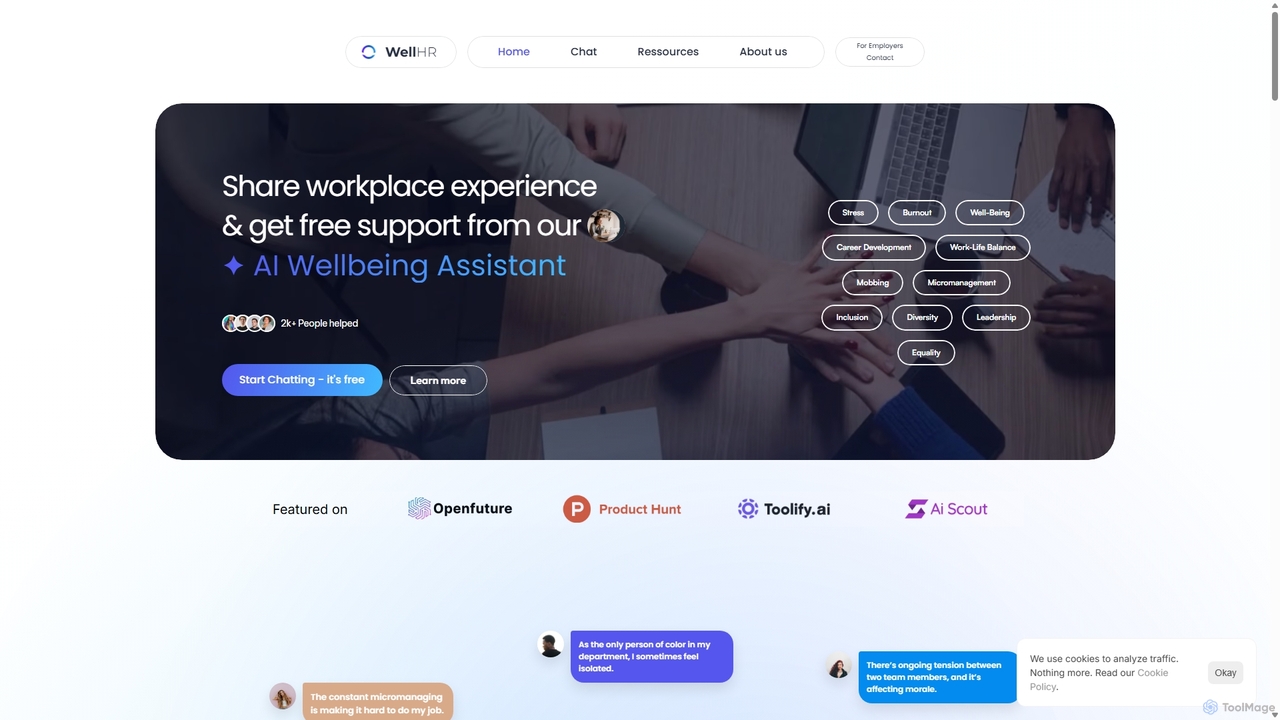
WellHR is an AI-powered wellbeing assistant that provides a safe, anonymous platform for employees to share workplace experiences. …
WellHR is an AI-powered wellbeing assistant that provides a safe, anonymous platform for employees to share workplace experiences. It offers instant support and guidance on issues like stress, burnout, and career development, while enabling anonymous feedback to HR departments to foster a healthier work environment.
About Mental Health
Mental Health AI tools are a specialized category of AI-powered applications designed to support emotional well-being and psychological health. Leveraging advanced algorithms and natural language processing, these tools offer personalized assistance for mood tracking, stress management, and cognitive support. They provide accessible, confidential resources for individuals seeking to enhance their mental resilience and integrate mental wellness practices into their daily routines, contributing to overall productivity and quality of life.
Core Features
- Personalized Mood Tracking: AI analyzes user input to identify mood patterns, triggers, and emotional trends over time.
- Guided Mindfulness & Meditation: Offers AI-curated or dynamically generated meditation sessions and breathing exercises.
- Cognitive Behavioral Therapy (CBT) Support: Provides interactive exercises and techniques based on CBT principles to help reframe negative thoughts.
- Emotional Support Chatbots: Conversational AI offers non-judgmental listening, coping strategies, and crisis resource navigation.
- Stress & Anxiety Management Programs: Delivers tailored programs and interventions to reduce stress and manage anxiety symptoms.
Applicable Scenarios
These tools are invaluable for individuals managing daily stress, anxiety, or mild depression, offering self-help resources and coping mechanisms. They also serve as supplementary aids for mental health professionals, providing clients with between-session support and data tracking. Furthermore, workplaces and educational institutions can integrate these platforms to foster a supportive environment and promote employee/student well-being.
How to Choose
When selecting a Mental Health AI tool, prioritize data privacy and security, ensuring sensitive information is protected. Look for tools grounded in evidence-based psychological principles like CBT or mindfulness. Evaluate personalization capabilities to ensure the tool adapts to individual needs and preferences. Consider its integration potential with professional care, if you plan to share insights with a therapist, and assess the user interface for ease of use and accessibility.
Mental HealthUse Cases
Daily Mood Tracking and Pattern Analysis
Individuals utilize AI-powered applications to consistently log their moods, thoughts, and daily activities. The AI then analyzes this data to identify recurring emotional patterns, potential triggers for stress or anxiety, and long-term trends in their mental state. This helps users gain self-awareness and proactively manage their emotional well-being, providing insights that can be shared with a therapist for more informed discussions.
Personalized Stress and Anxiety Management
Users experiencing stress or anxiety can access AI tools that offer real-time, personalized interventions. Based on their current emotional input, the AI might suggest tailored breathing exercises, guided meditations, or cognitive reframing techniques. This immediate, context-aware support helps individuals de-escalate stressful situations and build resilience against future stressors, making coping strategies more accessible.
Accessible Emotional Support Chatbots
For those needing immediate, non-judgmental support, AI chatbots provide a confidential space to express feelings. These chatbots are designed to listen empathetically, offer basic coping mechanisms, and guide users to relevant resources for more serious concerns. They serve as a convenient first line of support, especially outside of traditional therapy hours, helping users process emotions and feel heard.
Workplace Mental Wellness Programs
Companies implement AI mental health platforms as part of their employee wellness initiatives. These platforms offer confidential mental health check-ins, stress reduction modules, and mindfulness breaks accessible directly from employees' devices. By providing proactive support and resources, organizations aim to reduce burnout, improve employee morale, and enhance overall productivity by fostering a healthier work environment.
Supplementary Therapy Support
Mental health professionals recommend AI tools to their clients as a complement to traditional therapy sessions. Clients can use these tools to practice learned CBT techniques, maintain mood journals, or engage in guided exercises between appointments. This continuous engagement reinforces therapeutic progress, provides therapists with valuable data on client's daily experiences, and extends the reach of professional care.
Sleep Improvement through AI-Guided Relaxation
Individuals struggling with sleep disturbances leverage AI applications designed to promote better rest. These tools offer personalized sleep stories, calming soundscapes, or progressive muscle relaxation techniques, often adapting to user preferences and sleep patterns. By creating a conducive environment for relaxation and reducing pre-sleep anxiety, AI helps users improve their sleep quality and wake up feeling more refreshed.