
ToolMage
Sign in

Best 1 Multifunction AI tools for Productivity

Popular Multifunction AI tools in Productivity include Seamlessity, helping you work more efficiently.

Seamlessity
Freemium

Seamlessity

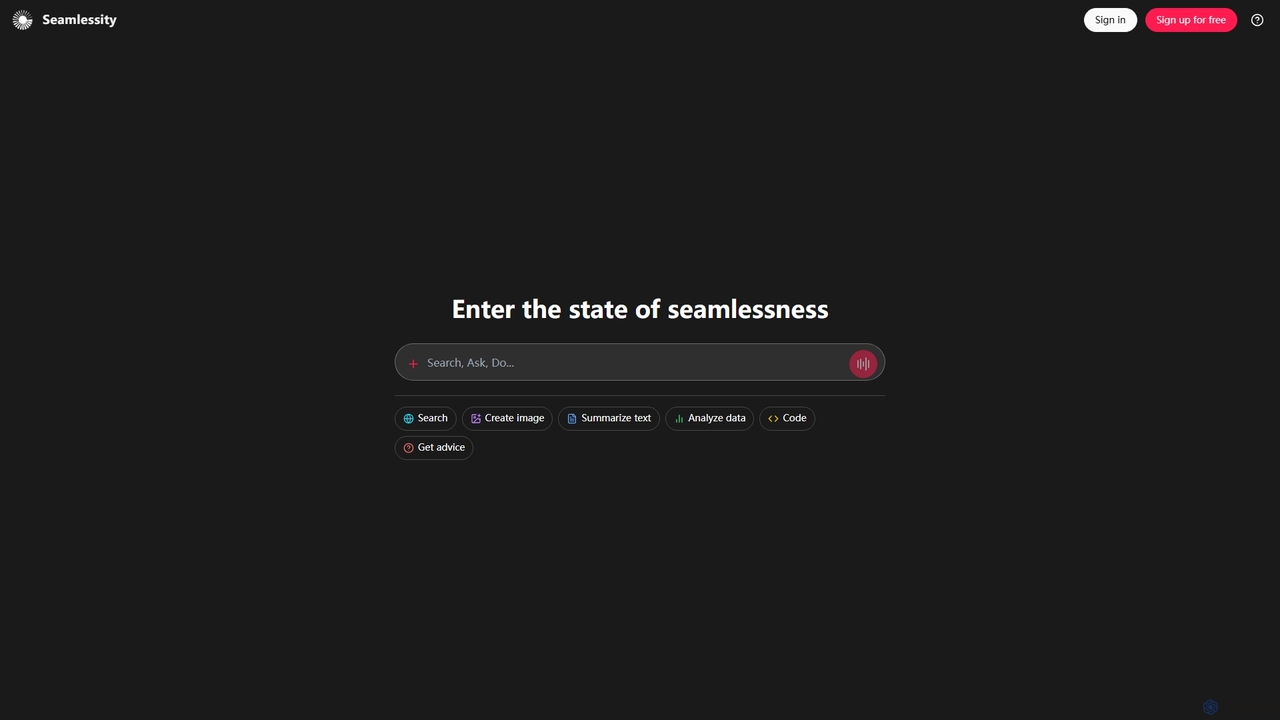
Seamlessity is a versatile AI platform designed to streamline various tasks, offering functionalities such as image creation, text summarization, data analysis, code generation, and expert advice. It aims to provide a unified experience for users seeking efficiency across multiple domains, from creative content generation to complex data interpretation and development support.

Image Generation
Visits 3.5KFavorites 91Likes 96

About Multifunction

Multifunction AI tools are integrated platforms that combine several distinct artificial intelligence capabilities or traditional software functions into a single interface. These tools leverage advanced AI models to offer a versatile suite of features, enabling users to accomplish a wide array of tasks without switching between multiple applications. Their primary value lies in streamlining workflows, enhancing efficiency, and providing a cohesive environment for diverse productivity needs, from content creation to data analysis and task automation.

Core Features

  • Integrated Content Generation: Combines text, image, and sometimes video or audio generation within one platform.
  • Advanced Data Processing: Offers capabilities like summarization, translation, sentiment analysis, and structured data extraction.
  • Task Automation & Management: Automates repetitive tasks, schedules workflows, and assists with project organization.
  • Code & Development Assistance: Provides code generation, debugging, and documentation support across various programming languages.
  • Interactive AI Assistance: Acts as a smart assistant for brainstorming, research, and personalized recommendations.

Applicable Scenarios

These tools are ideal for individuals and teams seeking to consolidate their digital toolkit and maximize efficiency. Content creators can generate text, images, and social media posts from one dashboard. Marketers can manage campaigns, analyze data, and create diverse promotional materials. Small business owners can automate administrative tasks, generate reports, and handle customer communications more effectively.

How to Choose

When selecting a Multifunction AI tool, consider the breadth and depth of its integrated features, ensuring they align with your primary workflow needs. Evaluate its ease of use and user interface for seamless navigation between functions. Assess its integration capabilities with existing software ecosystems and compare pricing models against the cost of acquiring separate specialized tools. Finally, check for customization options and the quality of AI output across different modalities.

Featured tool rankings

Multifunction use cases

1

Streamlining Content Creation Workflows

A digital marketing specialist needs to create a blog post, accompanying social media graphics, and a short video script daily. Instead of using separate tools for writing, image design, and script generation, a multifunction AI tool allows them to input a topic once and generate all required assets within the same platform. This significantly reduces context switching and saves hours of work, enabling the creation of more diverse content faster.

2

Automating Small Business Operations

A small e-commerce business owner often juggles customer service, marketing, and inventory management. A multifunction AI tool can automate customer email responses, generate product descriptions and marketing copy, and even assist with basic data analysis for sales trends. This consolidation helps the owner manage various aspects of their business efficiently without hiring multiple specialists or subscribing to numerous single-purpose tools.

3

Accelerating Software Development & Documentation

A solo developer or a small development team needs to write code, debug, and generate comprehensive documentation for their projects. A multifunction AI tool can provide intelligent code suggestions, identify potential errors, and automatically generate API documentation or user manuals based on the codebase. This integration speeds up the development cycle and ensures consistent, high-quality documentation, freeing up time for core coding tasks.

4

Enhancing Academic Research & Writing

A university student or researcher needs to summarize academic papers, generate research questions, brainstorm essay topics, and create presentation slides. A multifunction AI tool can process large volumes of text, extract key information, suggest relevant sources, and even help structure arguments for papers. This centralizes their research process, making it more efficient and improving the quality of their academic output.

5

Personalized Learning & Skill Development

An individual looking to learn a new skill or language can use a multifunction AI tool for personalized tutoring, generating practice exercises, summarizing complex topics, and even creating flashcards or quizzes. The tool adapts to their learning pace and style, providing a comprehensive and interactive learning environment that combines various educational resources and methods.

6

Optimizing Marketing Campaign Management

A marketing team is launching a new product and needs to develop a comprehensive campaign across multiple channels. A multifunction AI tool can assist in generating ad copy variations for different platforms, designing visual assets, analyzing market trends to identify target audiences, and even drafting email sequences. This integrated approach ensures brand consistency and allows for rapid iteration and optimization of campaign elements from a single dashboard.

Multifunction FAQ

What are Multifunction AI tools?

Multifunction AI tools are comprehensive software platforms that integrate a variety of artificial intelligence capabilities and often traditional productivity functions into a single user interface. Unlike specialized AI tools that focus on one specific task (e.g., only text generation or only image editing), multifunction tools offer a broad suite of functionalities, such as text creation, image generation, data analysis, task automation, and more. They are designed to streamline diverse workflows and reduce the need for multiple separate applications, enhancing overall productivity.

How do Multifunction AI tools enhance productivity?

Multifunction AI tools significantly enhance productivity by consolidating various tasks into one platform, thereby minimizing context switching and reducing the learning curve associated with multiple tools. They automate repetitive processes, accelerate content creation across different modalities (text, image, code), and provide integrated insights from data analysis. This holistic approach allows users to manage complex projects more efficiently, save time, and maintain a consistent workflow, leading to higher output and better resource utilization.

What key features should I look for in a Multifunction AI tool?

When choosing a Multifunction AI tool, prioritize features that align with your core needs. Look for a broad range of AI capabilities, such as robust text generation, versatile image creation, efficient data processing (summarization, analysis), and effective task automation. Evaluate the quality and accuracy of the AI output for each function. Consider the tool's ease of use, its ability to integrate with your existing software ecosystem, and the flexibility of its customization options. Finally, assess its pricing model and customer support.

What is the difference between Multifunction AI tools and specialized AI tools?

The primary difference lies in their scope and focus. Specialized AI tools excel at one particular task, offering deep functionality and advanced features for that specific domain (e.g., a dedicated AI image editor). Multifunction AI tools, conversely, provide a broader, more integrated set of capabilities, allowing users to perform diverse tasks within a single platform, albeit sometimes with less depth in any single function compared to a highly specialized tool. Multifunction tools prioritize workflow consolidation and versatility, while specialized tools prioritize mastery of a single domain.

Who benefits most from using Multifunction AI tools?

Multifunction AI tools are particularly beneficial for individuals and small to medium-sized businesses that handle a wide variety of tasks and seek to optimize their operational efficiency without investing in numerous separate software subscriptions. This includes content creators, digital marketers, small business owners, freelancers, and even developers who need a versatile assistant for various aspects of their work. They are ideal for users who value an integrated workflow and want to reduce the complexity of managing multiple applications.