Societ
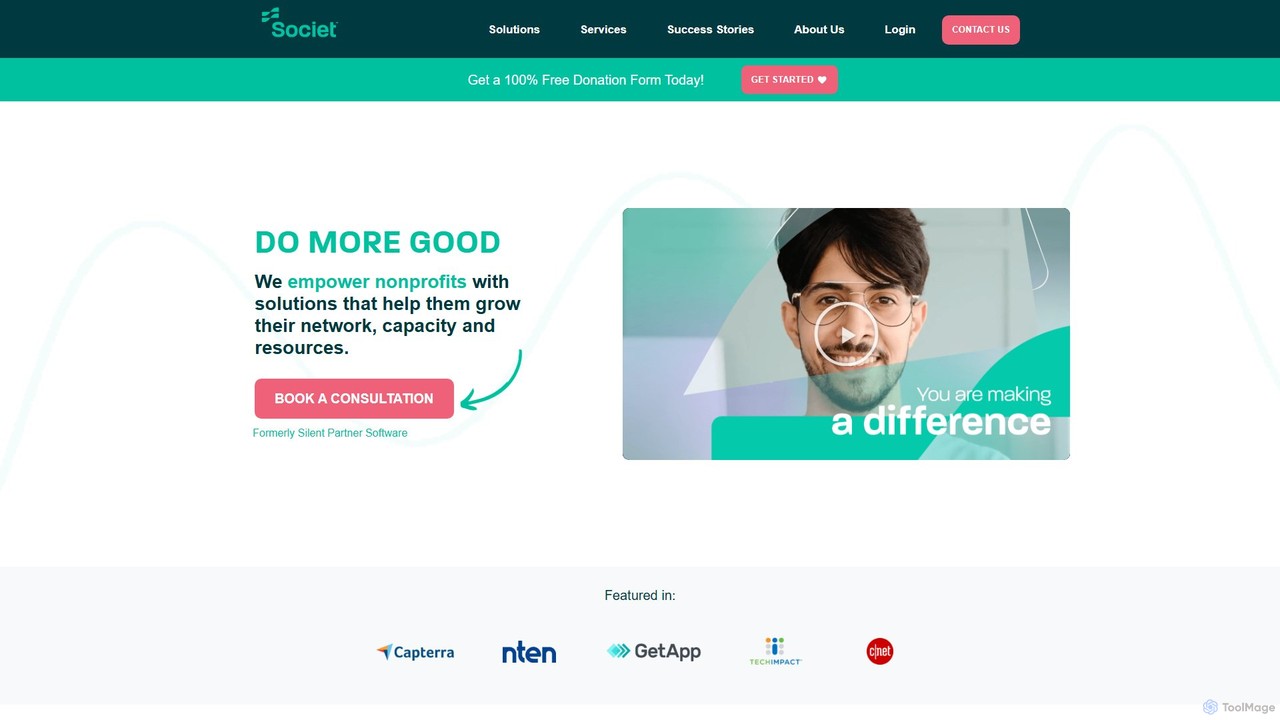
Societ offers a comprehensive suite of software and services exclusively for nonprofits. It provides integrated solutions for case …
Societ offers a comprehensive suite of software and services exclusively for nonprofits. It provides integrated solutions for case management, fundraising, donor management, website creation, and board governance to help organizations grow their network, resources, and impact.
About Nonprofit Management
Nonprofit Management AI tools are specialized platforms designed to empower charitable organizations by leveraging artificial intelligence. These solutions automate administrative tasks, optimize resource allocation, and enhance stakeholder engagement, allowing nonprofits to amplify their mission. They integrate advanced analytics and machine learning to streamline operations, from fundraising to impact reporting, ensuring greater efficiency and transparency.
Core Features
- Donor Relationship Management: Automates donor segmentation, personalized communication, and donation tracking to foster stronger relationships.
- Grant Application & Tracking: Streamlines the grant writing process, identifies suitable funding opportunities, and monitors grant compliance and reporting.
- Volunteer Coordination & Engagement: Optimizes volunteer recruitment, scheduling, communication, and impact measurement.
- Impact Measurement & Reporting: Collects and analyzes program data to generate comprehensive reports on social impact and outcomes.
- Automated Communication: Uses AI to personalize outreach to donors, volunteers, and beneficiaries, improving engagement and response rates.
Applicable Scenarios
Nonprofit Management AI tools are invaluable for organizations seeking to modernize their operations and maximize their social impact. They are used by fundraising teams to optimize campaigns, program managers to track outcomes, and administrative staff to automate routine tasks. These tools help organizations of all sizes, from small community groups to large international NGOs, to operate more strategically and efficiently.
How to Choose
When selecting Nonprofit Management AI tools, consider the specific needs of your organization, such as fundraising volume, volunteer base size, and reporting requirements. Evaluate the tool's integration capabilities with existing systems, its compliance with data privacy regulations (e.g., GDPR), and its scalability to grow with your organization. User-friendliness, support, and pricing models are also crucial factors for long-term success.
Nonprofit ManagementUse Cases
Optimizing Fundraising Campaigns with AI
Nonprofit development teams can leverage AI tools to analyze donor data, predict giving patterns, and identify potential major donors. The AI can segment donors based on their likelihood to contribute to specific campaigns, suggesting personalized outreach strategies and optimal timing for communications. This leads to more targeted and successful fundraising efforts, significantly increasing donation revenue and reducing staff workload.
Streamlining Volunteer Recruitment and Management
Nonprofit volunteer coordinators can use AI tools to match potential volunteers with suitable roles based on their skills, availability, and interests. The AI can automate the screening process, send personalized onboarding materials, and manage scheduling conflicts. This ensures a more efficient recruitment process, higher volunteer retention rates, and better utilization of human resources for various programs.
Automating Grant Application and Reporting
Grant managers in nonprofits can utilize AI tools to identify relevant grant opportunities by scanning databases and matching criteria with the organization's mission. The AI can assist in drafting grant proposals by suggesting relevant data points and language from past successful applications, and automate the generation of compliance reports. This significantly reduces the time spent on administrative tasks, increasing the success rate of grant applications.
Enhancing Impact Measurement and Reporting
Program managers can deploy AI tools to collect, analyze, and visualize data from various program activities and beneficiary feedback. The AI can identify key trends, measure specific outcomes against predefined goals, and generate compelling impact reports for stakeholders and funders. This provides data-driven insights into program effectiveness, enabling continuous improvement and demonstrating accountability.
Personalizing Communications for Stakeholders
Nonprofit communication teams can utilize AI-powered tools to craft highly personalized messages for different stakeholder groups, including donors, volunteers, and beneficiaries. By analyzing past interactions and preferences, the AI can generate tailored emails, social media posts, and even direct mail content. This fosters stronger relationships, increases engagement rates, and ensures that messages resonate more effectively with each audience segment.
Automating Administrative Tasks and Workflows
Nonprofit administrative staff can use AI tools to automate repetitive tasks such as data entry, invoice processing, and scheduling. AI-powered chatbots can handle routine inquiries from donors or volunteers, freeing up staff time for more complex issues. This significantly reduces operational costs, minimizes human error, and allows staff to focus on strategic initiatives rather than mundane administrative burdens.