
Babbly
Babbly is an AI-powered application designed for parents to monitor their infant's speech and brain development. By analyzing …
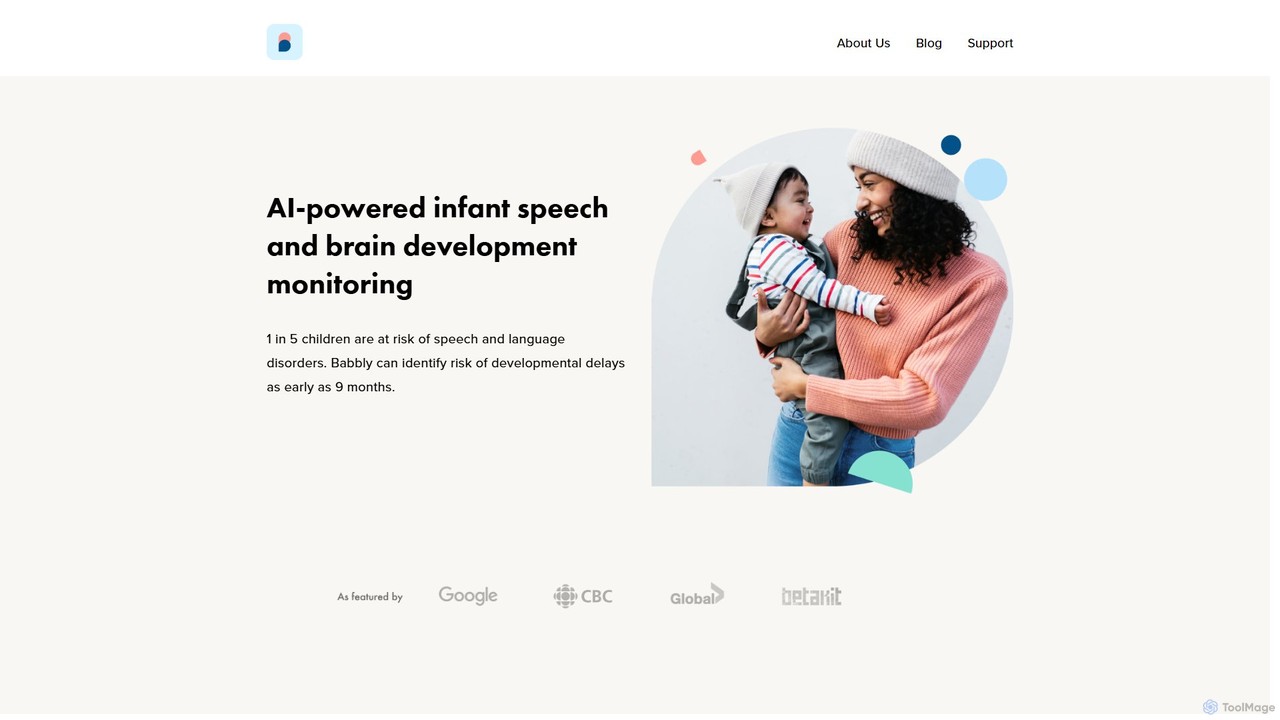
Babbly is an AI-powered application designed for parents to monitor their infant's speech and brain development. By analyzing a baby's babbling, it can identify the risk of developmental delays, such as speech and language disorders, as early as 9 months. The tool provides data-driven insights and personalized activities to support a child's growth.
About Parenting Tools
AI Parenting Tools are specialized applications designed to help parents manage family life and support child development using artificial intelligence. These tools leverage AI to offer personalized advice, automate scheduling, track developmental milestones, and provide educational content. They streamline daily parenting responsibilities, reduce organizational stress, and offer data-driven insights to foster a child's growth. Unlike general productivity apps, they are specifically tailored to the unique challenges of raising children.
Core Features
- Smart Scheduling: Automatically organizes family calendars, appointments, and school activities to prevent conflicts.
- Milestone Tracking: Monitors a child's physical, cognitive, and social development against established benchmarks, offering insights.
- AI-Powered Advice: Delivers personalized tips on topics like sleep training, nutrition, and behavior based on the child's age and logged data.
- Content & Activity Generation: Suggests age-appropriate educational games, crafts, and learning activities to support cognitive growth.
- Safety Monitoring: Includes features like location tracking, screen time management, and intelligent content filtering for online safety.
Use Cases
These tools are widely used by new parents seeking guidance, families with multiple children managing complex schedules, and caregivers of children with specific developmental or dietary needs. They are valuable for creating structured routines, ensuring developmental progress is on track, and simplifying the logistical challenges of modern parenting.
How to Choose
When selecting an AI Parenting Tool, consider the age range it covers to ensure it matches your child's needs. Evaluate its data privacy and security policies rigorously. Check for integration capabilities with other family management tools like shared calendars. Finally, prioritize a user-friendly interface that is easy for all caregivers to use, regardless of their technical skill.
Parenting ToolsUse Cases
Automating a Newborn's Feeding and Sleep Log
New parents can use an AI parenting tool to simplify the tracking of a newborn's critical routines. Instead of manually writing down feeding times, amounts, and sleep durations, they can log this data with a few taps. The AI then analyzes these patterns to provide insights, such as predicting the next likely feeding time or identifying early sleep patterns. This helps reduce anxiety for new parents and provides structured data to share with pediatricians, ensuring the baby's needs are consistently met.
Generating Age-Appropriate Educational Activities
Parents of toddlers and preschoolers often struggle to find new, engaging, and educational activities. An AI parenting tool can act as a creative partner. By inputting the child's age, interests, and available materials (e.g., crayons, blocks), the AI can generate a list of customized activity ideas. This could range from a simple color-sorting game to a story prompt for imaginative play, helping parents support their child's cognitive and motor skill development without endless online searches.
Managing Screen Time with Smart Controls
For families with school-aged children, managing screen time is a constant challenge. An AI parenting tool can offer more than a simple timer. It allows parents to set dynamic rules, such as allowing educational apps during homework hours but blocking games. The AI can also analyze usage patterns and suggest healthier digital habits or flag content that may be inappropriate. This provides a more nuanced approach to screen time management, focusing on quality over just quantity.
Coordinating Complex Family Schedules
In households with multiple children involved in various after-school activities, coordinating schedules can be a logistical nightmare. An AI-powered family calendar can automatically detect scheduling conflicts and suggest alternative times. Some tools can even optimize driving routes between different locations for pickups and drop-offs. By centralizing everyone's commitments and using AI to find efficiencies, these tools significantly reduce the mental load on parents and ensure no appointments are missed.
Tracking Developmental Milestones and Concerns
Parents can use AI tools to log key developmental milestones, such as a baby's first words or steps. The application compares this data against standard developmental charts and can provide parents with a clear overview of their child's progress. If the AI detects a potential delay or anomaly based on the logged data, it can suggest topics to discuss with a healthcare professional. This empowers parents to be more informed and proactive in monitoring their child's health and development.
Creating Healthy, Kid-Friendly Meal Plans
Meal planning for a family, especially with picky eaters or allergies, is time-consuming. A parent can use an AI tool to generate weekly meal plans by inputting dietary restrictions, favorite ingredients, and budget constraints. The AI can suggest recipes that are both nutritious and appealing to children, and even generate a corresponding grocery list. This automates a significant part of household management, saving parents hours each week and helping to ensure a balanced diet for the family.