ToolMage
Sign in

Best 2 Personalized Coaching AI tools for Productivity

Popular Personalized Coaching AI tools in Productivity include Nourish and Evolve Training App, helping you work more efficiently.

Evolve Training App
Freemium

Evolve Training App

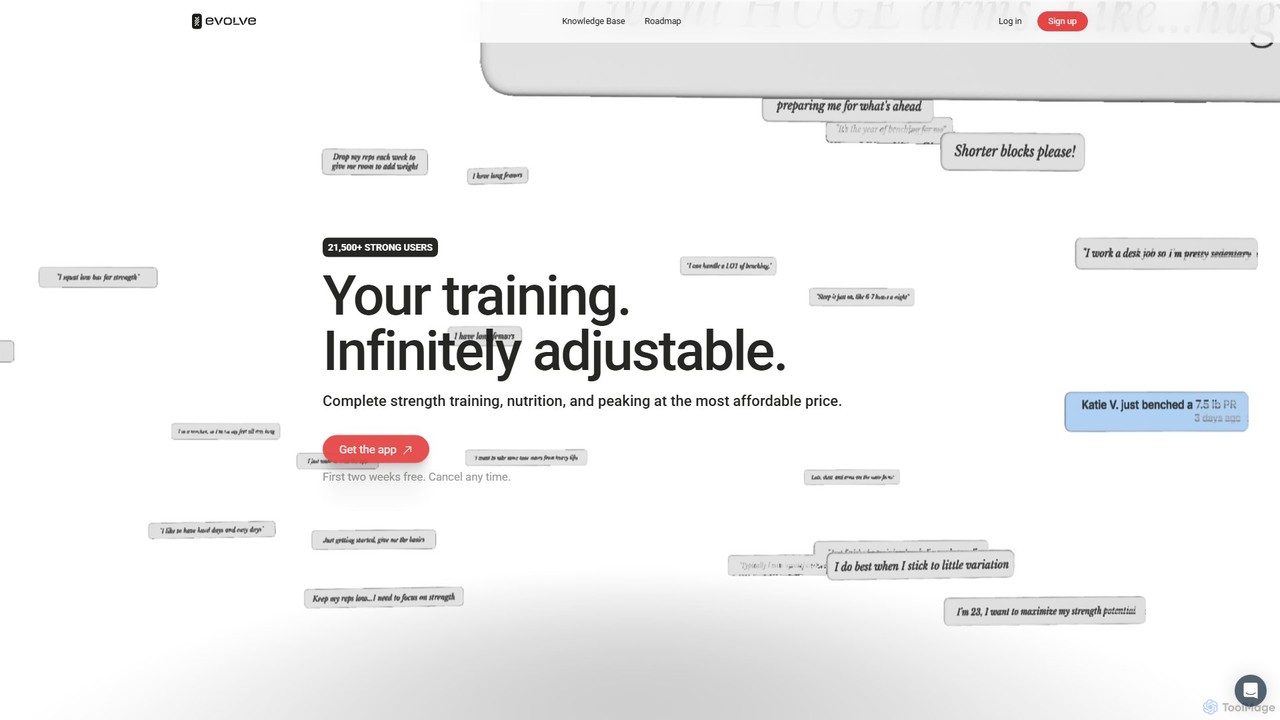
Evolve Training App is an AI-powered coach for strength training, nutrition, and competition peaking. It creates infinitely adjustable training programs based on your history, goals, and daily feedback. The app provides guided nutrition, detailed analytics, and competition-specific preparation to help athletes continuously progress and achieve new personal records.

3D
Visits 17.3KFavorites 146Likes 155
Nourish
Paid

Nourish

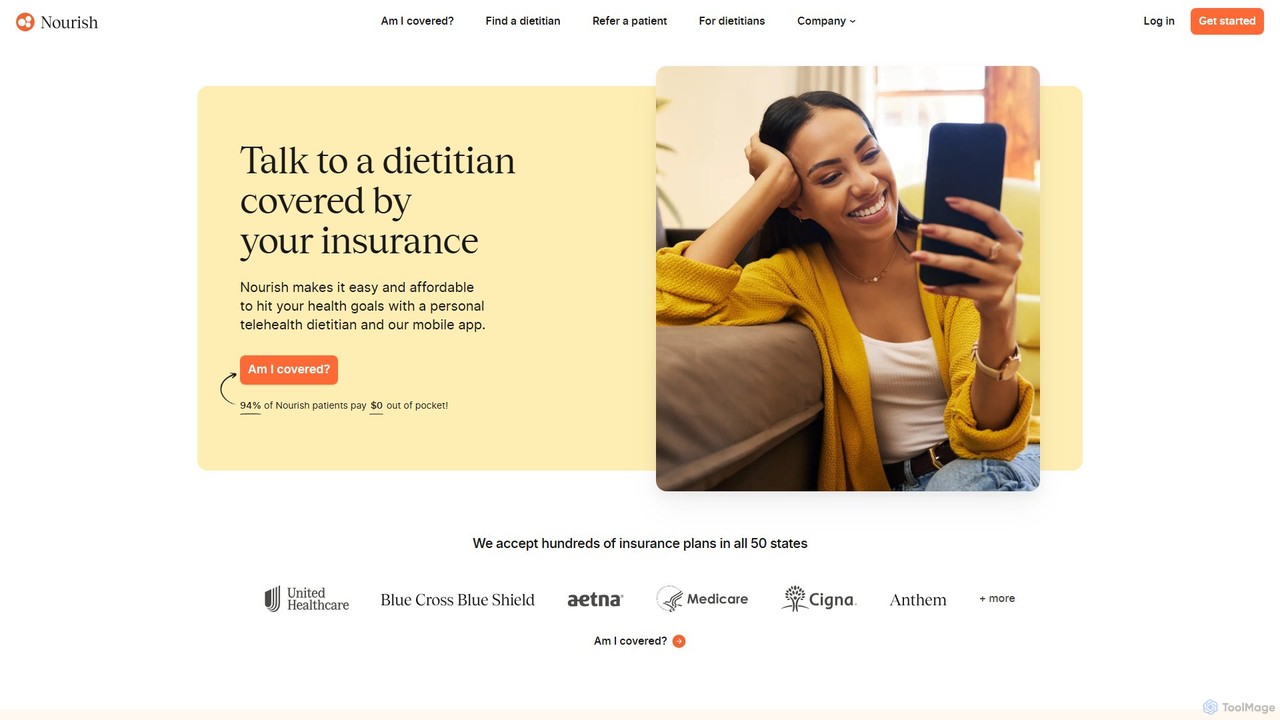
Nourish is an AI-powered telehealth platform that connects you with a Registered Dietitian for personalized nutrition counseling, often fully covered by insurance. Through virtual appointments and a supportive mobile app, Nourish helps you manage chronic conditions, achieve weight goals, and build sustainable healthy eating habits. It offers a holistic approach, considering fitness, sleep, and overall well-being to create a plan tailored just for you.

Nutrition
Visits 63.6KFavorites 126Likes 121

About Personalized Coaching

Personalized Coaching tools are a class of AI applications that provide individualized guidance, feedback, and support to help users achieve specific goals. These tools leverage machine learning to analyze user performance data—such as speech patterns, text, or even physical movements—to offer tailored advice. They function as a digital mentor for improving skills in areas like public speaking, leadership, and sales, making expert-level coaching more accessible and scalable. As a specialized area of productivity, they focus on targeted skill enhancement through interactive feedback loops rather than general task management.

Core Features

  • Performance Analysis: Utilizes AI to analyze user input like voice, video, or text to identify strengths and areas for improvement.
  • Real-time Feedback: Delivers instant, actionable suggestions during practice sessions, such as correcting pace or filler words in a speech.
  • Personalized Learning Paths: Creates customized training plans and exercises that adapt based on the user's progress and performance.
  • Progress Tracking: Provides dashboards and reports with clear metrics to visualize development and skill acquisition over time.
  • Realistic Simulations: Offers safe, virtual environments to practice skills like difficult conversations, sales pitches, or interviews.

Use Cases

These tools are widely adopted by professionals seeking to enhance communication skills, sales teams refining their pitches, and new managers developing leadership abilities. They are also valuable for students preparing for debates or presentations, and individuals learning a new language or improving their fitness form. Essentially, anyone looking to improve a specific, measurable skill through structured practice and targeted feedback can benefit.

How to Choose

When selecting a Personalized Coaching tool, first consider the specific skill you want to develop, as many platforms are specialized. Evaluate the depth and quality of the feedback mechanism—does it offer quantitative metrics alongside qualitative advice? Review the data privacy policy, especially if you will be sharing sensitive recordings. Finally, assess the platform's ease of use and whether it can integrate with your existing calendar or communication tools.

Personalized Coaching use cases

1

Refining Public Speaking and Presentation Skills

A marketing manager preparing for a major conference uses an AI coaching tool to practice their keynote speech. They upload their script and record themselves delivering the presentation. The AI analyzes their speech for pacing, use of filler words like 'um' and 'ah', vocal tone variety, and body language from the video. It provides a detailed report with a score and specific, time-stamped suggestions, such as 'slow down in this section for emphasis' or 'avoid looking down here'. This allows the manager to conduct dozens of practice runs and receive objective feedback, significantly improving their confidence and delivery without the cost of a human coach.

2

Mastering Sales Pitches and Client Communication

A junior sales representative uses an AI coach to improve their product pitch. They engage in simulated sales calls where the AI plays the role of different client personas (e.g., skeptical, busy, interested). The tool analyzes the rep's word choice, clarity, and ability to handle objections. After each simulation, it provides feedback on persuasive language, question-asking techniques, and overall confidence. By practicing in this safe environment, the representative can experiment with different approaches and build the skills needed to close deals more effectively in real-world scenarios, accelerating their ramp-up time by weeks.

3

Developing Leadership and Management Skills

A newly promoted team lead uses an AI coaching platform to practice difficult conversations, such as giving constructive feedback or addressing underperformance. The platform provides interactive role-playing scenarios with an AI-driven 'employee'. The AI responds dynamically based on the manager's tone and phrasing. The system then provides a transcript analysis, highlighting moments where the manager could have been more empathetic, clear, or assertive. This confidential practice helps the new leader build confidence and competence in crucial management skills before applying them in real, high-stakes interactions with their team.

4

Preparing for High-Stakes Job Interviews

A recent graduate preparing for interviews in the tech industry uses an AI coach to simulate the experience. They can choose from a library of common behavioral and technical questions. The tool records their answers via video and provides feedback on the clarity and structure of their responses (e.g., using the STAR method), their speaking pace, and non-verbal cues like eye contact and posture. Some advanced tools can even assess the relevance of their answers to the job description. This allows the candidate to identify and correct weaknesses, reduce anxiety, and walk into real interviews feeling more prepared and polished.

5

Improving Foreign Language Pronunciation and Fluency

A student learning Spanish uses an AI-powered language coach to improve their accent and conversational skills. They read sentences aloud or engage in simulated conversations with an AI bot. The tool provides real-time feedback on their pronunciation, intonation, and rhythm, comparing it to a native speaker's patterns. It highlights specific phonemes or words that need correction and offers exercises to practice them. This targeted, on-demand practice is a powerful supplement to traditional language classes, allowing the student to gain confidence and achieve a more natural-sounding accent much faster.

6

Correcting Fitness and Exercise Form

An individual working out at home uses a fitness coaching app that leverages their phone's camera and computer vision. As they perform exercises like squats or push-ups, the AI analyzes their posture and joint angles in real-time. It provides immediate auditory or visual feedback, such as 'lower your hips' or 'keep your back straight', to prevent injury and maximize the effectiveness of the workout. The app tracks reps, sets, and form consistency over time, creating a personalized workout plan that adjusts in difficulty as their form improves. This brings the expertise of a personal trainer into the user's living room.

Personalized Coaching FAQ

What is an AI Personalized Coaching tool?

An AI Personalized Coaching tool is a software application that uses artificial intelligence to provide users with tailored feedback and guidance to improve a specific skill. Unlike generic training videos or articles, these tools actively analyze a user's performance—such as their speech, writing, or physical movements—and offer specific, actionable advice for improvement. They essentially act as a digital mentor, available 24/7, to help individuals practice and refine abilities in areas like public speaking, sales, leadership, or language learning.

How does AI coaching differ from working with a human coach?

AI coaching and human coaching offer distinct advantages. AI coaches excel in scalability, accessibility, and consistency. They are available 24/7, can be more affordable, and provide objective, data-driven feedback without bias. They are ideal for practicing structured skills with measurable metrics. A human coach, however, provides empathy, intuition, and a holistic understanding of a person's context and emotional state. They can adapt their strategy in complex, nuanced situations and build a deep, motivational relationship. Often, the most effective approach is a hybrid one, using AI for frequent practice and a human coach for strategic guidance and deeper insights.

How do I choose the right AI Personalized Coaching tool?

Choosing the right tool depends on your specific goals. Consider these factors:

  • Skill Focus: Identify the exact skill you want to improve (e.g., public speaking, sales, fitness). Look for tools that specialize in that area for more nuanced feedback.
  • Feedback Mechanism: How does the tool provide feedback? Does it analyze video, audio, or text? Is the feedback in real-time or a post-session report? Choose what best suits your practice style.
  • Data Privacy: You will be sharing personal performance data. Review the tool's privacy policy to understand how your data is stored, used, and protected.
  • Usability and Integration: The tool should be easy to use and fit into your routine. Check if it integrates with other platforms you use, like your calendar or CRM.
Who can benefit most from using AI Personalized Coaching tools?

A wide range of individuals can benefit from these tools. Key groups include:

  • Professionals: Individuals in roles requiring strong communication, such as sales, consulting, and management, who want to refine their presentation and interpersonal skills.
  • Students: Those preparing for debates, presentations, or job interviews who need a safe space to practice and build confidence.
  • Language Learners: People seeking to improve their pronunciation and fluency with immediate, accurate feedback that is often hard to get.
  • Fitness Enthusiasts: Individuals working out at home who want to ensure proper form to prevent injury and maximize results without a personal trainer.

In general, anyone who is self-motivated and wants to improve a specific, practice-based skill can find significant value in AI coaching.

Is the feedback from AI coaching tools reliable?

The reliability of feedback from AI coaches is generally high for well-defined, structured skills. These tools are trained on vast datasets of expert performances, allowing them to accurately identify deviations from optimal patterns in areas like speech pacing, grammar, or exercise form. However, their effectiveness can be limited in situations requiring deep contextual or emotional understanding. For example, an AI can correct your grammar in a difficult conversation, but it may not grasp the underlying emotional nuance. Therefore, it's best to view AI feedback as a highly accurate, data-driven supplement to, rather than a complete replacement for, human judgment and intuition.