Productivity Best in category 2 results Product Development AI Tool

Popular AI tools in the Product Development field of Productivity include Gastrograph、Green Bio Tech, etc., helping you quickly improve efficiency.

Gastrograph

Gastrograph

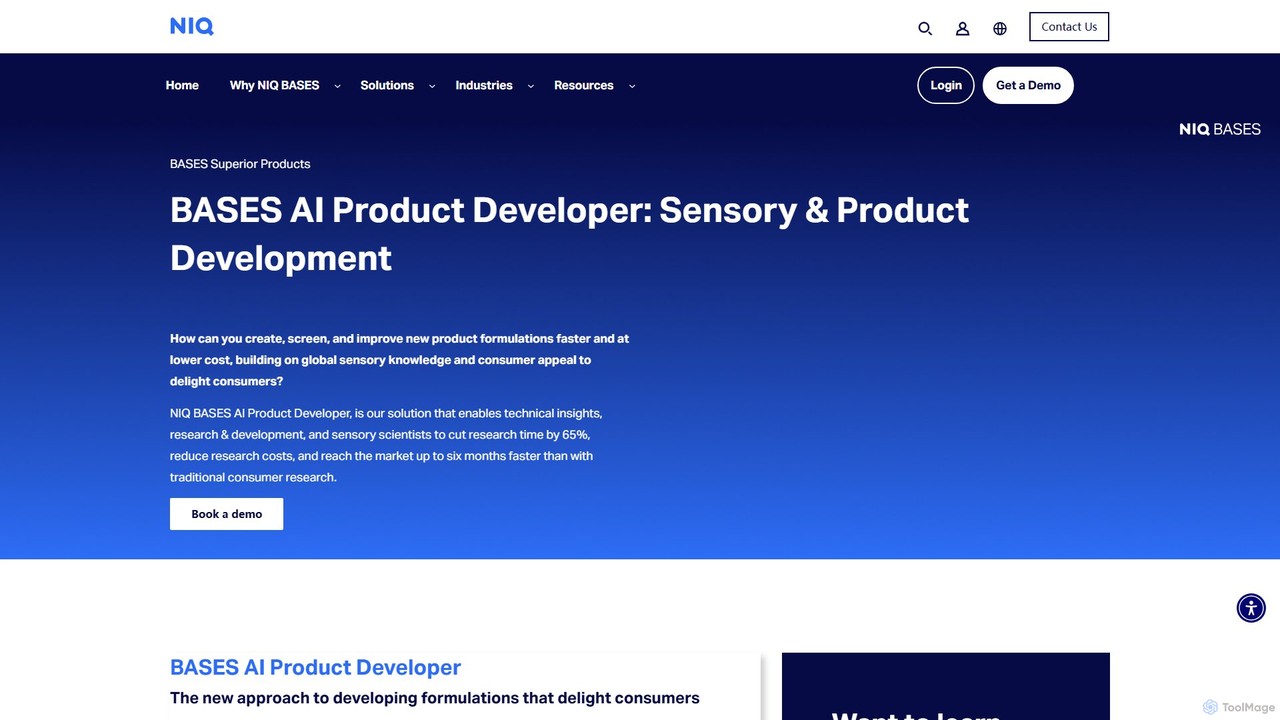
Gastrograph is an AI-powered platform, now part of NIQ's BASES suite, designed for the food and beverage industry. …

1.3M
Green Bio Tech

Green Bio Tech

Green Bio Tech is an AI-powered platform for the nutraceutical industry, specializing in the development and third-party manufacturing …

2.5K

About Product Development

Product Development AI tools are specialized platforms that leverage artificial intelligence to streamline and enhance every stage of the product lifecycle, from ideation to launch and iteration. These tools utilize advanced algorithms for data analysis, predictive modeling, and automation, enabling teams to make data-driven decisions, accelerate innovation, and optimize resource allocation. They empower product managers, designers, and engineers to identify market opportunities, validate concepts, and deliver user-centric products more efficiently within the broader scope of productivity solutions.

Core Features

  • Market Research & Analysis: Automate trend identification, competitor analysis, and customer insights extraction.
  • Idea Generation & Validation: Assist in brainstorming new concepts and evaluating their potential viability.
  • Design & Prototyping: Accelerate the creation of mockups, wireframes, and interactive prototypes.
  • User Feedback & Iteration: Analyze user data and feedback to inform product improvements and feature prioritization.
  • Project Management & Optimization: Enhance planning, resource allocation, and timeline management for development cycles.

Applicable Scenarios

These tools are indispensable for product managers seeking to prioritize features based on market demand, UX/UI designers aiming for rapid prototyping and user testing, and R&D teams exploring innovative solutions. Startups can leverage them for efficient market entry, while established enterprises use them to maintain competitive advantage and drive continuous innovation.

How to Choose

When selecting Product Development AI tools, consider the breadth of features, particularly in market analysis, design assistance, and feedback integration. Evaluate its compatibility with your existing tech stack and collaboration tools. Assess the accuracy of its AI models and the level of customization offered. Finally, review pricing models and ensure it aligns with your team's specific development methodologies and scalability needs.

Product DevelopmentUse Cases

1

Identifying Emerging Market Trends for New Product Opportunities

A product manager uses AI-powered market research tools to scan vast amounts of online data, including social media, news, and competitor reports. The AI identifies emerging consumer needs and technological trends, providing actionable insights that inform the development of innovative product features or entirely new product lines, significantly reducing the risk of market misalignment.

2

Accelerating Concept Validation and Feature Prioritization

An R&D team employs AI tools to generate and validate new product concepts. By inputting initial ideas, the AI can simulate market reception, predict user engagement, and even suggest feature enhancements based on historical data and user preferences. This allows the team to quickly prioritize features with the highest potential impact, streamlining the product roadmap.

3

Rapidly Generating UI/UX Prototypes and Design Iterations

A UX/UI designer leverages AI design assistants to transform textual descriptions or rough sketches into high-fidelity wireframes and interactive prototypes. The AI can suggest design patterns, optimize layouts for usability, and even generate multiple design variations. This drastically cuts down the time spent on initial design phases, enabling faster iteration cycles.

4

Analyzing Large Volumes of User Feedback for Product Improvement

A product team utilizes AI-driven sentiment analysis and topic modeling tools to process thousands of customer reviews, support tickets, and survey responses. The AI identifies common pain points, feature requests, and sentiment patterns, providing a clear, prioritized list of areas for product improvement and bug fixes, ensuring development efforts are user-centric.

5

Optimizing Product Launch Strategies and Marketing Content

A marketing specialist uses AI tools to analyze market segments, predict optimal launch timings, and generate tailored marketing copy for new products. The AI can identify the most effective channels and messaging for target audiences, ensuring maximum reach and engagement during product introduction, leading to higher conversion rates and market penetration.

6

Enhancing Competitive Analysis and Strategic Positioning

A business strategist employs AI platforms to conduct in-depth competitive analysis. The AI monitors competitor product updates, pricing strategies, marketing campaigns, and customer reviews across various platforms. This provides a comprehensive overview of the competitive landscape, highlighting gaps and opportunities for strategic differentiation and market positioning.

Product DevelopmentFrequently Asked Questions