ToolMage
Sign in

Best 1 Professional Tools for Productivity

Popular Professional Tools in Productivity include get_headshot, helping you work more efficiently.

get_headshot
Paid

get_headshot

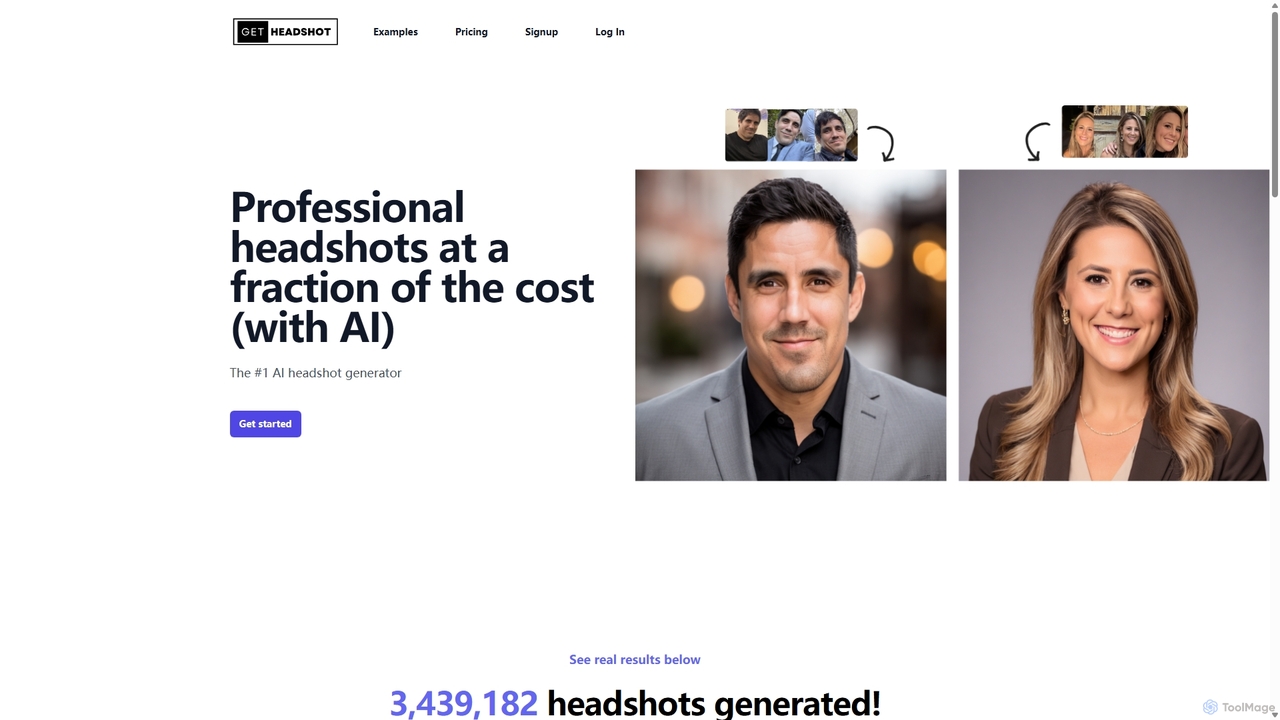
An AI-powered headshot generator that creates professional, studio-quality business photos in minutes. Upload your selfies, choose from various styles, and let the AI generate a wide range of affordable and high-quality headshots for your professional needs.

Avatar Generation
Visits 6.4KFavorites 128Likes 114

About Professional Tools

Professional Tools are AI-powered applications engineered for specialized, high-level tasks across various industries, extending beyond general productivity solutions. These tools leverage advanced AI algorithms to automate complex workflows, provide deep analytical insights, and enhance precision in expert-level operations. They empower professionals in fields like finance, legal, healthcare, and engineering to achieve superior outcomes and optimize intricate processes, serving as a critical component of modern productivity strategies.

Core Features

  • Advanced Data Analysis: Perform complex statistical modeling, predictive analytics, and pattern recognition on large, specialized datasets.
  • Automated Compliance & Risk Assessment: Identify regulatory breaches, potential risks, and inconsistencies in legal, financial, or medical documents.
  • Specialized Content Generation: Create industry-specific reports, technical documentation, legal briefs, or medical summaries with high accuracy.
  • Intelligent Workflow Automation: Streamline multi-step professional processes, from project management and resource allocation to client onboarding and case management.
  • Precision Design & Simulation: Assist engineers and designers with intricate modeling, simulation, and optimization tasks for complex systems.

Applicable Scenarios

Professionals across diverse sectors utilize these tools to transform their work. For instance, legal professionals employ AI for rapid contract review and e-discovery, significantly reducing manual effort and improving accuracy. Financial analysts use AI to process market data, identify trends, and automate report generation, enabling faster, more informed investment decisions. Healthcare providers leverage AI for diagnostic support and personalized treatment planning, enhancing patient care outcomes and operational efficiency.

How to Choose

Selecting the right professional AI tool requires careful consideration of several factors. Evaluate the tool's domain-specific accuracy and its ability to handle industry-specific data and terminology. Assess its integration capabilities with existing professional software ecosystems and workflows. Consider the level of customization offered to adapt to unique operational requirements. Finally, review the security and compliance standards to ensure data privacy and regulatory adherence, especially in sensitive sectors like finance and healthcare.

Professional Tools use cases

1

Automated Legal Document Review

Legal firms use AI tools to rapidly analyze thousands of legal documents, contracts, and case files for specific clauses, anomalies, or compliance issues. This drastically reduces review time and human error in e-discovery and due diligence processes, allowing legal professionals to focus on strategic analysis rather than tedious manual review, leading to faster case resolution and improved accuracy.

2

Financial Market Trend Prediction

Investment analysts leverage AI professional tools to process vast amounts of real-time financial data, news, and social sentiment to identify emerging market trends, predict stock movements, and optimize trading strategies with higher accuracy. This enables them to make more informed and timely investment decisions, gaining a competitive edge in volatile markets and maximizing portfolio returns.

3

Personalized Healthcare Treatment Planning

Medical professionals utilize AI to analyze patient medical history, genetic data, and diagnostic images to suggest personalized treatment plans, predict disease progression, and optimize drug dosages. This leads to improved patient outcomes, reduced adverse reactions, and more efficient allocation of healthcare resources, ultimately enhancing the quality of patient care.

4

Advanced Engineering Design Optimization

Engineers employ AI tools to simulate and optimize complex designs for products, structures, or systems. This includes material selection, performance prediction, and identifying design flaws before physical prototyping. By rapidly iterating through thousands of design variations, AI accelerates innovation cycles, reduces development costs, and ensures optimal performance and safety of engineered solutions.

5

Hyper-targeted Marketing Campaign Generation

Marketing strategists use AI to segment audiences with extreme precision, generate highly personalized ad copy and visuals across multiple channels, and predict campaign performance. This maximizes ROI for complex marketing initiatives by ensuring messages resonate deeply with specific customer segments, leading to higher conversion rates and more efficient ad spend.

6

Intelligent Software Code Generation & Refactoring

Software developers utilize AI professional tools to automatically generate boilerplate code, suggest code improvements, detect subtle bugs, and refactor existing codebases. This significantly speeds up development cycles, improves code quality, and reduces the likelihood of errors, allowing developers to focus on complex problem-solving and innovative feature development rather than repetitive coding tasks.

Professional Tools FAQ

What are Professional Tools in AI?

Professional Tools in AI are specialized software applications designed to assist experts in specific industries or roles with complex, high-value tasks. Unlike general productivity tools, they leverage advanced AI algorithms to perform deep analysis, automate intricate workflows, and generate highly accurate, domain-specific outputs, such as legal documents, financial reports, or medical diagnoses. They aim to enhance precision, efficiency, and decision-making for professionals.

How do Professional AI Tools differ from general Productivity Tools?

The primary difference lies in their specialization and depth. General productivity tools (e.g., AI writing assistants for emails) offer broad utility for common tasks. Professional AI Tools, however, are tailored for specific domains (e.g., AI for legal contract analysis or medical imaging diagnostics). They handle industry-specific data, terminology, and regulations, offering advanced functionalities and insights that require deep domain expertise, going beyond basic efficiency gains.

What industries benefit most from Professional AI Tools?

Industries requiring high precision, extensive data analysis, and complex decision-making benefit significantly. This includes Legal (contract review, e-discovery), Finance (fraud detection, market prediction), Healthcare (diagnostics, treatment planning), Engineering & Manufacturing (design optimization, predictive maintenance), Research & Development (data synthesis, hypothesis generation), and Advanced Marketing (hyper-personalization, deep analytics).

What key features should I look for in Professional AI Tools?

When selecting professional AI tools, prioritize domain-specific accuracy in handling your industry's data and terminology. Look for robust integration capabilities with your existing enterprise software. Scalability is crucial for handling growing data volumes and user bases. Customization options allow tailoring to unique workflows. Finally, strong security and compliance features are paramount, especially for sensitive data and regulated industries.

How do Professional AI Tools ensure data security and compliance?

Reputable Professional AI Tools implement stringent security measures, including end-to-end encryption for data in transit and at rest, robust access controls, and regular security audits. For compliance, they often adhere to industry-specific regulations like GDPR, HIPAA, or SOC 2, providing features for data anonymization, audit trails, and consent management. Users should always verify a tool's certifications and compliance frameworks.