FollowKit
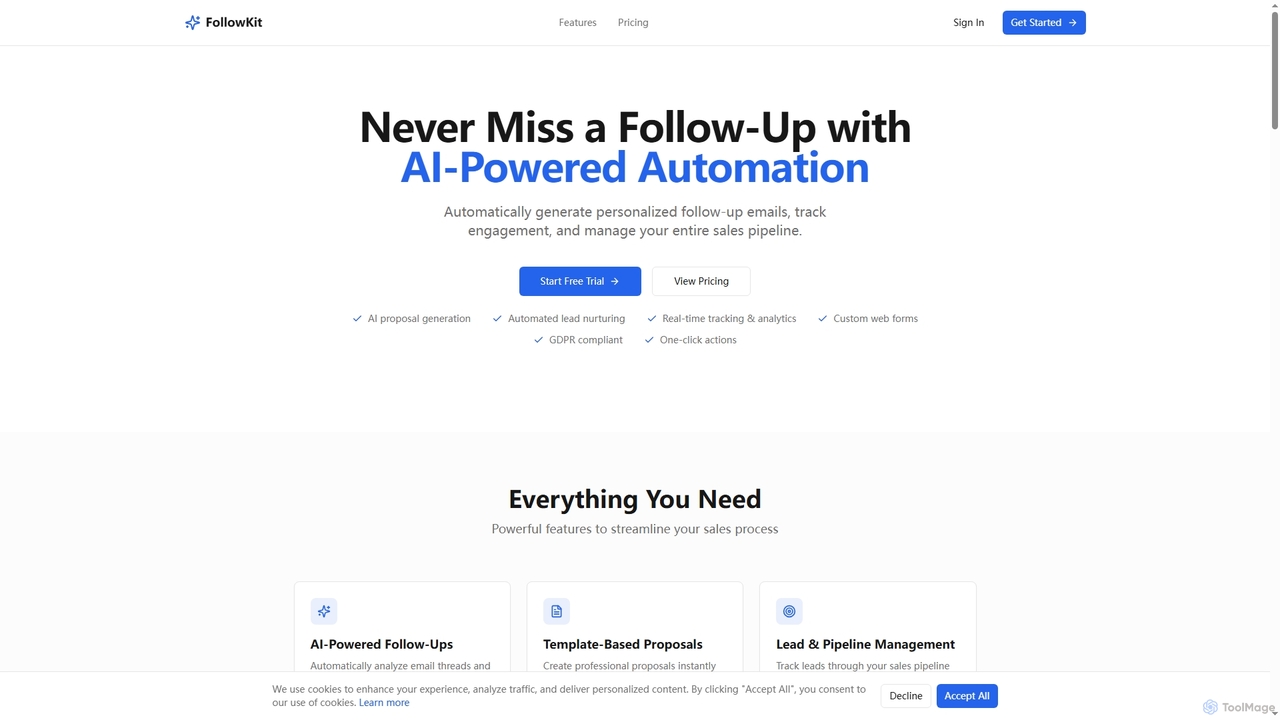
FollowKit is an AI-powered sales automation platform designed to streamline the sales process by automating personalized follow-up emails, …
FollowKit is an AI-powered sales automation platform designed to streamline the sales process by automating personalized follow-up emails, generating professional proposals, and managing the entire sales pipeline. It helps sales professionals track engagement, nurture leads, and close more deals efficiently.
About Proposal Generation
AI Proposal Generation tools are specialized applications designed to automate and streamline the creation of professional business proposals. They leverage natural language processing and data integration to automatically populate templates with client details, project scope, pricing, and case studies. This significantly reduces the time spent on manual document creation, ensures brand consistency, and helps sales teams respond to leads faster. Unlike general document editors, these tools often include analytics for tracking proposal views and deep integrations with CRM systems for a seamless workflow.
Core Features
- Automated Content Population: Automatically fills templates with data from CRMs or user inputs to personalize proposals.
- Template Library: Offers a range of professionally designed, customizable templates for various industries and use cases.
- Dynamic Pricing Tables: Generates interactive and accurate pricing sections based on selected services or products.
- Proposal Analytics: Tracks when a proposal is opened, how long it's viewed, and which sections receive the most engagement.
- CRM Integration: Syncs client data and proposal status with platforms like Salesforce, HubSpot, and other business systems.
Use Cases
These tools are widely used by sales teams, marketing agencies, freelancers, and consulting firms. They are essential for efficiently responding to Requests for Proposals (RFPs), creating detailed sales quotes, drafting project scopes, and formalizing service agreements. Any role that requires producing customized, data-driven documents for clients can benefit from this technology.
How to Choose
When selecting a proposal generation tool, first assess its integration capabilities with your existing CRM and other software. Evaluate the level of template customization to ensure it aligns with your brand identity. Consider the depth of analytics features you require, from simple open-tracking to detailed engagement metrics. Finally, check for scalability, including support for team collaboration and a growing volume of proposals.

Proposal GenerationUse Cases
Accelerating Sales Cycles for B2B Tech Companies
A sales executive at a B2B software company needs to create personalized proposals for dozens of leads each week. Using an AI proposal tool connected to their CRM, they can instantly generate a new proposal where the tool auto-populates the lead's company name, contact details, and specific needs. The AI can also suggest relevant case studies and service packages from a central content library based on the lead's industry. This process reduces proposal creation time from over an hour to under 15 minutes, allowing the executive to respond to inquiries 75% faster and significantly increase their outreach volume and conversion rates.
Crafting Winning Bids for Marketing Agencies
An account manager at a digital marketing agency is responding to a detailed Request for Proposal (RFP). The AI tool helps structure the response by breaking down the RFP's requirements into sections. It then pulls pre-approved content, such as team bios, past campaign results, and detailed service descriptions, from a shared library. The manager can quickly assemble a comprehensive and professionally formatted proposal that directly addresses every point in the RFP. This ensures brand consistency, eliminates errors, and frees up the team to focus on developing a winning strategy rather than on document formatting.
Standardizing Quotes for Freelancers and Consultants
An independent consultant needs to send professional, consistent quotes quickly to manage multiple client inquiries. They use a proposal generation tool to create several templates for their different service packages. For each new client, they select a template, input the client's specific requirements, and the tool generates an interactive pricing table and a clear scope of work. This not only projects a highly professional image but also eliminates pricing errors and streamlines the client onboarding process, allowing the consultant to secure projects faster.
Generating Complex Bids for Construction Firms
A bid manager at a construction firm creates complex proposals that include detailed cost breakdowns, material lists, and project timelines. By integrating a proposal tool with their estimating software, the manager can automatically pull accurate cost data and material specifications into a client-friendly proposal template. The AI helps structure the document, ensuring all critical sections like safety compliance and project milestones are included. This improves the accuracy of bids, reduces manual data entry errors, and presents complex information in a clear, persuasive format to win client trust and larger contracts.
Creating Sponsorship Packages for Non-Profits
A fundraising coordinator for a non-profit organization needs to create tailored sponsorship proposals for various corporate partners. Using a proposal tool, they design tiered sponsorship templates (e.g., Gold, Silver, Bronze) with pre-defined benefits. For each potential sponsor, the AI helps personalize the introduction and impact sections by suggesting language that aligns with the target company's corporate social responsibility (CSR) goals. This allows for the rapid personalization of outreach materials, increasing the chances of securing funding and presenting a polished, professional image to potential donors.
Streamlining Client Onboarding for Legal Services
A paralegal at a law firm is responsible for preparing engagement letters and service agreements for new clients. A proposal generation tool, integrated with the firm's practice management system, automates this process. It pulls client information, case details, and agreed-upon fee structures directly into a standardized engagement letter template. The tool ensures that all necessary legal clauses and disclosures are automatically included, which guarantees compliance and consistency. This reduces administrative overhead by over 80% and accelerates the formal client intake process, allowing legal work to commence sooner.