Productivity Best in category 1 results Recruitment AI Tool

Popular AI tools in the Recruitment field of Productivity include hiapply, etc., helping you quickly improve efficiency.

hiapply

hiapply

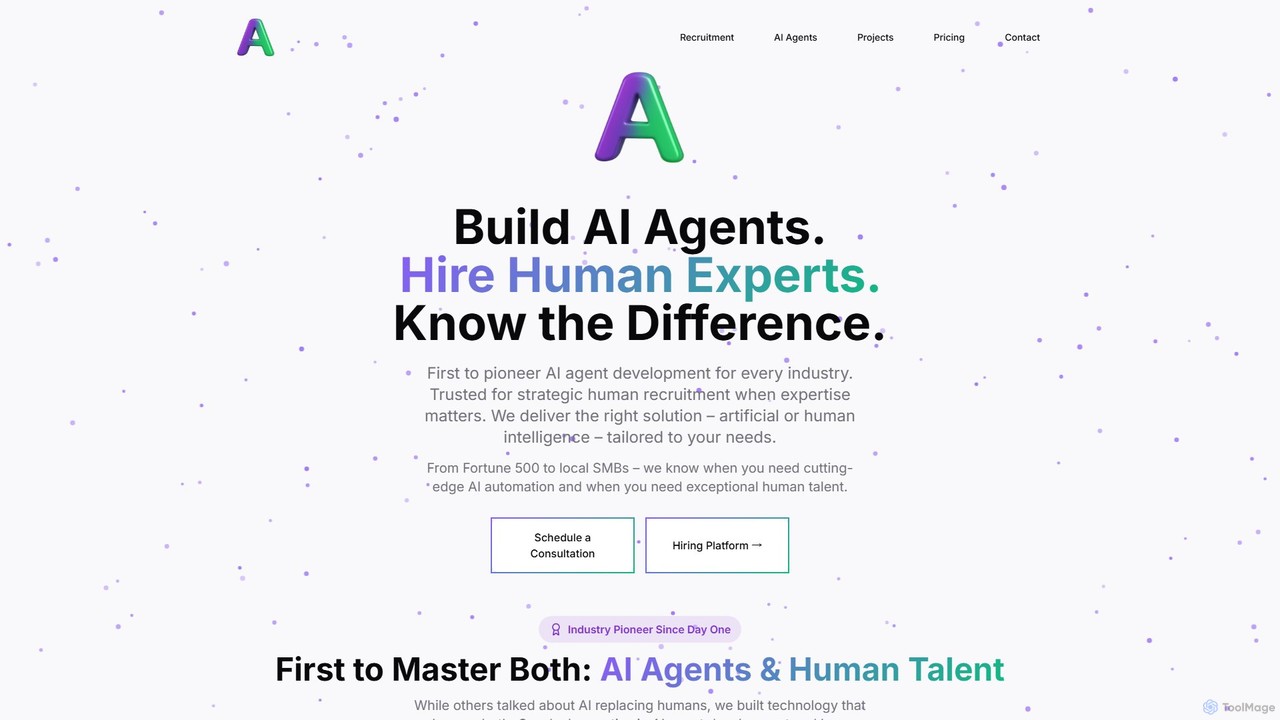
hiapply is a pioneering platform that builds custom AI agents and provides expert human talent for every industry. …

3.0K

About Recruitment

AI Recruitment tools are a specialized category of software designed to automate and enhance the hiring process. They leverage machine learning and natural language processing (NLP) to streamline tasks from sourcing candidates to screening resumes and scheduling interviews. By transforming manual, time-consuming activities into data-driven workflows, these tools help organizations identify top talent more efficiently, reduce unconscious bias, and improve the overall candidate experience. As a key part of the modern productivity stack, they empower HR teams to make smarter, faster hiring decisions.

Core Features

  • Intelligent Sourcing: Actively finds and engages passive candidates from various online platforms based on ideal profiles.
  • Automated Resume Screening: Analyzes and ranks resumes against job requirements, shortlisting the most qualified applicants.
  • AI-Powered Interview Scheduling: Automatically coordinates calendars between candidates and hiring managers to set up interviews.
  • Candidate Matching & Ranking: Uses predictive analytics to score candidates on their potential for success and cultural fit.
  • Bias Reduction Tools: Anonymizes candidate data such as name, gender, or school to promote fair and objective evaluation.

Use Cases

AI Recruitment tools are widely used by corporate HR departments, recruitment agencies, and startups. They are particularly effective for high-volume hiring where thousands of applications must be processed, as well as for sourcing highly specialized technical or executive roles where talent is scarce. Companies focused on improving diversity and inclusion also use these tools to ensure a fair and equitable screening process.

How to Choose

When selecting an AI Recruitment tool, first consider its integration capabilities with your existing Applicant Tracking System (ATS). Evaluate the scope of its features—whether you need strong sourcing, screening, or scheduling automation. Assess its scalability to match your company's growth and the vendor's commitment to ethical AI, including transparency in how their algorithms work to mitigate bias. Finally, consider the user interface for both recruiters and candidates.

RecruitmentUse Cases

1

Automate High-Volume Candidate Screening

A national retail chain needs to hire 500 store associates across 50 locations. Their HR team receives over 10,000 applications. By using an AI recruitment tool, they can automatically screen all resumes against key criteria like availability, customer service experience, and location preference. The AI ranks the top 15% of candidates, reducing the manual screening time from weeks to just a few hours and allowing recruiters to focus immediately on interviewing qualified applicants.

2

Source Niche Technical Talent

A tech startup is searching for a rare 'Senior Machine Learning Engineer with experience in reinforcement learning for robotics'. A traditional job board yields few results. An AI sourcing tool actively scans platforms like GitHub, technical blogs, and academic papers to identify individuals with matching skills, even if they aren't actively looking for a job. The tool then helps craft personalized outreach messages, significantly increasing the response rate from these hard-to-find experts.

3

Reduce Unconscious Bias in Hiring

A financial services firm aims to improve diversity in its analyst program. They implement an AI tool that anonymizes resumes during the initial screening phase. The tool removes names, photos, university names, and graduation years, forcing hiring managers to evaluate candidates solely based on their skills and experience. This data-driven approach helps mitigate unconscious biases related to gender, ethnicity, or age, leading to a more diverse pool of candidates advancing to the interview stage.

4

Streamline Interview Scheduling Across Time Zones

A global company is hiring for a remote role with candidates in Europe, Asia, and North America. Coordinating interview times is a logistical challenge for the recruiter. They use an AI scheduling assistant that integrates with the calendars of the hiring team. The AI communicates with candidates via email, offers available time slots converted to their local time zone, and automatically books the interview once a candidate confirms. This eliminates back-and-forth emails and reduces scheduling errors.

5

Enhance Candidate Engagement with AI Chatbots

A large corporation's career page receives high traffic, but many potential applicants drop off without applying. They deploy an AI chatbot on the site. The chatbot engages visitors 24/7, answering frequently asked questions about company culture, benefits, and application processes. It can also pre-screen interested candidates by asking basic qualifying questions and, if they are a good fit, guiding them directly to the most relevant job application. This proactive engagement improves the candidate experience and increases application conversion rates.

6

Predictive Analytics for Quality of Hire

A management consulting firm wants to improve its 'quality of hire'. They use an AI recruitment platform that analyzes the profiles of their current top-performing consultants, identifying common traits in their backgrounds, skills, and experiences. The AI then builds a predictive model. When new applications come in, the tool scores each candidate against this 'success profile', providing recruiters with a data-backed indicator of who is most likely to excel at the firm. This helps prioritize candidates who not only have the right skills but also the attributes of long-term top performers.

RecruitmentFrequently Asked Questions