Productivity Best in category 1 results Roadmapping AI Tool

Popular AI tools in the Roadmapping field of Productivity include Miro Insights, etc., helping you quickly improve efficiency.

Miro Insights

Miro Insights

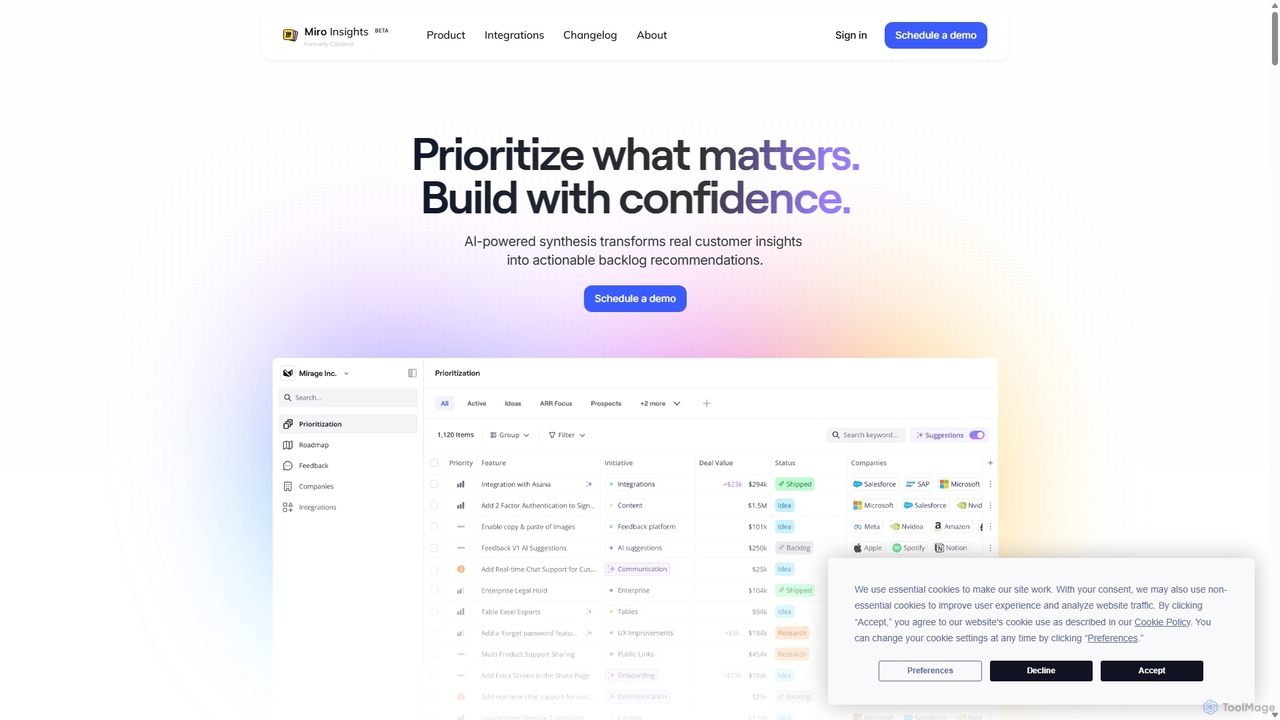
Miro Insights is an AI-powered product management platform that helps teams build better products. It automatically synthesizes customer …

2.7K

About Roadmapping

AI Roadmapping tools are specialized applications that use artificial intelligence to create, manage, and visualize strategic plans. They leverage machine learning to analyze data, predict timelines, and suggest feature priorities, moving beyond static diagrams. These tools are crucial for product managers, executives, and strategists to align teams, communicate vision, and make data-informed decisions. Unlike traditional project management software that focuses on task execution, AI roadmapping tools concentrate on high-level strategic direction and outcome forecasting.

Core Features

  • AI-Powered Prioritization: Suggests feature importance by analyzing user feedback, business goals, and market data.
  • Dynamic Timeline Generation: Automatically creates and adjusts visual timelines based on dependencies and resource allocation.
  • Predictive Risk Analysis: Identifies potential bottlenecks, resource conflicts, and strategic risks using predictive models.
  • Automated Stakeholder Reporting: Generates customized roadmap views and progress reports for different audiences like engineering or marketing.
  • Scenario Planning: Allows teams to model different strategic paths and compare their potential impacts on goals and timelines.

Use Cases

These tools are widely used by product teams for planning feature releases, marketing departments for mapping out campaign strategies, and IT organizations for visualizing technology adoption roadmaps. They help align cross-functional teams around a shared vision and set of priorities.

How to Choose

When selecting an AI Roadmapping tool, consider its integration capabilities with your existing systems (e.g., Jira, Slack). Evaluate the depth of its AI features—does it offer true predictive analysis or just simple automation? Also, assess its visualization flexibility for different stakeholders and its real-time collaboration features.

RoadmappingUse Cases

1

Aligning Product Strategy with Business Goals

A Product Manager preparing for a quarterly planning session needs to justify the product roadmap to executives. They input business objectives, like 'increase user retention by 15%', and raw user feedback data into the AI tool. The AI analyzes this information, suggests a prioritized list of features most likely to impact the goal, and generates a visual roadmap with predicted timelines. This results in a data-backed plan that clearly links feature development to strategic outcomes, facilitating executive buy-in.

2

Dynamic Resource Allocation for Engineering Teams

An Engineering Lead manages multiple projects with a limited pool of developers. Using an AI roadmapping tool, they map out project dependencies and developer skill sets. The AI simulates resource allocation, highlights potential overloads, and suggests timeline adjustments to maintain a balanced workload. When a project is delayed, the system automatically recalculates the impact on other dependent projects. This leads to optimized resource planning, reduced risk of developer burnout, and more realistic project delivery forecasts.

3

Visualizing a Go-to-Market Campaign Strategy

A Marketing Director is planning a multi-channel launch for a new product. They use a roadmapping tool to outline key marketing phases: pre-launch, launch, and post-launch. The AI helps sequence activities like content creation, PR outreach, and ad campaigns, visualizing dependencies between marketing and product development milestones. This creates a clear, unified Go-to-Market plan that ensures all teams are synchronized, key deadlines are visible to everyone, and the campaign strategy is aligned with the product's release schedule.

4

Communicating IT Infrastructure Upgrades to Stakeholders

An IT Manager needs to present a multi-year technology migration plan to non-technical leadership. They use an AI roadmapping tool to create a high-level, visual timeline. The tool automatically generates different views: a detailed technical view for the IT team showing server dependencies, and a simplified, business-impact-focused view for executives highlighting benefits like cost savings and security improvements. This dual-view capability improves communication and understanding across departments, leading to smoother approval and implementation of the IT strategy.

5

Prioritizing Features Based on Customer Feedback Analysis

A startup founder has hundreds of pieces of user feedback from various channels like Intercom, surveys, and app store reviews. They integrate these feedback sources with their roadmapping tool. The AI uses natural language processing (NLP) to categorize feedback, identify common themes, and score feature requests based on volume and sentiment. This transforms qualitative feedback into quantitative data, resulting in a customer-centric roadmap where development efforts are focused on features that deliver the most value to users, boosting satisfaction and retention.

6

Conducting Scenario Planning for Strategic Decisions

A leadership team is deciding between two strategic directions: entering a new market or doubling down on their existing one. Using an AI roadmapping tool's scenario planning feature, they model both options. The AI generates two distinct roadmaps, forecasting potential revenue, resource requirements, and risks for each path. By comparing these data-driven simulations side-by-side, the team can make a more informed strategic decision, choosing the path with the highest probability of success based on predictive analytics rather than intuition alone.

RoadmappingFrequently Asked Questions