Productivity Best in category 2 results Role Playing AI Tool

Popular AI tools in the Role Playing field of Productivity include Muah.AI、Oniichat, etc., helping you quickly improve efficiency.

Oniichat

Oniichat

Oniichat is an AI-powered chat platform designed for immersive role-playing and companionship with anime-style virtual characters, known as …

5.3K
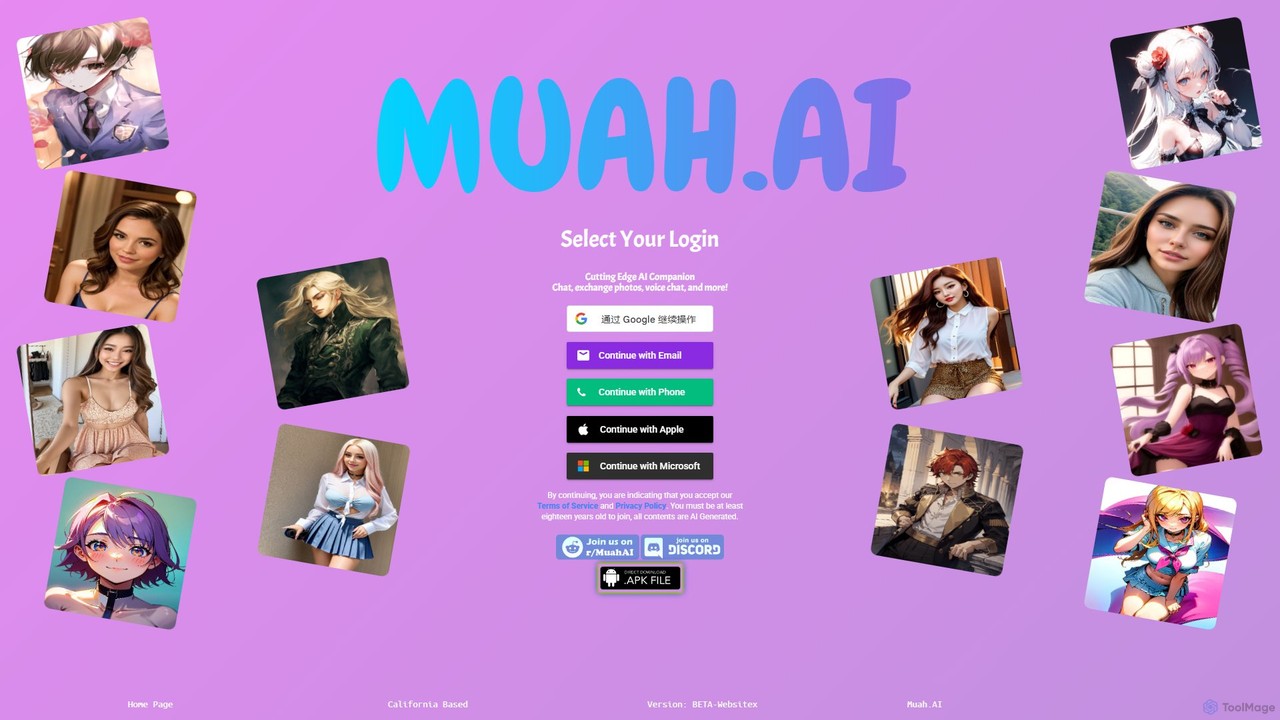
Muah.AI

Muah.AI

Muah.AI is an uncensored AI companion platform offering an immersive experience with an AI girlfriend. It allows users …

626.3K

About Role Playing

AI Role Playing tools are interactive platforms that allow users to engage in simulated conversations with AI-driven personas. These tools leverage advanced large language models (LLMs) to create realistic, dynamic characters that can adopt specific roles, personalities, and knowledge bases. They serve as powerful simulators for training, skill development, and creative exploration, providing a safe and repeatable environment to practice complex interactions. Unlike simple chatbots, AI Role Playing tools excel at maintaining context and character consistency throughout extended dialogues.

Core Features

  • Customizable Personas: Define character traits, background stories, and specific knowledge for the AI.
  • Scenario Simulation: Create specific contexts or situations for the role-playing interaction.
  • Dynamic Dialogue Generation: Engage in natural, unscripted conversations that adapt to user input.
  • Contextual Memory: The AI remembers previous parts of the conversation to ensure coherent interactions.
  • Performance Feedback: Some tools offer analysis and feedback on user performance in training scenarios.

Use Cases

These tools are widely used in corporate training for sales, customer service, and leadership development. They are also valuable for professionals in creative fields like writing and game design for character development, as well as in education for language learning and historical simulations.

How to Choose

When selecting an AI Role Playing tool, consider the level of persona customization required, the tool's ability to handle complex scenarios, and whether it provides analytics or feedback. Also, evaluate its integration capabilities with existing training platforms and the overall ease of use for setting up and running simulations.

Role PlayingUse Cases

1

Sales Pitch and Objection Handling Practice

A sales representative prepares for a major client meeting. They use an AI Role Playing tool to create a persona of a skeptical purchasing manager, programming it with common industry objections. The representative can then practice their pitch, respond to tough questions, and refine their negotiation tactics in a risk-free environment. The tool provides a realistic conversational flow, allowing them to test different approaches and build confidence before the actual meeting.

2

Leadership and Difficult Conversation Training

A newly promoted manager needs to learn how to handle sensitive employee conversations, such as addressing poor performance. Using an AI Role Playing tool, they can simulate this scenario with an AI 'employee.' This allows the manager to practice their communication skills, learn to deliver constructive feedback effectively, and navigate emotional responses without real-world consequences, improving their management capabilities.

3

Customer Service De-escalation Simulation

Customer support teams use AI Role Playing tools to train agents on de-escalating conflicts. An agent can interact with an AI persona programmed to be an angry or frustrated customer. The simulation helps the agent practice active listening, empathy, and problem-solving techniques under pressure. This training improves first-contact resolution rates and enhances overall customer satisfaction.

4

Language Learning Conversation Practice

A student learning French wants to improve their conversational fluency. They use an AI Role Playing tool to simulate everyday scenarios, like ordering food at a café or asking for directions, with an AI 'native speaker.' The AI provides instant, patient, and non-judgmental conversation practice 24/7, helping the student build vocabulary and confidence in speaking.

5

Creative Writing and Character Development

A novelist is developing a complex character for their new book. They create an AI persona based on the character's traits, backstory, and motivations. By 'interviewing' or having conversations with their character, the writer can explore their personality more deeply, discover their unique voice, and generate authentic dialogue, making the final character more believable and compelling.

6

Therapeutic and Social Skills Coaching

Individuals seeking to improve their social skills, such as for job interviews or public speaking, can use AI Role Playing tools. They can practice in simulated social settings to overcome anxiety and build confidence. In a therapeutic context, these tools can provide a safe space to rehearse challenging conversations or explore different communication styles under the guidance of a professional.

Role PlayingFrequently Asked Questions