
ToolMage
Sign in

Best 1 Script Analysis AI tools for Productivity

Popular Script Analysis AI tools in Productivity include Table Read Studio, helping you work more efficiently.

Table Read Studio
Paid

Table Read Studio

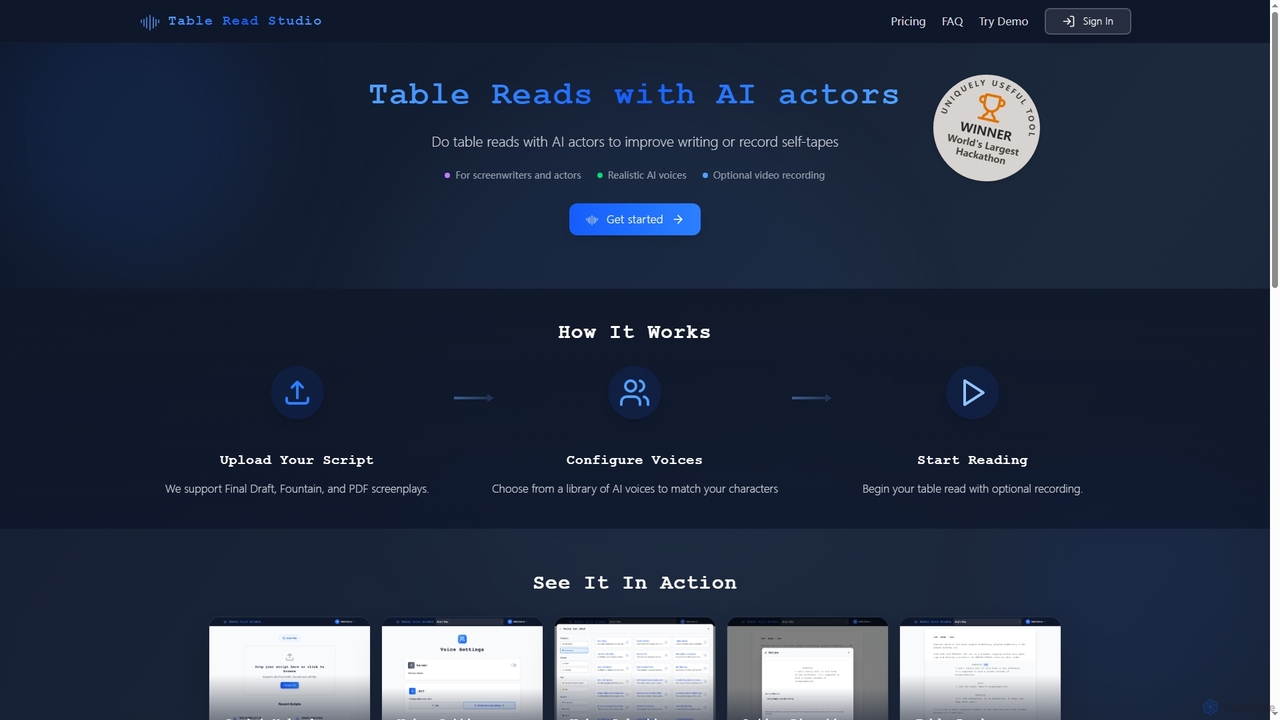
Table Read Studio is an AI-powered platform designed for screenwriters and actors to conduct virtual table reads. It helps screenwriters refine their scripts with realistic AI voices and enables actors to record self-tapes for auditions, offering a unique tool for script development and performance practice.

Voice Generation
Visits 5.4KFavorites 85Likes 90

About Script Analysis

Script Analysis tools are AI-powered platforms designed to automatically examine and interpret code or text scripts. They leverage natural language processing (NLP) and machine learning to identify patterns, errors, and potential improvements. These tools enhance productivity by automating tedious review processes, ensuring code quality, and optimizing content. They provide deep insights into script structure, logic, and performance, making development and content creation more efficient.

Core Features

  • Syntax and Error Checking: Automatically identify and highlight syntax errors, logical flaws, and common coding mistakes.
  • Code Quality Assessment: Evaluate code readability, maintainability, and adherence to coding standards.
  • Performance Optimization Suggestions: Analyze script execution paths and suggest improvements for faster, more efficient operation.
  • Security Vulnerability Detection: Scan for potential security risks, insecure coding practices, or known vulnerabilities.
  • Content Readability & SEO Analysis: For text scripts, assess readability, keyword density, and SEO best practices.

Use Cases

Script analysis tools are crucial for various professionals. Software developers use them for automated code reviews and ensuring consistent code quality across teams. Data scientists and analysts apply them to validate data processing scripts and optimize algorithms for performance. Content creators and marketers leverage these tools to analyze marketing copy or video scripts for clarity, tone, and SEO effectiveness.

How to Choose

When selecting a script analysis tool, consider its compatibility with the specific programming languages or text formats you use. Evaluate its integration capabilities with your existing development environments (IDEs) or content platforms. Look for the ability to define custom rules, coding standards, or content guidelines. Finally, prioritize tools that offer clear, actionable reports and intuitive dashboards for understanding analysis results.

Script Analysis use cases

1

Automating Code Review for Development Teams

Software development teams use script analysis tools to automatically review pull requests and code commits. This ensures adherence to coding standards, identifies potential bugs, and flags security vulnerabilities before merging, significantly reducing manual review time and improving code quality.

2

Optimizing Data Processing Scripts

Data scientists and analysts employ these tools to scrutinize Python, R, or SQL scripts used for data cleaning, transformation, and analysis. The tools help identify inefficient queries, memory leaks, or logical errors, leading to faster execution times and more reliable data pipelines.

3

Enhancing SEO for Web Content Scripts

Content marketers and SEO specialists utilize script analysis for website copy, blog posts, or video scripts. The tools analyze keyword density, readability, sentence structure, and suggest improvements to optimize content for search engines and audience engagement, boosting organic traffic.

4

Detecting Security Vulnerabilities in Web Applications

Cybersecurity professionals integrate script analysis into their CI/CD pipelines to automatically scan application code for common security flaws like SQL injection, cross-site scripting (XSS), or insecure API calls. This proactive approach helps prevent breaches and strengthens application security.

5

Improving Script Readability and Maintainability

Individual developers or open-source contributors use script analysis to refactor existing codebases. The tools provide suggestions for improving variable naming, function complexity, and overall code structure, making the script easier to understand, debug, and maintain for future updates.

6

Validating Configuration Files and Automation Scripts

DevOps engineers and system administrators apply script analysis to configuration files (e.g., YAML, JSON) and automation scripts (e.g., Bash, PowerShell). This ensures correct syntax, identifies potential conflicts, and validates logic, preventing system outages or misconfigurations in production environments.

Script Analysis FAQ

What are Script Analysis tools?

Script Analysis tools are AI-powered applications that automatically examine and interpret various types of scripts, including programming code, configuration files, or text-based content. They use techniques like natural language processing and static code analysis to identify errors, suggest improvements, and ensure quality, security, and performance.

How do Script Analysis tools work?

These tools typically work by parsing the script's syntax, building an abstract syntax tree (AST), and then applying a set of predefined rules, patterns, or machine learning models. They can detect issues ranging from simple syntax errors to complex logical flaws, security vulnerabilities, or stylistic inconsistencies, providing actionable feedback to the user.

What are the main benefits of using AI for Script Analysis?

AI-driven script analysis offers several benefits, including automation of tedious review processes, early detection of bugs and security risks, consistent enforcement of coding or content standards, and intelligent suggestions for performance optimization. This leads to higher quality outputs, reduced development time, and improved overall productivity.

Who can benefit from using Script Analysis tools?

A wide range of professionals can benefit, including software developers for code quality and security, data scientists for optimizing data pipelines, content creators for improving readability and SEO, DevOps engineers for validating automation scripts, and cybersecurity analysts for vulnerability detection. Essentially, anyone working with structured text or code can leverage these tools.

How do Script Analysis tools differ from traditional linters or static analyzers?

While traditional linters and static analyzers focus primarily on syntax, style, and basic rule violations, AI-powered script analysis tools go further. They can understand context, identify more complex logical issues, predict potential performance bottlenecks, and even suggest refactorings based on learned patterns, offering deeper insights and more intelligent recommendations than rule-based systems alone.