ToolMage
Sign in

Best 3 Strategy AI tools for Productivity

Popular Strategy AI tools in Productivity include Deck AI, Moonbeam, and Your AI Consultant, helping you work more efficiently.

Your AI Consultant
Paid

Your AI Consultant

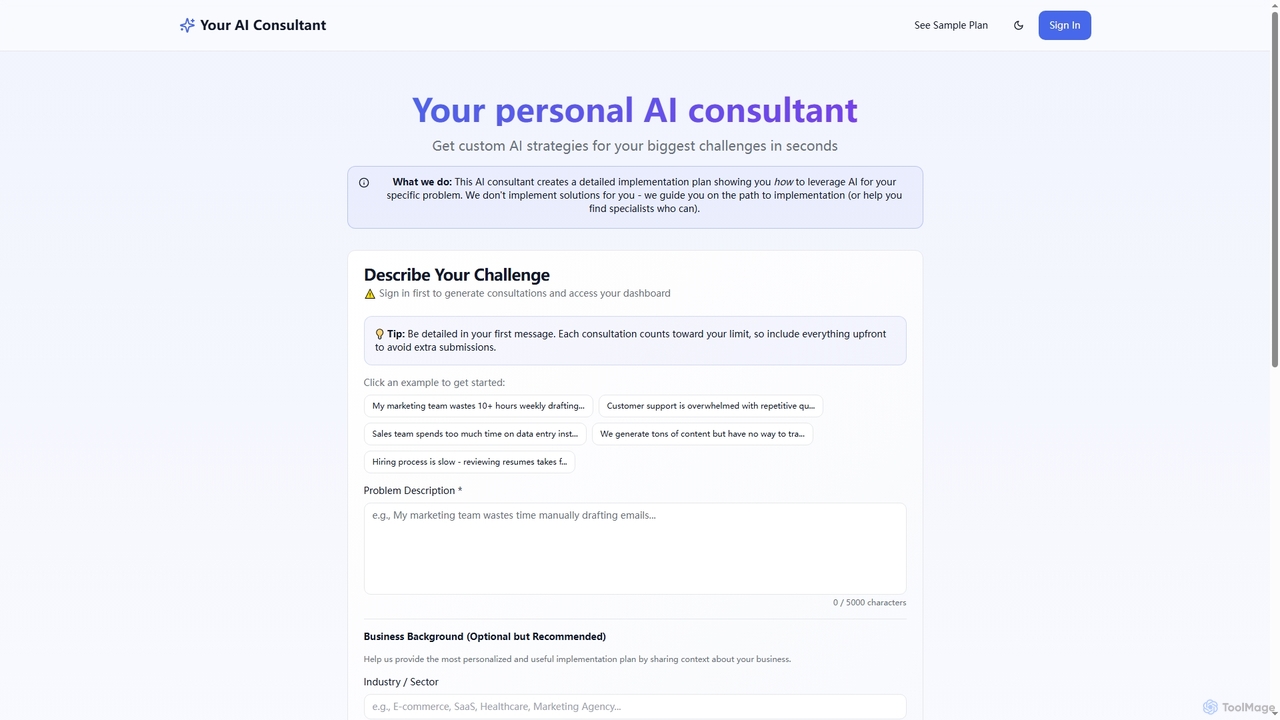
Your AI Consultant is an AI-powered tool that generates custom, detailed implementation plans for business challenges. By analyzing your specific problems and business context, it provides step-by-step strategic guidance, recommended tools, and actionable insights to help you leverage AI for growth, risk mitigation, and competitive advantage.

Consulting
Visits 4.2KFavorites 134Likes 129
Moonbeam

Moonbeam

Moonbeam is an AI-powered innovation intelligence platform and consulting firm. It leverages a data science platform with over 100 sources to provide market intelligence, strategic technology sourcing, and innovation programming, connecting corporations with global startup ecosystems to accelerate growth and transformative change.

Market Intelligence
Visits 5KFavorites 122Likes 122
Deck AI
Freemium

Deck AI

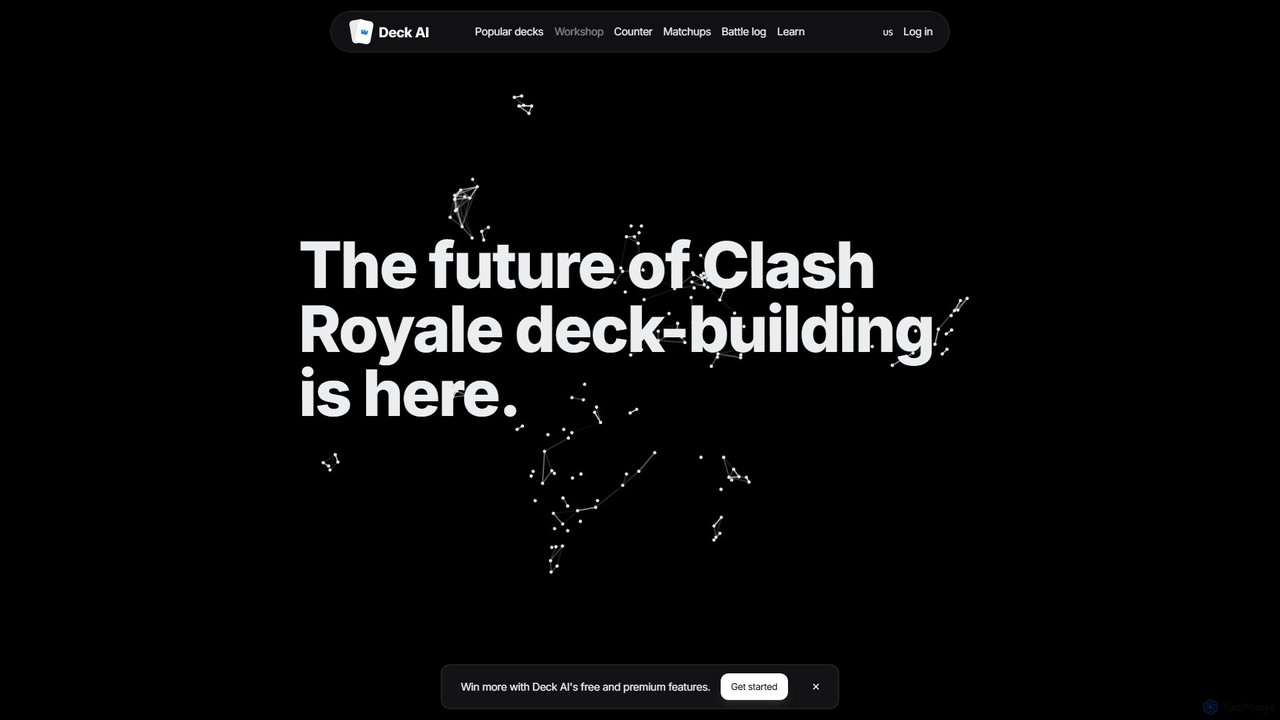
Deck AI is an AI-powered companion for Clash Royale players. It analyzes millions of matches to provide personalized deck building, counter-deck generation, matchup analysis, and card upgrade suggestions, helping players optimize their strategy based on their specific card levels and playstyle to win more games.

Game Assistant
Visits 171.6KFavorites 123Likes 131

About Strategy

AI Strategy tools are a specialized category of productivity software designed to assist in high-level planning, decision-making, and goal setting. They leverage machine learning and data analysis to transform raw data into actionable strategic insights. These tools help businesses and individuals move beyond simple task management to formulate, simulate, and monitor long-term objectives. By providing predictive analytics and scenario modeling, they enable more informed and data-driven strategic choices.

Core Features

  • Goal & OKR Management: Define, align, and track objectives and key results across the organization.
  • Predictive Scenario Modeling: Simulate the potential outcomes of different business decisions and market conditions.
  • Data-Driven Insights: Automatically analyze business and market data to uncover trends, risks, and opportunities.
  • Competitive Intelligence: Monitor competitor activities, market shifts, and industry news in real-time.
  • Resource Optimization: Recommend the most effective allocation of budget, personnel, and other resources to achieve goals.

Use Cases

Primarily used by business leaders, product managers, and strategic planners. For instance, a startup can use these tools to validate a business model with market data, while a large corporation can use them to align departmental OKRs with overarching company goals and track progress automatically.

How to Choose

When selecting an AI Strategy tool, consider its data integration capabilities (can it connect to your CRM, ERP?), the complexity of its modeling features, its specific focus (e.g., financial planning vs. market analysis), and the clarity of its user interface for visualizing strategic plans.

Featured tool rankings

Strategy use cases

1

Develop a Data-Driven Business Plan

A startup founder uses an AI strategy tool to analyze market research data, competitor landscapes, and consumer trends. The tool helps identify a viable target audience, suggests optimal pricing strategies, and generates financial projections based on various growth scenarios. This replaces weeks of manual spreadsheet work, providing a robust, data-backed plan to present to investors.

2

Align and Track Company-Wide OKRs

A department manager at a tech company uses an AI strategy platform to set quarterly Objectives and Key Results (OKRs). The tool helps cascade high-level company goals down to individual team tasks, ensuring alignment. It continuously monitors progress from integrated data sources (like Jira or Salesforce) and flags initiatives that are falling behind, allowing for proactive adjustments.

3

Simulate a New Product Launch Strategy

A product marketing manager preparing for a launch uses an AI tool to model different go-to-market scenarios. By inputting variables like marketing budget, channel mix, and pricing points, the AI simulates potential outcomes for customer acquisition, revenue, and market share. This allows the team to choose the strategy with the highest probability of success before committing resources.

4

Automate Competitive Landscape Monitoring

A market intelligence analyst configures an AI strategy tool to track key competitors. The system automatically scans news articles, press releases, social media, and website changes for relevant events like new feature launches or pricing updates. It then synthesizes this information into a weekly intelligence brief, highlighting threats and opportunities for the strategy team.

5

Optimize Project Portfolio Resource Allocation

A PMO (Project Management Office) director uses an AI strategy tool to manage a portfolio of dozens of projects. The tool analyzes the strategic value, resource requirements, and risk profile of each project. It then recommends an optimal allocation of budget and personnel to maximize the portfolio's overall return on investment and alignment with company priorities.

6

Conduct Strategic Risk Assessment

A corporate strategist uses an AI platform to identify and assess potential risks to their five-year plan. The tool analyzes historical data, economic indicators, and geopolitical news to model potential disruptions, such as supply chain issues or shifts in consumer behavior. It then helps formulate contingency plans by simulating the impact of different mitigation strategies.

Strategy FAQ

What are AI Strategy tools?

AI Strategy tools are advanced software that use artificial intelligence to support high-level business planning and decision-making. Unlike standard productivity apps that manage tasks, these tools focus on answering 'what' and 'why' by analyzing data, modeling future scenarios, and tracking long-term goals like OKRs. They essentially act as an intelligent assistant for strategic thinking.

How do I choose the right AI Strategy tool?

To choose the right tool, first define your primary need: is it for goal tracking (OKRs), market analysis, or financial modeling? Then, evaluate these key factors:

  • Data Integration: Can it connect seamlessly with your existing data sources (e.g., CRM, analytics platforms)?
  • Analytical Depth: Does it offer simple dashboards or complex predictive modeling capabilities?
  • Usability: Is the interface intuitive for your team to build and visualize strategic plans?
  • Scalability: Can the tool grow with your company from a small team to an enterprise?
What's the difference between an AI Strategy tool and a project management tool?

The key difference lies in their focus. Project management tools (like Asana or Trello) are tactical and help you manage the 'how' and 'when' of executing tasks and projects. AI Strategy tools are strategic; they help you decide 'what' to do and 'why' by providing high-level insights, setting goals, and simulating outcomes. A strategy tool sets the direction, and a project management tool helps you get there.

What key features should I look for in an AI Strategy tool?

Look for features that support the entire strategic lifecycle. Essential capabilities include: goal setting and OKR tracking, scenario planning and simulation to test hypotheses, automated data analysis for market and competitive insights, and clear dashboards for visualizing strategic roadmaps and progress. Strong integration with other business systems is also a critical feature.

Who benefits most from using AI Strategy tools?

While anyone can use them, they provide the most value to roles responsible for direction and planning. This includes business leaders, C-level executives, startup founders, product managers, marketing strategists, and financial planners. These professionals use the tools to make more informed, data-driven decisions that guide their teams and organizations toward long-term success.