Productivity Best in category 1 results Study Assistant AI Tool

Popular AI tools in the Study Assistant field of Productivity include ExamFul.ai, etc., helping you quickly improve efficiency.

Free
ExamFul.ai

ExamFul.ai

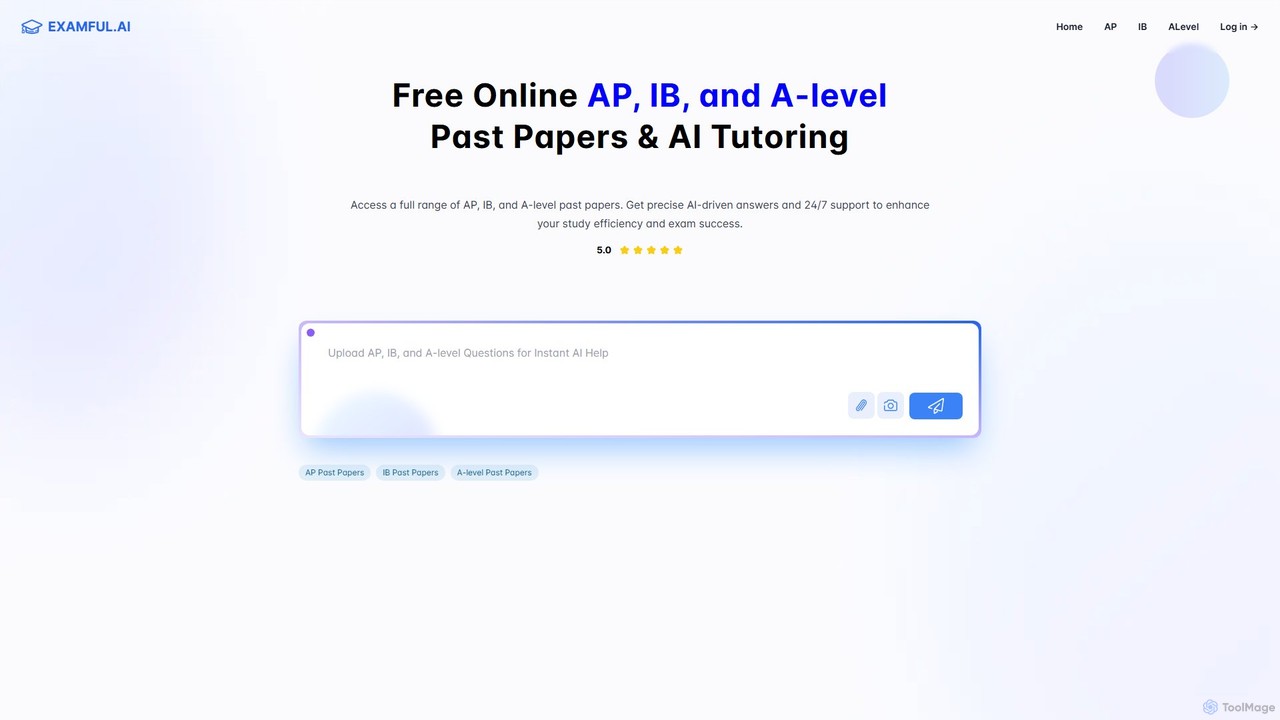
ExamFul.ai is a free AI-powered educational platform designed for students preparing for AP, IB, and A-level exams. It …

2.3K

About Study Assistant

AI Study Assistants are specialized tools designed to enhance the learning process and academic research. They leverage natural language processing (NLP) to understand, summarize, and explain complex information from various sources like textbooks, articles, and lecture notes. These assistants act as personalized tutors, helping users grasp difficult concepts, prepare for exams, and streamline their research workflow. By automating tasks like summarization and question generation, they make studying more efficient and effective.

Core Features

  • Intelligent Summarization: Condenses long documents, research papers, or web pages into concise summaries, highlighting key points and arguments.
  • Concept Explanation: Breaks down complex topics, theories, or formulas into simple, easy-to-understand language.
  • Question & Flashcard Generation: Automatically creates practice questions, quizzes, and flashcards from uploaded study materials to aid revision.
  • Research Assistance: Helps find relevant sources, extracts key data from papers, and assists in organizing bibliographies and citations.
  • Interactive Q&A: Allows users to 'chat' with their documents, asking specific questions about the content to find information quickly.

Applicable Scenarios

These tools are widely used by university students for exam preparation and essay writing, academic researchers for conducting literature reviews, and lifelong learners tackling new subjects. For instance, a student can upload a dense textbook chapter to get a summary and a set of practice questions, while a researcher can use it to quickly screen dozens of papers for relevant information.

Selection Criteria

When choosing an AI Study Assistant, consider the following: the range of supported document types (PDF, URL, text), the accuracy of its summarization and explanations, specific features like citation generation or multilingual support, and its integration capabilities with other productivity tools like note-taking apps or reference managers.

Study AssistantUse Cases

1

Efficiently Summarize Research Papers

A university student preparing for a literature review is faced with over 20 dense academic papers. Instead of spending days reading each one, they upload the PDFs to an AI Study Assistant. The tool analyzes each document and, within minutes, provides a structured summary including the abstract, methodology, key findings, and conclusion. This allows the student to quickly grasp the core arguments of each paper, identify the most relevant ones for their review, and save over 80% of their initial reading time.

2

Master Complex Scientific Concepts

A biology student is struggling to understand the process of cellular respiration from their textbook. The explanation is filled with technical jargon. They copy the difficult paragraphs into an AI Study Assistant and ask it to 'explain this like I'm 15'. The AI breaks down the process into a simple, step-by-step analogy, comparing it to a factory that converts sugar into energy. It defines key terms like 'glycolysis' and 'Krebs cycle' in plain language, turning a confusing topic into a clear and memorable concept.

3

Generate Custom Practice Quizzes for Exams

A history student has a final exam covering three chapters of notes. To prepare, they upload their digital notes to an AI Study Assistant. They instruct the tool to generate a 50-question quiz with a mix of multiple-choice, true/false, and short-answer questions. The AI analyzes the key dates, figures, and events from the notes and produces a comprehensive practice exam. This allows the student to actively test their knowledge, identify weak spots, and focus their remaining study time more effectively, rather than passively re-reading.

4

Accelerate Literature Review and Data Extraction

A PhD researcher needs to identify all studies in their library of 200 papers that used a specific methodology. Manually, this would take weeks. Using an AI Study Assistant, they upload their entire library and ask, 'Which of these papers use a longitudinal study design?'. The AI scans all documents and returns a list of the 15 relevant papers, along with the specific sentences where the methodology is described. This transforms a tedious screening process into a targeted, minutes-long query, dramatically accelerating the research timeline.

5

Improve Academic Writing and Citation

A student is finalizing an essay and wants to ensure it is well-written and properly cited. They paste their draft into an AI Study Assistant. The tool provides suggestions to improve sentence structure for better clarity and flags potential grammatical errors. More importantly, when the student needs to cite a source, they simply provide the link or title, and the AI automatically generates a perfectly formatted citation in APA 7th edition style. This saves time and reduces the risk of accidental plagiarism or formatting errors in their bibliography.

6

Interactive Learning with an AI Tutor

A lifelong learner is studying economics independently using online resources. They encounter the concept of 'elasticity' and have follow-up questions that a static article cannot answer. They open an AI Study Assistant and start a conversation: 'What is price elasticity of demand? Can you give me a real-world example? What happens if it's inelastic?'. The AI provides clear answers, offers examples like gasoline vs. luxury cars, and responds to follow-up queries, creating a dynamic learning experience that mimics a one-on-one tutoring session and deepens their understanding.

Study AssistantFrequently Asked Questions