
SurveySwan
SurveySwan is an AI-powered survey builder that automates question creation. Simply describe the insights you need, and the …
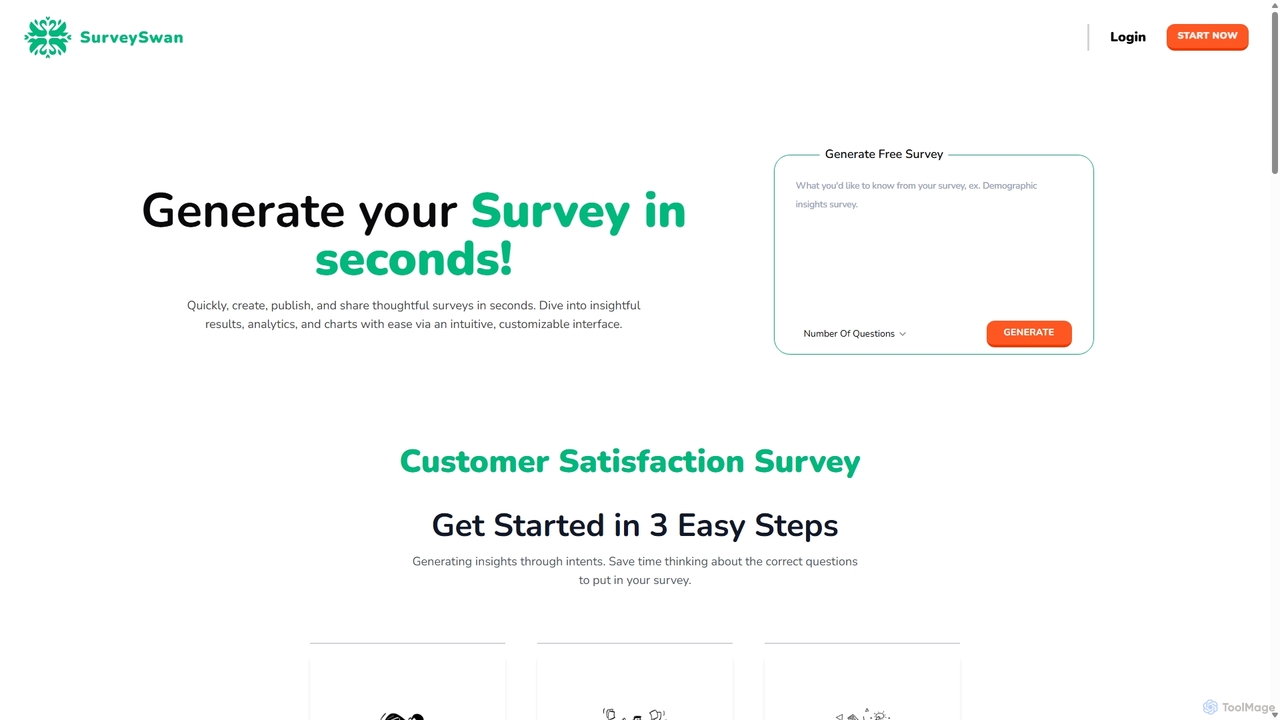
SurveySwan is an AI-powered survey builder that automates question creation. Simply describe the insights you need, and the tool generates thoughtful, high-quality survey questions in seconds. It's designed for professionals to quickly create, share, and analyze surveys with features like sentiment analysis and intuitive analytics, saving significant time and effort.
About Survey
AI Survey tools are a category of AI-powered platforms designed to streamline and enhance the entire survey process, from creation to analysis. Leveraging artificial intelligence, these tools automate question generation, personalize respondent experiences, and extract deeper insights from collected data. They significantly boost productivity in data collection and interpretation, enabling users to make more informed decisions faster.
Core Features
- AI-Powered Question Generation: Automatically drafts relevant and unbiased survey questions based on topic and goals.
- Sentiment Analysis: Analyzes open-ended text responses to identify underlying emotions, opinions, and key themes.
- Automated Data Analysis: Processes large datasets, identifies trends, correlations, and generates summarized reports.
- Smart Survey Design: Optimizes survey flow, question logic, and length for improved completion rates.
- Predictive Insights: Uses AI to forecast potential outcomes or respondent behaviors based on collected data.
Applicable Scenarios
Market researchers utilize these tools to quickly gauge public opinion and analyze competitor landscapes. HR professionals deploy them for automated employee engagement surveys and sentiment tracking. Product managers leverage AI surveys to gather nuanced user feedback, identifying pain points and feature requests with greater efficiency.
How to Choose
When selecting an AI Survey tool, consider its specific AI capabilities, such as natural language processing for open-ended responses and predictive analytics. Evaluate its integration options with existing CRM or HR systems, the level of customization available for survey design, and its data security protocols. Finally, assess the pricing model and scalability to ensure it meets your organizational needs.
SurveyUse Cases
Automating Market Research Insights
Market research analysts can use AI survey tools to rapidly design surveys for new product concepts or market trends. The AI assists in generating diverse questions, distributing to targeted demographics, and then automatically analyzing thousands of responses, including open-ended feedback, to identify key sentiments and actionable insights, significantly reducing manual analysis time.
Enhancing Customer Feedback Collection
Customer experience teams can deploy AI surveys to gather feedback after service interactions or product purchases. The AI not only helps craft relevant follow-up questions but also performs real-time sentiment analysis on customer comments, categorizing issues and highlighting urgent concerns, allowing for quicker resolution and improved customer satisfaction.
Streamlining Employee Engagement Surveys
HR departments can leverage AI survey tools to conduct regular employee pulse checks or annual engagement surveys. The AI can personalize questions based on employee roles or previous feedback, analyze responses for sentiment shifts across departments, and automatically generate reports identifying areas for improvement in company culture or management practices.
Optimizing Product Feature Development
Product managers can utilize AI survey tools to collect detailed feedback on beta features or new product iterations. By asking targeted questions and analyzing qualitative responses with AI, they can quickly identify user preferences, usability issues, and prioritize feature enhancements, ensuring product development aligns closely with user needs.
Academic Research Data Analysis
Academic researchers can employ AI survey tools to manage and analyze large-scale qualitative data from interviews or open-ended questionnaires. The AI can assist in coding responses, identifying recurring themes, and even suggesting correlations between different data points, accelerating the often time-consuming process of qualitative data interpretation.
Efficient Event Feedback Collection
Event organizers can use AI survey tools to gather post-event feedback from attendees. The AI can help design concise, engaging surveys, automatically summarize key takeaways from hundreds of responses, and pinpoint areas of success or improvement for future events, providing immediate, actionable insights without extensive manual review.