
Productivity Best in category 1 results Team Building AI Tool

Popular AI tools in the Team Building field of Productivity include cards, etc., helping you quickly improve efficiency.

cards

cards

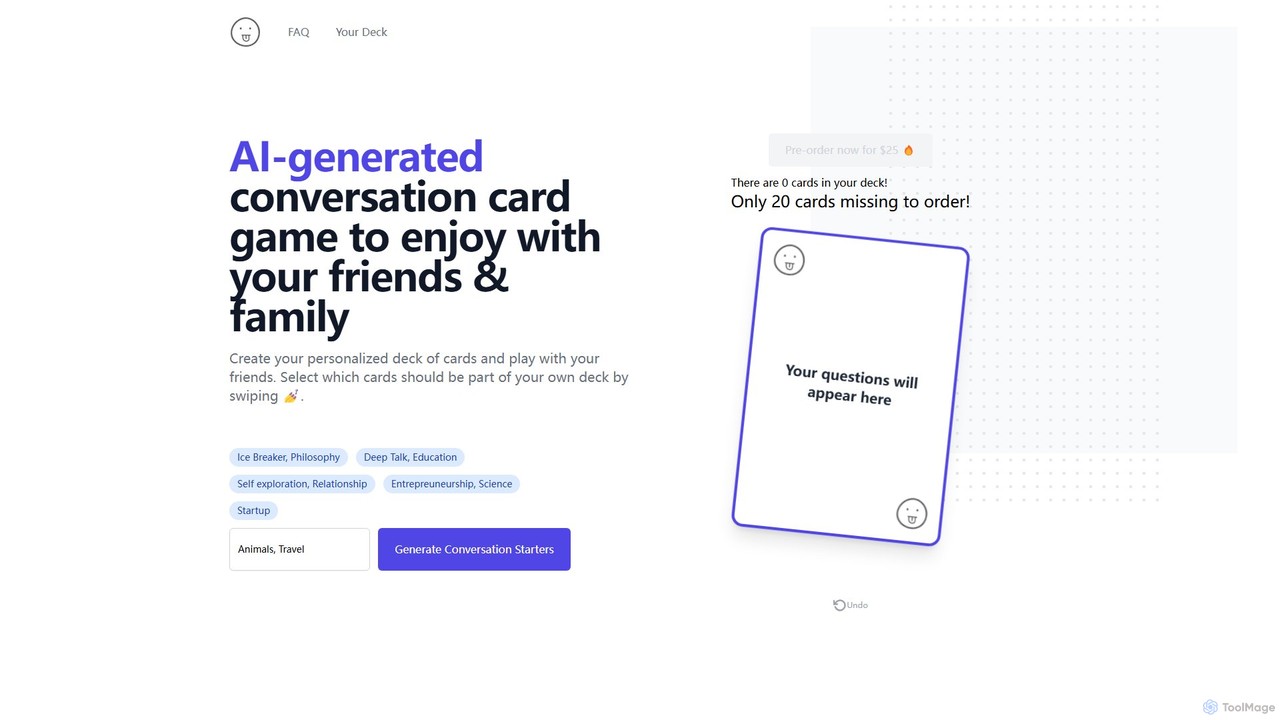
cards is an AI-powered platform for creating personalized conversation starter card games. Select from diverse categories like Ice …

3.0K

About Team Building

AI Team Building tools are specialized applications designed to enhance team cohesion, communication, and morale using artificial intelligence. These platforms often analyze communication patterns or facilitate interactive activities to foster stronger interpersonal relationships. They are particularly effective for remote and hybrid teams, helping to build a connected and engaged culture that directly contributes to overall productivity. By providing data-driven insights and structured engagement opportunities, these tools transform team dynamics from an abstract concept into a measurable and improvable asset.

Core Features

  • AI-Powered Icebreakers & Games: Automatically generates personalized and engaging activities to help team members connect on a personal level.
  • Communication Pattern Analysis: Analyzes anonymized communication data from platforms like Slack or Teams to identify collaboration trends, information silos, and potential burnout risks.
  • Sentiment & Morale Tracking: Utilizes pulse surveys and natural language processing (NLP) to gauge team sentiment and proactively address issues.
  • Automated Peer Recognition: Facilitates and encourages peer-to-peer appreciation by prompting users and highlighting positive contributions.
  • Skill & Personality Mapping: Visualizes the collective strengths, weaknesses, and personality types within a team to optimize task allocation and collaboration.

Use Cases

These tools are invaluable for organizations with remote or distributed workforces, newly formed project teams needing to establish rapport quickly, and managers seeking objective data to understand and improve their team's health. They are also used by HR departments to scale culture-building initiatives and improve employee retention across the entire company.

How to Choose

When selecting an AI Team Building tool, consider its integration capabilities with your existing communication stack (e.g., Slack, Microsoft Teams). Evaluate the platform's data privacy and security policies, especially regarding communication analysis. Also, assess the variety and quality of the activities offered, and whether the analytical dashboards provide actionable insights relevant to your team's specific challenges.

Team BuildingUse Cases

1

Onboarding New Remote Employees

A manager of a globally distributed team uses an AI Team Building tool to integrate new hires. The tool automatically schedules a series of AI-led icebreaker games and 'get-to-know-you' sessions during the first two weeks. It pairs new employees with existing team members for virtual coffee chats based on shared interests identified by the AI. This structured, automated process helps new hires feel connected and part of the team culture from day one, significantly reducing the isolation often felt in remote roles and accelerating their time to full productivity.

2

Proactively Monitoring Team Morale

An HR Business Partner implements an AI Team Building tool across several departments to monitor employee well-being. The tool sends out weekly, non-intrusive pulse surveys with questions generated by AI to be more engaging. The AI analyzes the anonymized responses for sentiment trends, flagging a specific team showing a consistent decline in morale. This early warning allows the HR partner and the team manager to intervene with targeted support, such as a workshop or a review of workload, before the issue escalates into lower performance or employee turnover.

3

Improving Cross-Functional Collaboration

A project manager notices that the engineering and marketing teams are working in silos, causing project delays. They use an AI Team Building tool that analyzes communication channels in Slack. The AI dashboard visualizes a clear lack of interaction between the two teams. Based on this data, the tool suggests creating a shared channel for project updates and recommends AI-facilitated weekly sync-ups with structured agendas. This data-driven intervention breaks down communication barriers, fostering a more collaborative environment and getting projects back on track.

4

Facilitating Engaging Virtual Offsites

A company planning its annual virtual offsite for 100 employees uses an AI Team Building platform to structure the event. Instead of passive presentations, the platform facilitates interactive workshops where AI breaks a large group into smaller, diverse teams for brainstorming sessions. It also runs a company-wide trivia tournament with an AI host that adapts the difficulty in real-time. The AI handles all the logistics of team formation and activity management, allowing organizers to focus on content. The result is a highly engaging and memorable virtual event that strengthens company culture.

5

Automating Peer-to-Peer Recognition

To boost positive reinforcement, a tech startup integrates an AI Team Building tool with their Slack. The AI monitors public channels for positive language and project completions. When it detects a milestone, it prompts the project lead to publicly recognize the team's effort. It also encourages all employees to give 'kudos' to colleagues, tracking these interactions and highlighting 'culture champions' each month. This automates the process of building a recognition-rich culture, improving morale and making employees feel valued for their contributions without adding administrative overhead.

6

Optimizing Team Composition for Projects

A consulting firm needs to assemble a new project team from a pool of 50 consultants. They use an AI Team Building tool that has mapped each consultant's skills, past project performance, and personality traits (from a voluntary assessment). The project manager inputs the project requirements, and the AI recommends several optimal team configurations. It balances technical skills with complementary personalities, highlighting potential leadership candidates and flagging possible friction points. This data-driven approach helps create a well-balanced, high-potential team from the start, increasing the project's likelihood of success.

Team BuildingFrequently Asked Questions