Productivity Best in category 1 results Text Extraction AI Tool

Popular AI tools in the Text Extraction field of Productivity include Imagetotext.me, etc., helping you quickly improve efficiency.

Free
Imagetotext.me

Imagetotext.me

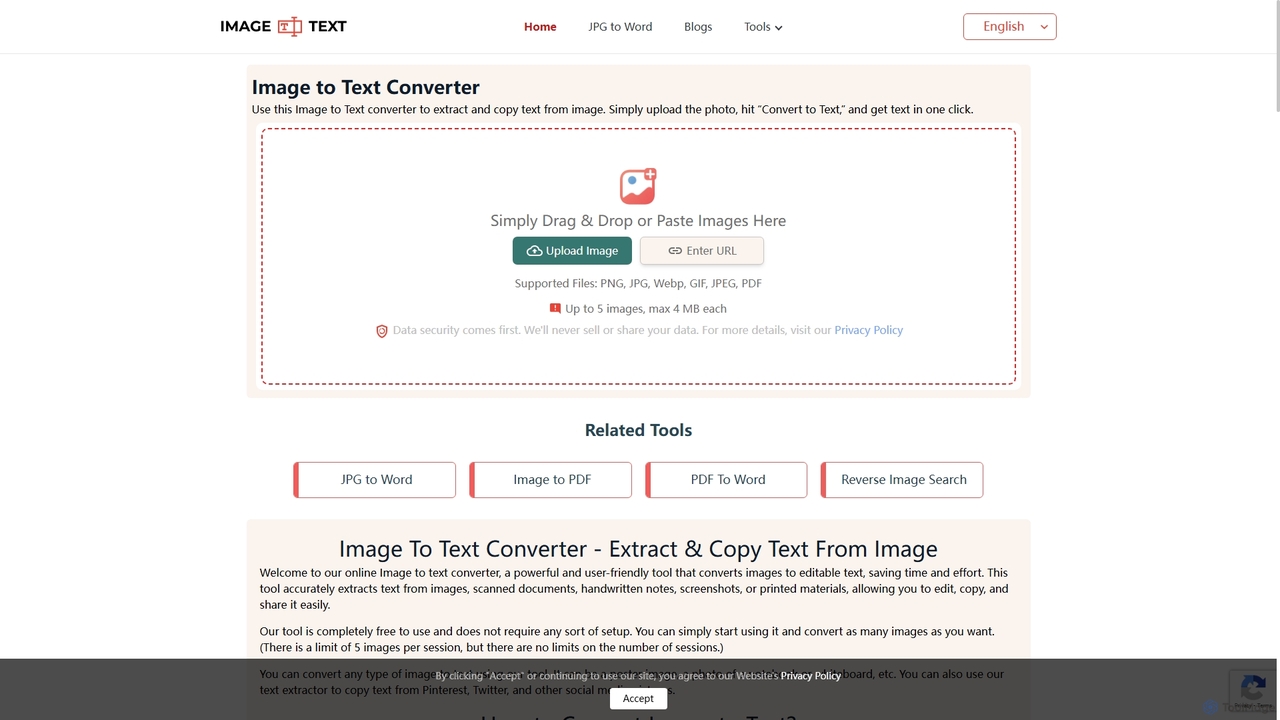
A free online OCR tool that accurately extracts text from images, scanned documents, and handwritten notes. It supports …

357.7K

About Text Extraction

Text Extraction tools are AI-powered solutions designed to automatically identify, locate, and extract specific pieces of information from unstructured text data. These tools leverage advanced Natural Language Processing (NLP) and machine learning algorithms to understand context and patterns, transforming raw text into structured, actionable insights. They are invaluable for automating data entry, enriching databases, and gaining deep understanding from large volumes of documents, significantly boosting productivity in data-intensive tasks.

Core Features

  • Entity Recognition (NER): Automatically identifies and categorizes key information like names, organizations, locations, and dates.
  • Keyword and Phrase Extraction: Pinpoints the most relevant terms and concepts within a document.
  • Sentiment Analysis: Determines the emotional tone (positive, negative, neutral) expressed in text.
  • Pattern-Based Extraction: Extracts data conforming to specific patterns, such as invoice numbers or email addresses.
  • Data Structuring: Converts unstructured text into organized formats like JSON or CSV for easier analysis.

Use Cases

Text extraction is widely used in industries requiring efficient processing of large document volumes. Legal professionals use it to quickly find relevant clauses in contracts, while financial analysts extract key figures from reports. Customer service departments analyze feedback to identify common issues, and researchers process academic papers for specific data points.

How to Choose

When selecting a text extraction tool, consider its accuracy across different text types and languages, the specific types of data it can extract (e.g., entities, sentiment, custom patterns), and its integration capabilities with your existing systems. Evaluate its scalability for handling large data volumes, customization options for domain-specific training, and the output formats it supports to ensure compatibility with your workflows.

Text ExtractionUse Cases

1

Automate Customer Feedback Analysis

Marketing teams and product managers can utilize text extraction tools to automatically analyze thousands of customer reviews, social media comments, and survey responses. By extracting key entities like product features, common issues, and sentiment, they can quickly identify prevalent trends, prioritize improvements, and understand customer satisfaction levels without manual review, saving significant time and providing data-driven insights.

2

Streamline Legal Document Review

Legal professionals, such as paralegals and lawyers, can leverage text extraction to efficiently review vast quantities of legal documents, including contracts, case files, and discovery materials. The tools can automatically identify and extract critical information like party names, dates, clauses, and specific legal terms, significantly reducing the time spent on manual review and ensuring higher accuracy in legal research and due diligence processes.

3

Enhance Market Research and Competitive Analysis

Market researchers and business intelligence analysts can employ text extraction tools to monitor industry trends and competitor activities. By automatically extracting product mentions, company news, and sentiment from online articles, social media, and financial reports, they can gain real-time insights into market dynamics, identify emerging opportunities, and assess competitive positioning more effectively than manual data collection.

4

Automate Data Entry from Invoices and Receipts

Accounting departments and small business owners frequently deal with large volumes of invoices, receipts, and other financial documents. Text extraction tools can automate the tedious process of data entry by accurately extracting key information such as vendor names, dates, itemized lists, and total amounts. This not only saves countless hours but also significantly reduces human error, ensuring financial records are precise and up-to-date for auditing and reporting.

5

Extract Key Information from Healthcare Records

Healthcare providers and medical researchers can use text extraction to process vast amounts of unstructured clinical notes, patient histories, and research papers. These tools can identify and extract critical data points such as diagnoses, medications, symptoms, and treatment outcomes, facilitating faster data analysis for patient care, epidemiological studies, and drug discovery, while maintaining patient privacy and data security.

6

Categorize and Tag Content for Knowledge Management

Content managers and knowledge base administrators can employ text extraction tools to automatically categorize and tag articles, documents, and web pages. By extracting keywords, topics, and entities, these tools help organize vast content libraries, improve searchability, and ensure consistent metadata application. This streamlines content management, making it easier for users to find relevant information and enhancing the overall efficiency of knowledge retrieval systems.

Text ExtractionFrequently Asked Questions