Lasso Moderation
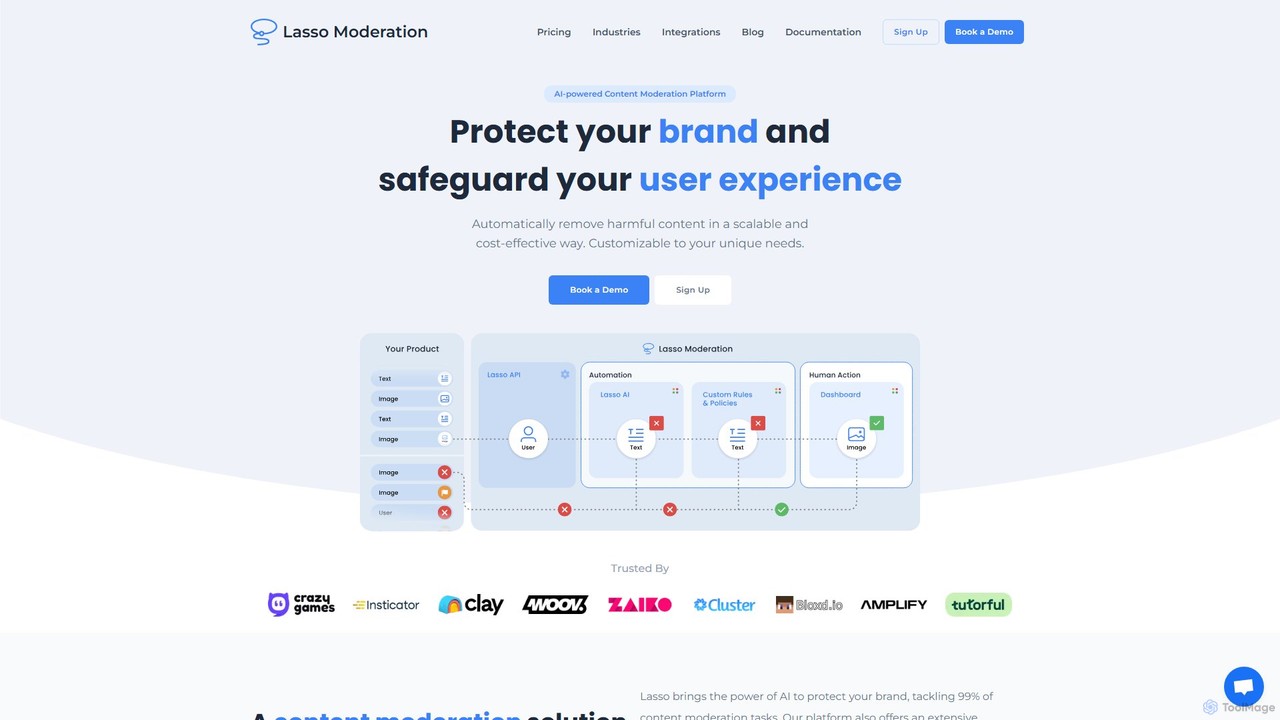
Lasso Moderation is an advanced AI-powered content moderation platform designed to protect brands and online communities. It offers …
Lasso Moderation is an advanced AI-powered content moderation platform designed to protect brands and online communities. It offers a comprehensive suite of tools for moderating text, images, video, and audio content, detecting everything from spam and toxicity to nudity and AI-generated deepfakes. With a customizable dashboard, custom AI models, and robust compliance features, Lasso helps businesses automate moderation, enhance user safety, and maintain a healthy online environment efficiently.
About Trust & Safety
Trust & Safety AI tools are a specialized category of productivity solutions designed to automatically detect, assess, and mitigate online risks. These tools leverage machine learning models, natural language processing (NLP), and computer vision to analyze user-generated content, transaction data, and behavioral patterns in real time. Their primary value lies in creating safer digital environments, protecting brand reputation, and ensuring regulatory compliance, thereby enhancing operational efficiency by automating critical security functions. They are essential for scaling moderation and security efforts in any online platform.
Core Features
- Content Moderation: Automatically detects and flags harmful or inappropriate content such as hate speech, spam, and explicit material across text, images, and videos.
- Fraud Detection: Analyzes user behavior and transaction patterns to identify and prevent fraudulent activities like payment fraud, account takeovers, and fake reviews.
- User Verification & Behavior Analysis: Verifies user identities and monitors behavioral signals to detect bots, sock puppet accounts, and coordinated inauthentic behavior.
- Threat Intelligence: Proactively identifies emerging threats, disinformation campaigns, and malicious actors by analyzing data from various online sources.
Applicable Scenarios
These tools are crucial for social media platforms, e-commerce marketplaces, financial services (FinTech), online gaming communities, and any business with a significant online presence. For example, a social network uses them to enforce community guidelines at scale, while an e-commerce site uses them to prevent transaction fraud and ensure the authenticity of reviews.
Selection Criteria
When choosing a Trust & Safety tool, consider its detection accuracy and the rate of false positives/negatives. Evaluate its scalability to handle your platform's volume, its ease of integration via APIs, and its ability to be customized for specific policies. Also, verify its compliance with data privacy regulations like GDPR and CCPA.

Trust & SafetyUse Cases
Automated Content Moderation for Social Platforms
A community manager for a large social media platform is tasked with maintaining a safe environment for millions of users. They use a Trust & Safety AI tool to automatically scan all user-generated content, including posts, comments, and images, in real time. The AI identifies and quarantines content that violates community guidelines, such as hate speech or graphic imagery, significantly reducing the workload on human moderators and enabling faster response times to harmful content, thereby protecting users and the platform's reputation.
E-commerce Fraud and Fake Review Prevention
An operations manager at an e-commerce marketplace needs to protect customers from fraudulent sellers and fake reviews. By implementing a Trust & Safety AI, they can analyze transaction data to flag suspicious orders, such as those using stolen credit cards. The same system analyzes review text and posting patterns to identify and remove inauthentic reviews designed to manipulate product ratings. This maintains a trustworthy marketplace, improves customer confidence, and reduces financial losses from chargebacks.
Securing Online Gaming Communities from Toxicity
A game developer wants to foster a positive and inclusive community for their online multiplayer game. They integrate a Trust & Safety AI into their in-game chat and communication systems. The AI monitors player interactions for toxic behavior, harassment, cheating, and hate speech in real time. It can automatically issue warnings, mute offending players, or flag severe cases for human review. This proactive approach helps create a healthier gaming environment, improving player retention and protecting younger audiences from harm.
User Identity Verification for FinTech Onboarding
A compliance officer at a digital bank needs to ensure a secure and compliant user onboarding process (KYC - Know Your Customer). They use a Trust & Safety AI tool that combines document verification with biometric analysis. New users upload their ID, and the AI verifies its authenticity and matches the photo to a live selfie. This automates a critical compliance step, reduces manual review time, prevents identity fraud, and ensures the bank meets regulatory requirements, all while providing a smoother experience for legitimate customers.
Detecting and Countering Disinformation Campaigns
A threat intelligence analyst working for a large corporation or government agency is responsible for identifying coordinated disinformation campaigns targeting their organization. They use a Trust & Safety AI platform to monitor social media, forums, and news sites for narratives spreading inorganically. The tool analyzes networks of accounts to identify botnets and coordinated inauthentic behavior, tracking the origin and spread of false information. This allows the organization to respond quickly, alert stakeholders, and mitigate reputational damage.
Protecting Brand Reputation from Impersonation
A marketing team is concerned about fake social media accounts and fraudulent websites impersonating their brand to scam customers. They deploy a Trust & Safety AI tool that continuously scans the web, including social media, app stores, and domain registrations, for unauthorized use of their brand's name and logo. The AI identifies impersonating accounts and phishing sites, allowing the team to initiate takedown requests swiftly. This proactive brand protection strategy safeguards customer trust and prevents revenue loss to scammers.