Productivity Best in category 1 results Virtual Assistants AI Tool

Popular AI tools in the Virtual Assistants field of Productivity include Laburen, etc., helping you quickly improve efficiency.

Laburen

Laburen

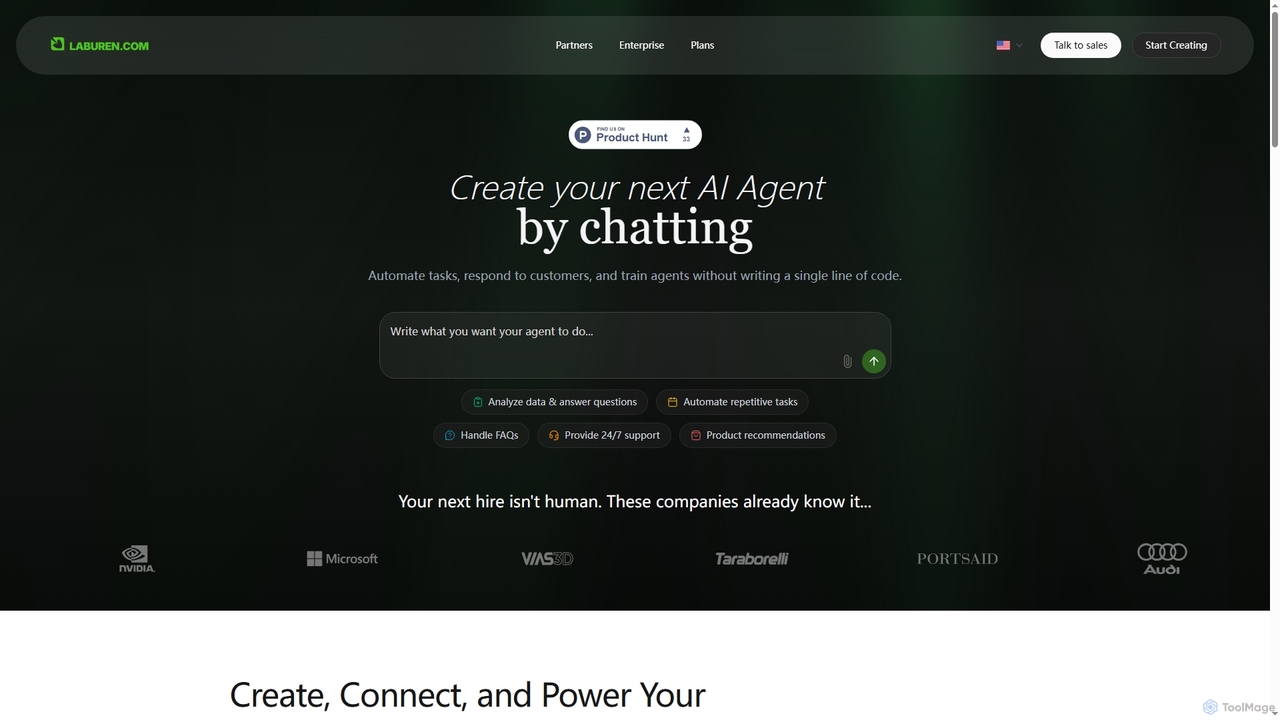
Laburen is a no-code AI agent platform that empowers businesses to automate tasks, customer support, sales, and administration. …

13.2K

About Virtual Assistants

Virtual Assistants are AI-powered tools designed to automate routine tasks, manage information, and facilitate communication, significantly enhancing personal and professional productivity. Leveraging advanced natural language processing (NLP) and machine learning, these intelligent assistants can understand user commands, retrieve data, schedule appointments, and even generate content. They serve as a digital extension, streamlining workflows and allowing users to focus on higher-value activities within the broader productivity landscape.

Core Features

  • Natural Language Understanding: Interprets spoken or typed commands and questions with high accuracy.
  • Task Automation: Automates repetitive actions like scheduling meetings, sending reminders, and managing emails.
  • Information Retrieval: Quickly accesses and synthesizes data from various sources to answer queries.
  • Personalized Interaction: Adapts responses and suggestions based on user preferences and past interactions.
  • Multi-platform Integration: Seamlessly connects with calendars, email clients, CRM systems, and other business applications.

Use Cases

Virtual Assistants are indispensable across various sectors, from individual professionals managing daily schedules to large enterprises automating customer service. They are particularly valuable for roles requiring extensive administrative support, data synthesis, or rapid information access, such as executive assistants, sales teams, and customer support agents.

How to Choose

When selecting a Virtual Assistant, evaluate its core functionalities, integration capabilities with your existing tools, and its natural language processing accuracy. Consider the level of customization offered, data security protocols, and whether it supports the specific languages and platforms essential for your operational needs. Scalability and pricing models are also crucial for long-term adoption.

Virtual AssistantsUse Cases

1

Automating Customer Service Inquiries

Customer support teams utilize virtual assistants to handle a high volume of routine inquiries, such as checking order status, providing FAQs, or guiding users through basic troubleshooting steps. This frees human agents to focus on complex issues, significantly reducing response times and improving overall customer satisfaction by providing instant, 24/7 support.

2

Streamlining Executive Scheduling and Communication

Executives and managers deploy virtual assistants to manage complex calendars, schedule meetings across multiple time zones, and draft routine email responses. The assistant can identify optimal meeting times, send invitations, and follow up, ensuring efficient time management and reducing administrative burden for high-level personnel.

3

Personalized Learning and Information Retrieval

Students and researchers use virtual assistants to quickly find information, summarize articles, or even create study guides on specific topics. By processing vast amounts of data and presenting key insights, these tools accelerate learning, aid in research, and help organize complex information efficiently for academic or professional development.

4

Enhancing Sales Lead Qualification and Follow-up

Sales professionals leverage virtual assistants to pre-qualify leads by asking initial questions, gathering contact information, and scheduling introductory calls. The assistant can also automate follow-up emails and reminders, ensuring no potential lead is missed and streamlining the sales pipeline for greater conversion rates.

5

Content Creation and Idea Generation Support

Content creators and marketers employ virtual assistants to brainstorm ideas, generate outlines for articles or social media posts, and even draft initial content snippets. By providing quick access to relevant information and creative prompts, these tools accelerate the content production process and help overcome creative blocks.

6

Managing Personal Productivity and Daily Tasks

Individuals use virtual assistants to set reminders, manage to-do lists, organize notes, and even control smart home devices. This personal productivity enhancement helps users stay organized, meet deadlines, and efficiently manage their daily routines, leading to a more balanced and productive lifestyle.

Virtual AssistantsFrequently Asked Questions