ToolMage
Sign in

Best 1 Documentation AI tools for Research

Popular Documentation AI tools in Research include Standard Wizard, helping you work more efficiently.

Standard Wizard
Paid

Standard Wizard

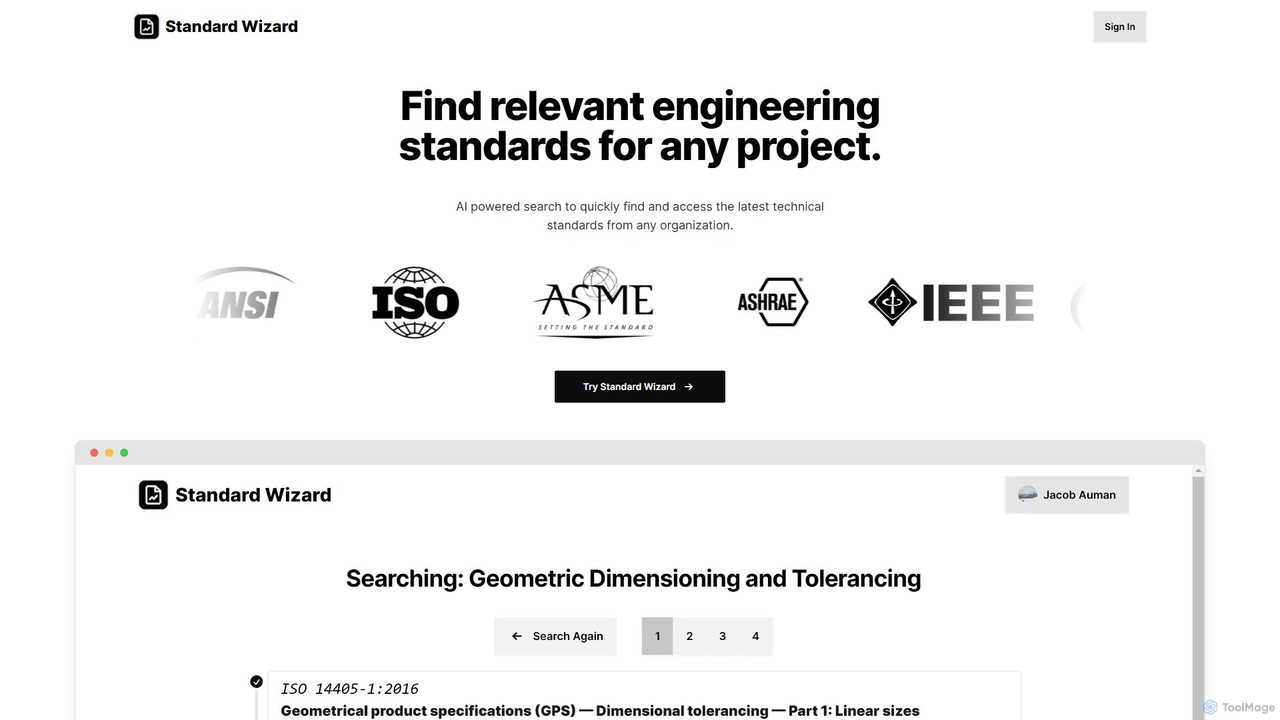
An AI-powered search engine designed for engineers to instantly find and access relevant technical and engineering standards. It utilizes semantic search across a database of over 28,000 standards, providing AI-generated summaries to accelerate research and ensure compliance for any project.

Technical Standards
Visits 7.5KFavorites 163Likes 175

About Documentation

AI Documentation tools are a category of AI-powered software designed to automate and enhance the creation, management, and maintenance of various forms of documentation. These tools leverage natural language processing (NLP) and machine learning to generate content, summarize complex information, and organize knowledge efficiently. They streamline workflows for technical writers, researchers, developers, and businesses, ensuring accuracy, consistency, and accessibility of critical information within the broader context of AI research and development.

Core Features

  • Automated Content Generation: Automatically drafts technical specifications, user manuals, or reports from raw data, code, or research notes.
  • Intelligent Summarization: Condenses lengthy research papers, meeting transcripts, or articles into concise, digestible summaries.
  • Knowledge Base Management: Organizes and structures vast amounts of information, making it easily searchable and retrievable for internal or external use.
  • Version Control & Collaboration: Facilitates team collaboration on documents with AI-assisted change tracking and suggestion features.
  • Multilingual Documentation: Translates and localizes documentation into multiple languages, expanding global reach and accessibility.

Applicable Scenarios

These tools are invaluable for organizations and individuals needing to manage information effectively. They are widely used in software development for generating API documentation, in academic research for summarizing literature reviews, and in customer support for building comprehensive FAQ sections and help guides.

How to Choose

When selecting an AI documentation tool, consider its integration capabilities with your existing tech stack (e.g., GitHub, Confluence), the accuracy and customizability of its AI generation models, and the range of document formats it supports. Evaluate its collaboration features for team workflows and ensure it meets your security and data privacy requirements.

Documentation use cases

1

Automated Research Paper Summarization

Academic researchers and scientists can utilize AI documentation tools to rapidly summarize extensive scientific papers, journals, and literature reviews. By inputting large volumes of text, the AI extracts key findings, methodologies, and conclusions, significantly reducing the time spent on manual reading and synthesis, thereby accelerating the literature review process for new studies.

2

Generating Technical Specifications from Code

Software developers and engineering teams can automate the creation of up-to-date technical documentation directly from their codebase. AI tools analyze code, identify functions, parameters, and dependencies, then generate detailed API documentation, code comments, and system design specifications, ensuring documentation remains consistent with the evolving software and saving countless hours of manual writing.

3

Creating User Manuals for Complex Software

Product managers and technical writers can leverage AI to draft comprehensive and user-friendly manuals for intricate software applications. By feeding the AI product specifications, feature descriptions, and UI screenshots, the tool generates structured guides, tutorials, and troubleshooting sections, making complex software more accessible to end-users and reducing support inquiries.

4

Drafting Internal Knowledge Base Articles

Companies can build and maintain robust internal knowledge bases more efficiently. AI documentation tools can ingest various internal communications, meeting notes, and project documents, then automatically structure and draft articles for FAQs, best practices, and onboarding guides, ensuring employees have quick access to accurate and consistent company information.

5

Translating Documentation for Global Audiences

Businesses aiming for international markets can use AI documentation tools to translate their product manuals, support articles, and marketing collateral into multiple languages. This capability ensures that global customers receive information in their native tongue, improving user experience and market penetration without the extensive costs and time associated with traditional human translation services.

6

Automating Meeting Minutes and Action Items

Teams can streamline post-meeting processes by using AI to transcribe and summarize discussions, identify key decisions, and extract actionable items. The AI processes audio or text transcripts, generating structured meeting minutes with assigned responsibilities and deadlines, ensuring clarity, accountability, and efficient follow-up for all participants.

Documentation FAQ

What are AI Documentation tools?

AI Documentation tools are software applications that use artificial intelligence, primarily natural language processing (NLP) and machine learning, to automate and assist in the creation, organization, and management of various types of documents. They aim to streamline the documentation process, improve accuracy, and ensure consistency across technical specifications, user manuals, research papers, and internal knowledge bases.

How do AI Documentation tools differ from traditional documentation software?

The key difference lies in automation and intelligence. Traditional software requires manual input for content creation and structuring. AI tools, however, can automatically generate content from raw data or code, summarize large texts, suggest improvements, and even translate, significantly reducing manual effort and time. They learn and adapt, offering more dynamic and efficient documentation solutions.

What types of documents can AI tools generate or manage?

AI documentation tools are versatile and can handle a wide range of document types. This includes technical documentation like API references, code comments, and system design documents; user-facing content such as user manuals, help guides, and FAQs; research-related documents like literature reviews and summaries of scientific papers; and internal knowledge base articles and meeting minutes.

How can AI Documentation tools improve research workflows?

In research, these tools significantly enhance efficiency by automating literature reviews through intelligent summarization, helping organize vast amounts of data into structured reports, and facilitating the drafting of research papers and proposals. They ensure consistency in referencing and terminology, allowing researchers to focus more on analysis and discovery rather than tedious documentation tasks.

What should I consider when choosing an AI Documentation tool?

When selecting an AI documentation tool, evaluate its core AI capabilities, such as the quality of its content generation and summarization. Consider its integration with your existing tools (e.g., version control, project management), supported document formats, and collaboration features. Data security, privacy policies, and the level of customization offered are also crucial factors to ensure it meets your specific organizational needs.