Research Best in category 1 results Financial Data AI Tool

Popular AI tools in the Financial Data field of Research include Winus, etc., helping you quickly improve efficiency.

Winus

Winus

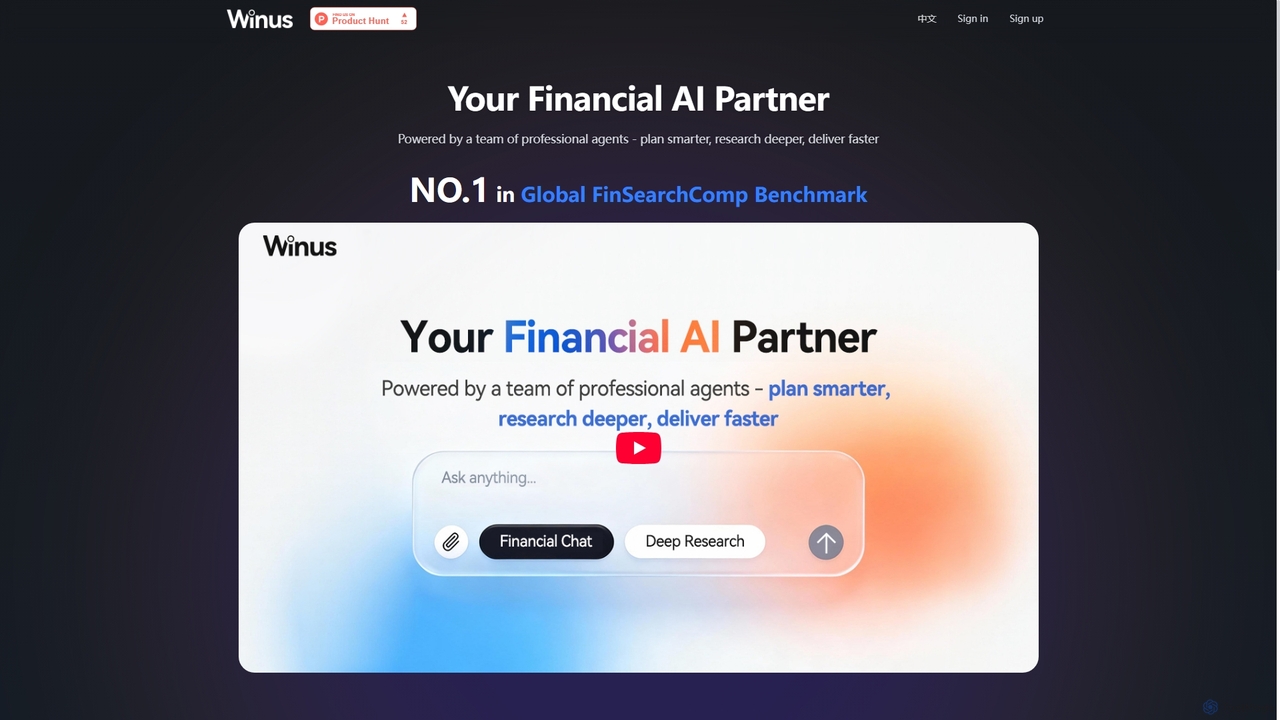
Winus is your advanced AI financial partner, offering custom AI agents, deep research capabilities, professional stock trading strategy …

2.5K

About Financial Data

Financial Data tools are AI-powered solutions designed to collect, process, analyze, and visualize vast amounts of financial information. Leveraging machine learning and natural language processing, these tools transform raw data into actionable insights, significantly enhancing financial research and decision-making. They enable users to identify market trends, assess risks, and optimize investment strategies with unprecedented speed and accuracy, forming a critical component of modern research workflows.

Core Features

  • Automated Data Aggregation: Gathers financial data from diverse sources like market feeds, company reports, and news.
  • Real-time Market Analysis: Provides instant insights into market movements, asset prices, and economic indicators.
  • Predictive Modeling: Utilizes AI algorithms to forecast future financial trends, stock prices, and market behavior.
  • Sentiment Analysis: Analyzes textual data from news and social media to gauge market sentiment towards specific assets or sectors.
  • Regulatory Compliance Support: Helps monitor transactions and generate reports to ensure adherence to financial regulations.

Applicable Scenarios

These tools are indispensable for professionals in investment banking, hedge funds, corporate finance, and market research. They are used for tasks such as evaluating potential investments, managing portfolio risks, conducting due diligence for mergers and acquisitions, and ensuring robust regulatory compliance across various financial operations.

How to Choose

When selecting Financial Data tools, consider the breadth and quality of data sources, the sophistication of analytical capabilities (e.g., predictive modeling, NLP), integration options with existing systems, and the level of customization offered. Security features, compliance standards, and transparent pricing models are also crucial for making an informed decision.

Financial DataUse Cases

1

Automated Market Sentiment Analysis

Investment analysts and fund managers utilize AI-powered tools to scan vast quantities of news articles, social media posts, and earnings call transcripts. By applying natural language processing (NLP), these tools identify and quantify market sentiment towards specific companies, industries, or economic events, providing early indicators for potential investment opportunities or risks, thereby informing trading decisions.

2

Predictive Stock Price Forecasting

Portfolio managers and quantitative traders employ financial data tools to build and refine predictive models for stock prices. These models analyze historical price movements, trading volumes, economic indicators, and company fundamentals using machine learning algorithms. The forecasts help in optimizing portfolio allocations, identifying undervalued or overvalued assets, and executing timely buy or sell orders.

3

Real-time Risk Assessment and Monitoring

Financial institutions, including banks and insurance companies, leverage these tools for continuous, real-time monitoring of various financial risks. This involves tracking credit risk, market risk, operational risk, and liquidity risk by analyzing live data feeds. The AI systems can detect anomalies, flag potential threats, and provide alerts, enabling proactive risk mitigation strategies and ensuring financial stability.

4

Enhanced Due Diligence for M&A

Corporate development teams and private equity firms use AI financial data tools to conduct comprehensive due diligence for mergers and acquisitions. These tools rapidly process target company financial statements, market data, and industry reports to identify financial health, growth potential, synergies, and potential red flags, significantly accelerating the evaluation process and improving deal quality.

5

Regulatory Compliance and Reporting Automation

Compliance officers in financial services firms utilize AI tools to automate the collection, validation, and reporting of financial data required by regulatory bodies. These systems ensure data accuracy, track transactions for suspicious activities (AML/KYC), and generate complex reports efficiently, reducing manual effort and minimizing the risk of non-compliance penalties.

6

Personalized Financial Product Recommendation

Retail banks and wealth management advisors deploy AI financial data tools to analyze individual customer spending patterns, income, credit history, and investment goals. Based on this comprehensive data, the AI generates personalized recommendations for financial products such as savings accounts, loans, credit cards, or investment portfolios, enhancing customer engagement and product uptake.

Financial DataFrequently Asked Questions