Magisterium
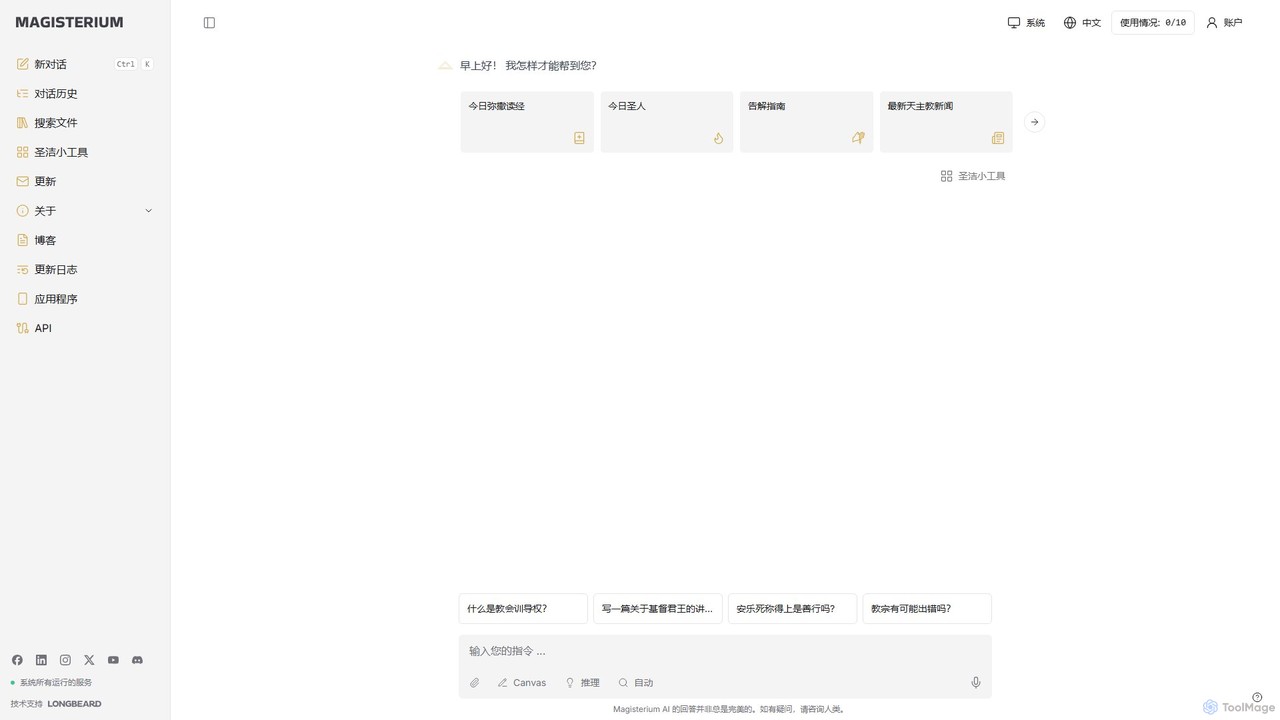
Magisterium is a specialized AI chatbot for exploring Catholic doctrine. Trained on an extensive library of over 27,000 …
Magisterium is a specialized AI chatbot for exploring Catholic doctrine. Trained on an extensive library of over 27,000 official Church documents, including the Catechism, Scripture, and writings of saints, it provides accurate, cited answers to theological questions. It also offers prayer guides, daily readings, and curated Catholic news, serving as a comprehensive digital resource for students, clergy, and the faithful.
About Theology
AI Theology tools are specialized applications that leverage artificial intelligence for religious study, research, and content creation. They utilize Natural Language Processing (NLP) to analyze sacred texts, historical documents, and theological commentaries. These tools assist pastors, scholars, and students in tasks like scriptural exegesis, sermon preparation, and exploring complex theological concepts, offering deep insights from vast digital libraries.
Core Features
- Scriptural Analysis: Identifies themes, cross-references verses, and analyzes original language syntax.
- Sermon Generation: Creates outlines, illustrations, and application points for sermons and lessons.
- Theological Q&A: Answers complex doctrinal questions by synthesizing scholarly sources.
- Historical Context Research: Gathers information on the historical and cultural background of religious texts.
Use Cases
Primarily used by clergy for weekly sermon preparation, academics and seminary students for theological research papers, and Bible study groups for deeper textual exploration. They are also valuable for apologists and content creators developing faith-based materials.
How to Choose
When selecting a tool, consider its theological alignment and the sources it's trained on. Evaluate its support for original languages (e.g., Greek, Hebrew), the depth of its analytical features, and whether its focus is on research, sermon preparation, or general study.

TheologyUse Cases
Sermon and Lesson Preparation
A pastor preparing a weekly sermon on a specific biblical passage uses an AI tool to generate a detailed outline. The tool provides historical context, identifies key theological themes, suggests relevant cross-references, and offers illustrative stories, reducing research time from hours to minutes and enriching the sermon's content.
Academic Theological Research
A seminary student writing a dissertation on Pauline theology uses an AI tool to perform a comprehensive analysis of Paul's epistles. The AI helps identify recurring linguistic patterns, compares theological concepts across different letters, and surfaces relevant secondary literature from academic journals, significantly accelerating the literature review process.
Personal Bible Study Enhancement
An individual or a small group leader uses an AI theology tool to explore difficult passages. By asking questions in natural language, they receive clear explanations, summaries of different interpretative views, and insights into the original Hebrew or Greek words, fostering a deeper and more informed personal understanding of the text.
Creating Faith-Based Content
A content creator for a religious blog or social media channel uses an AI tool to brainstorm topics and draft articles. They can input a theme like "grace" or "forgiveness" and receive scriptural references, theological summaries, and draft paragraphs, ensuring the content is biblically grounded and theologically sound.
Comparative Religion Studies
A researcher studying comparative religion utilizes an AI tool to analyze and compare core tenets across different sacred texts, such as the Bible, the Quran, and the Vedas. The tool can highlight thematic similarities, doctrinal differences, and historical intersections, providing a structured overview for complex comparative analysis.
Assisting with Scriptural Translation
A Bible translator working on a new version for a specific language group uses an AI tool as a sophisticated reference. The AI provides detailed analysis of original language nuances, offers multiple translation possibilities for complex phrases, and cross-references how similar terms are used elsewhere, ensuring greater accuracy and consistency.